
When an artificial intelligence system and a teacher give feedback to the same student, the two contributions can be complementary. This is the main lesson of a study published in the British Journal of Educational Technology with UC Berkeley and NTNU, in which students learn integers by moving through space.
The experience is coordinated by SENSEi software. On our website you will already find a summary article on the research; here we try a different angle: what a teacher can take into the classroom.
What is the research question?
Artificial intelligence is entering classrooms. The research group asks how interactions between teachers and AI systems are orchestrated, and how students perceive this hybrid teaching intelligence.
The case analysed is MOVES-NL, an AI-driven system for learning integer arithmetic through whole-body movement and immediate formative feedback, in a room-sized environment.
The study in brief
The system, described on the project page of the EDRL lab at UC Berkeley, is coordinated by SENSEi software. The experience is simple to describe:
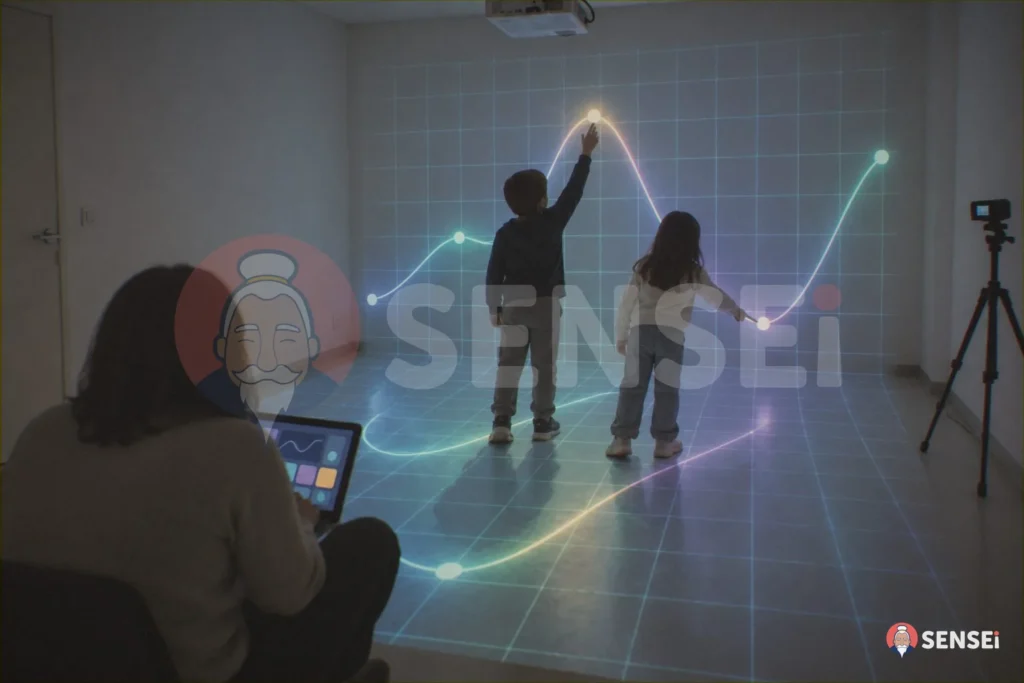
- the student walks along a body-scale number line, projected on the floor;
- when they stop on a number, the number turns blue and a sound plays;
- the problem on the wall lights up green when the movements are correct;
- in one of the interactions the wall shows a mirror avatar of the student.
The project also includes tabletop activities, on a smaller number line and on a tablet, to connect the bodily experience with pen-and-paper work.
In the study, 29 students in grades 6-8 of the US school system use MOVES-NL individually, for about an hour each, with a facilitator or teacher. The summary article on the SENSEi website names Mission Dolores Academy in San Francisco as the location. The analyses use mixed methods, across multiple data sources.
What emerges?
The group summarises the results in a few notes for practitioners:
- the system’s feedback and the facilitator’s feedback are complementary for the success of the experience;
- AI allows students to reflect on and test their prior knowledge;
- AI guides teachers to work with students to consolidate difficult topics;
- teacher-AI collaboration can engage students in conceptual reflection on mathematical rules.
The summary on the SENSEi website adds that bodily mirroring with the avatar increases awareness and that the system detects misconceptions in real time.
What can a teacher take into the classroom?
The study does not ask teachers to hand the lesson over to a machine. It suggests a division of tasks:
| The system | The teacher |
|---|---|
| gives immediate feedback on every movement | asks the student to explain their choices |
| shows the position and the error visibly | helps turn the error into an understood rule |
| records what happens | decides when to stop and consolidate |
In the study, human support also consists of asking students to elaborate on their own actions and decisions. It is a practice every teacher can adopt: after an action, ask “why did you move there?”. To get started:
- choose a concept where errors are frequent, such as negative numbers;
- alternate body-scale movement and desk work;
- use the system’s feedback as the starting point for a question, not as a grade.
Why does it matter today?
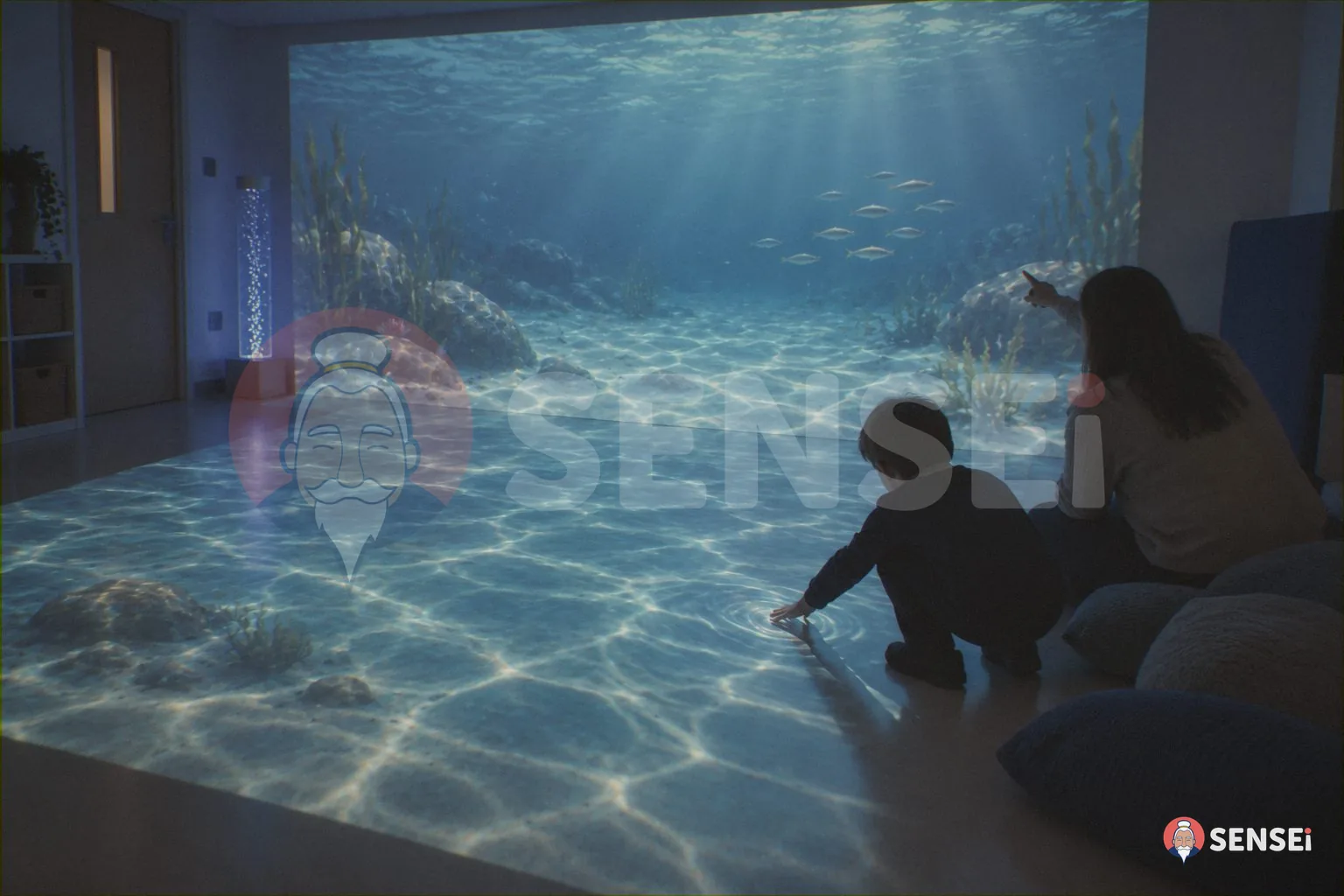
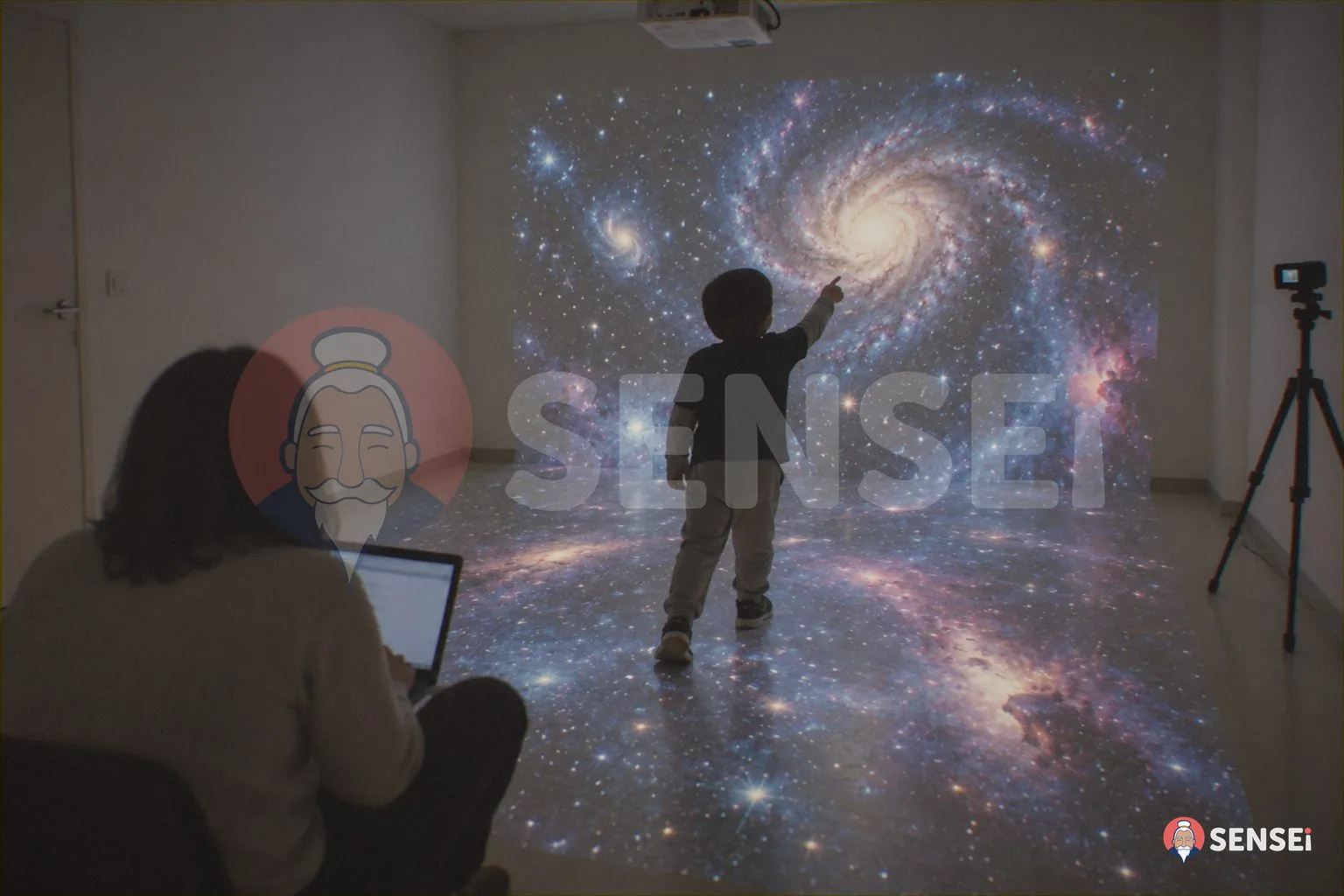
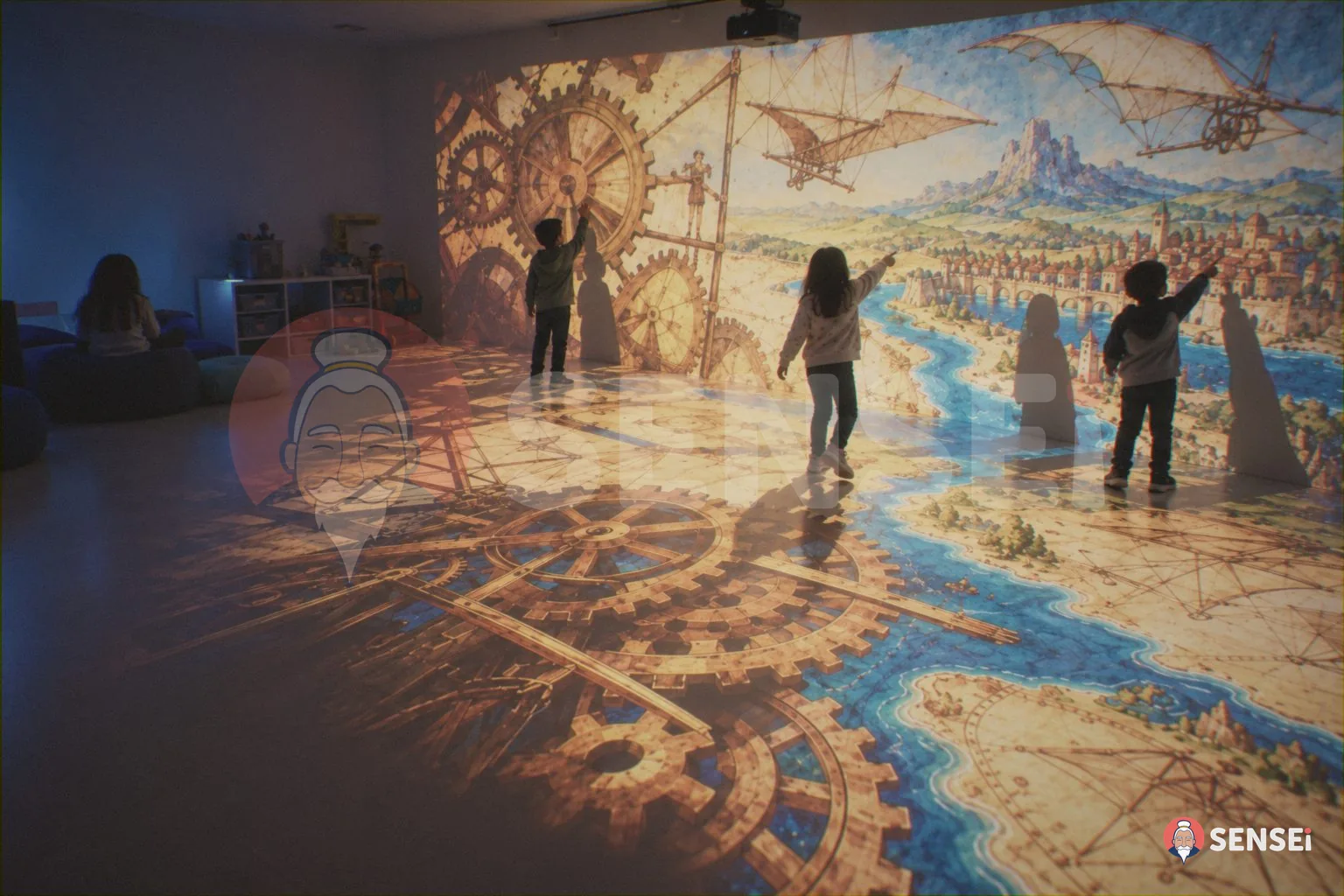
MOVES-NL shows SENSEi software at work in international research on mathematics and AI. For schools the message is clear: the system makes the error visible at the moment it happens, and the teacher turns it into an understood rule. In the classroom, the magic room brings the same division of tasks to life: the space responds to students’ steps and gestures, and the teacher decides from the tablet when to stop and ask why.
For mathematics, see the Primary and Secondary pages. For the underlying idea, read the case study on embodied learning and the Research section.
Frequently asked questions
What is hybrid teaching intelligence?
It is the combination of feedback from an artificial intelligence system and from a teacher, working together with the same student.
Does AI replace the teacher?
No. The study indicates that the system’s feedback and the facilitator’s feedback are complementary. The teacher remains central.
Which universities is the research carried out with?
With UC Berkeley and NTNU. The work brings together the SENSEi research group and researchers from both institutions.
How much does an environment like this cost?
It depends on the configuration: space, experiences, training and services. Contact us for an assessment.
Do you work in a school, a centre or a museum and want an environment like this? Tell us about your project: we start from the needs of the people who will use it.
Sources
- Cosentino G., Anton J., Sharma K., Gelsomini M., Giannakos M., Abrahamson D. (2024). Hybrid teaching intelligence: Lessons learned from an embodied mathematics learning experience. British Journal of Educational Technology
- Embodied Design Research Laboratory, UC Berkeley. MOVES-Number Line (project page)