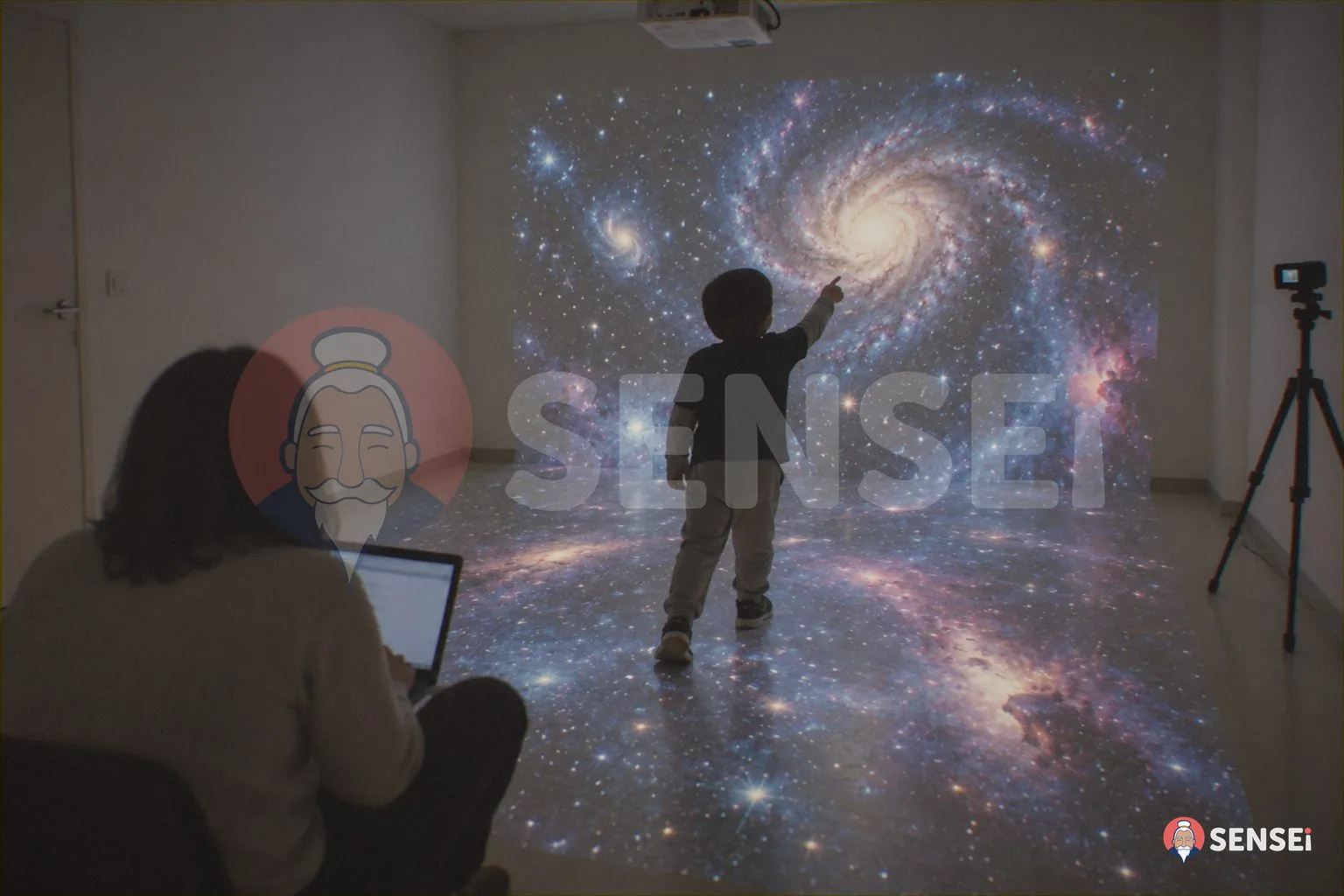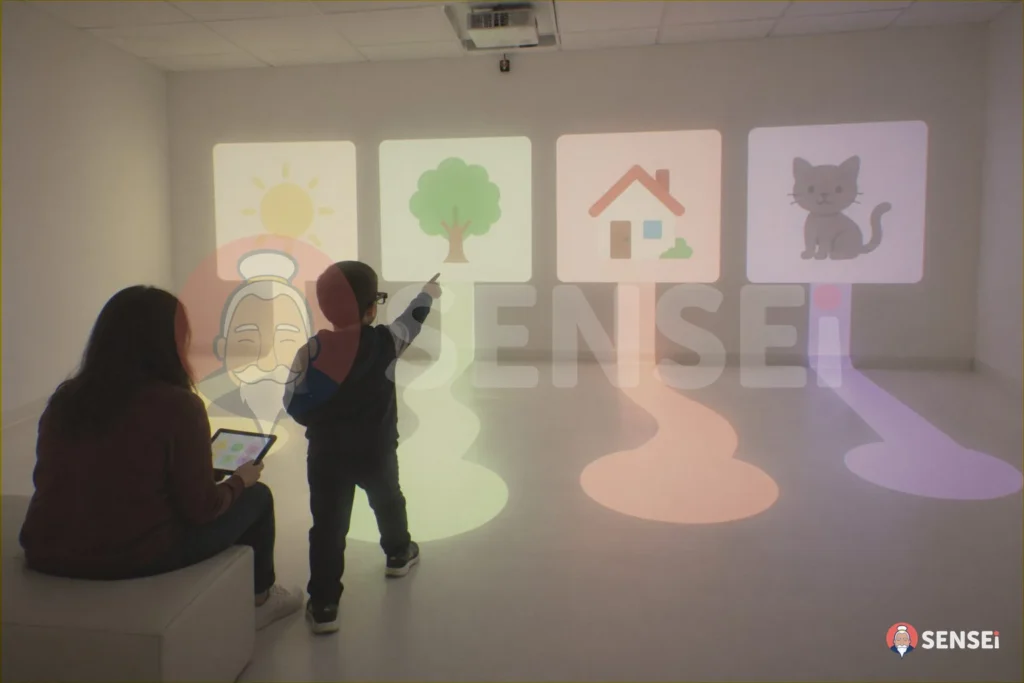
At Fondazione Angelo Custode (the Angelo Custode Foundation) in Bergamo, SENSEi is not a special room to visit once: it is part of the everyday work of therapists and educators. In one year, four multisensory environments support more than 50 children on their pathways, with over 40 professionals involved. Today it is our largest example of a magic room integrated into an entire service.
Who is Fondazione Angelo Custode?
The Foundation welcomes children and young people with disabilities and complex conditions, together with their families. It brings together a child neuropsychiatry hub, rehabilitation services and a day centre for adults with disabilities.
The need is clear: to give different teams a shared, flexible tool that can enrich different therapies without replacing them. And to do so while always keeping the person at the centre.
Four environments, one project
The four SENSEi environments are spread across different services, partly in the Foundation’s new home for children and families. The interactive projections interact with real sensory objects, such as bubble tubes built into the soft furnishings, lights and mirrors. Each environment is tailored to its spaces and its people, with flexible furnishings that also leave room for calm.
The collaboration is ongoing: training on the rooms, discussion sessions with the teams and new activities built together with the professionals. Not a package delivered, but a shared journey.
What experiences take shape in the room?
SENSEi does not replace therapies: it enriches them. Occupational therapy, psychomotor therapy, art therapy, speech and communication therapy, behavioural and sensory therapy, and music therapy can all use the room as an additional tool. Some examples:
- A river to cross: in a psychomotor session, alongside the materials on the floor, the projection turns the room into a scene, such as a river to cross by jumping from stone to stone;
- What’s the weather like?: simulating the weather and choosing the right clothes, to practise everyday living skills;
- Pointing to communicate: cause-and-effect activities in which the gesture of pointing becomes a way to be understood;
- Pathways with schools: shopping and cooking, emotions, plants and climate, road safety;
- Breathing: immersive videos dedicated to breathing and stress management.
The link with research
At the Foundation, the room is also a place for research. The project Occhio per occhio, mente per mente (Eye for an eye, mind for mind), on cognitive development through multisensory technologies, is supported by Fondazione Istituti Educativi di Bergamo and is presented to the press. In the study, gaze becomes a way of interacting: with eye-tracking glasses, for example, a train leaves the station only when the child looks at it.
Children who work in the SENSEi room report a markedly higher enjoyment of their sessions than the group following the usual pathway. The full results will be shared with the scientific publication.
The study continues a line of work that the SENSEi research group has pursued since the Magic Room: understanding how an interactive environment can engage children with neurodevelopmental disorders, as described in Engaging Children with Neurodevelopmental Disorder. In Bergamo, the principle of reverse inclusion can be seen every day: what is created for children with the most complex needs becomes a tool for every team. The group’s other publications, more than 40, are on the Research page.
What changes in a year
- 4 multisensory environments integrated into clinical and educational services;
- over 40 professionals involved in training and co-design;
- more than 50 children use the environments as part of their pathways;
- over 600 activities carried out;
- 35 new activities co-designed with the professionals.
The numbers tell only part of the story. Practitioners use the room beyond the initial novelty effect, to support learning and generalisation into everyday life. Over time they become autonomous in planning activities, and the room is also used as a space for self-regulation.
The Foundation describes the meaning of this work as follows: “putting technology at the service of the person and creating new possibilities for observation, relationship and learning”.
Why is this a significant case?
Angelo Custode shows how a multisensory environment can become shared infrastructure: the same platform, different services, different goals. What makes the difference is training and co-design, which make the teams autonomous. Find out how SENSEi CARE and the magic room work.
Frequently asked questions
How many SENSEi environments are there at the Foundation?
Four, spread across different services and integrated into clinical and educational pathways.
Who creates the activities?
SENSEi offers a library of activities; in one year the Foundation’s professionals co-design 35 new ones.
Does SENSEi replace therapies?
No. It is an additional tool that therapists use within their pathways.
How much does an environment like this cost?
It depends on the configuration: space, experiences, training and services. Contact us for an assessment.
Do you work in a school, a centre or a museum and want an environment like this? Tell us about your project: we start from the needs of the people who will use it.