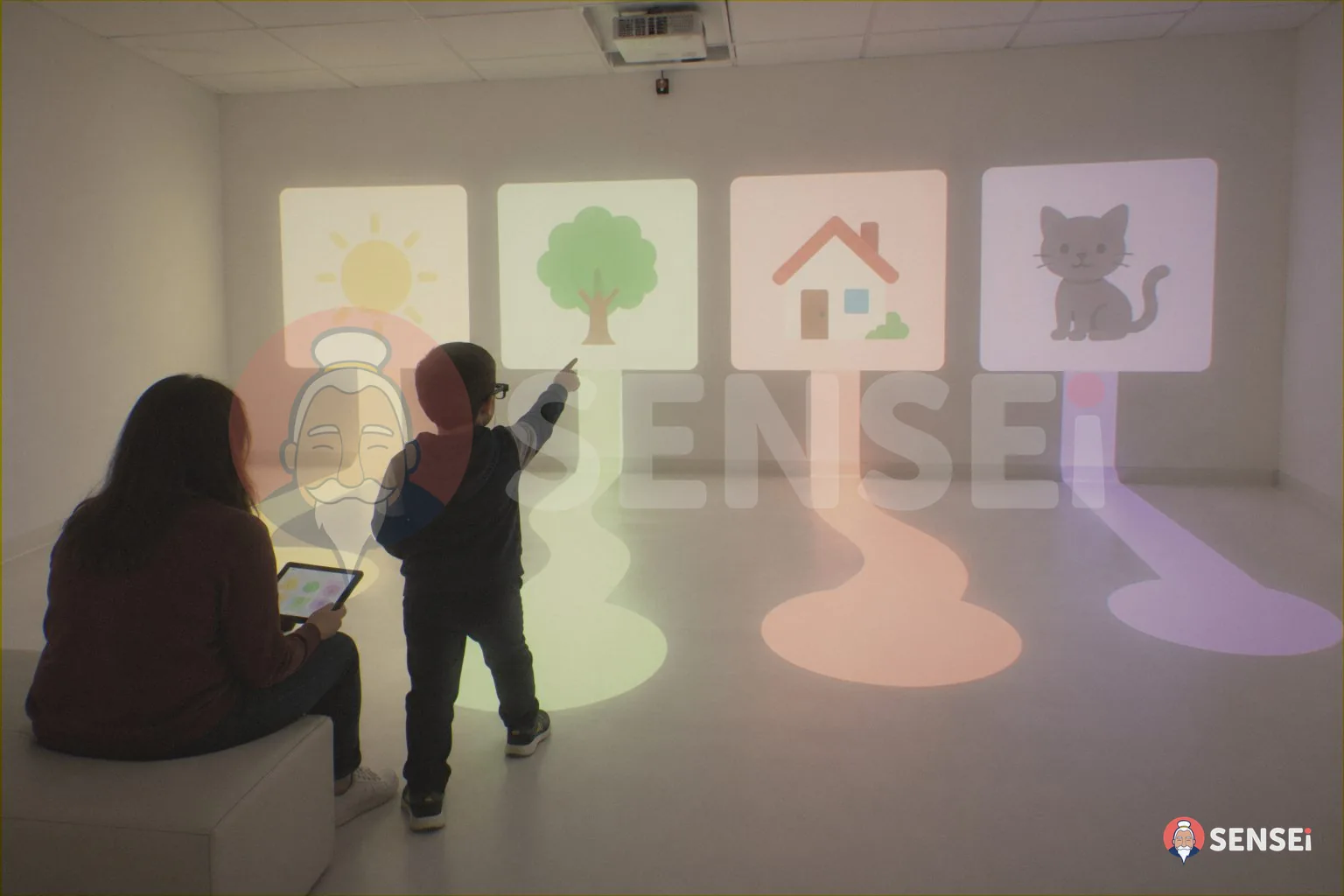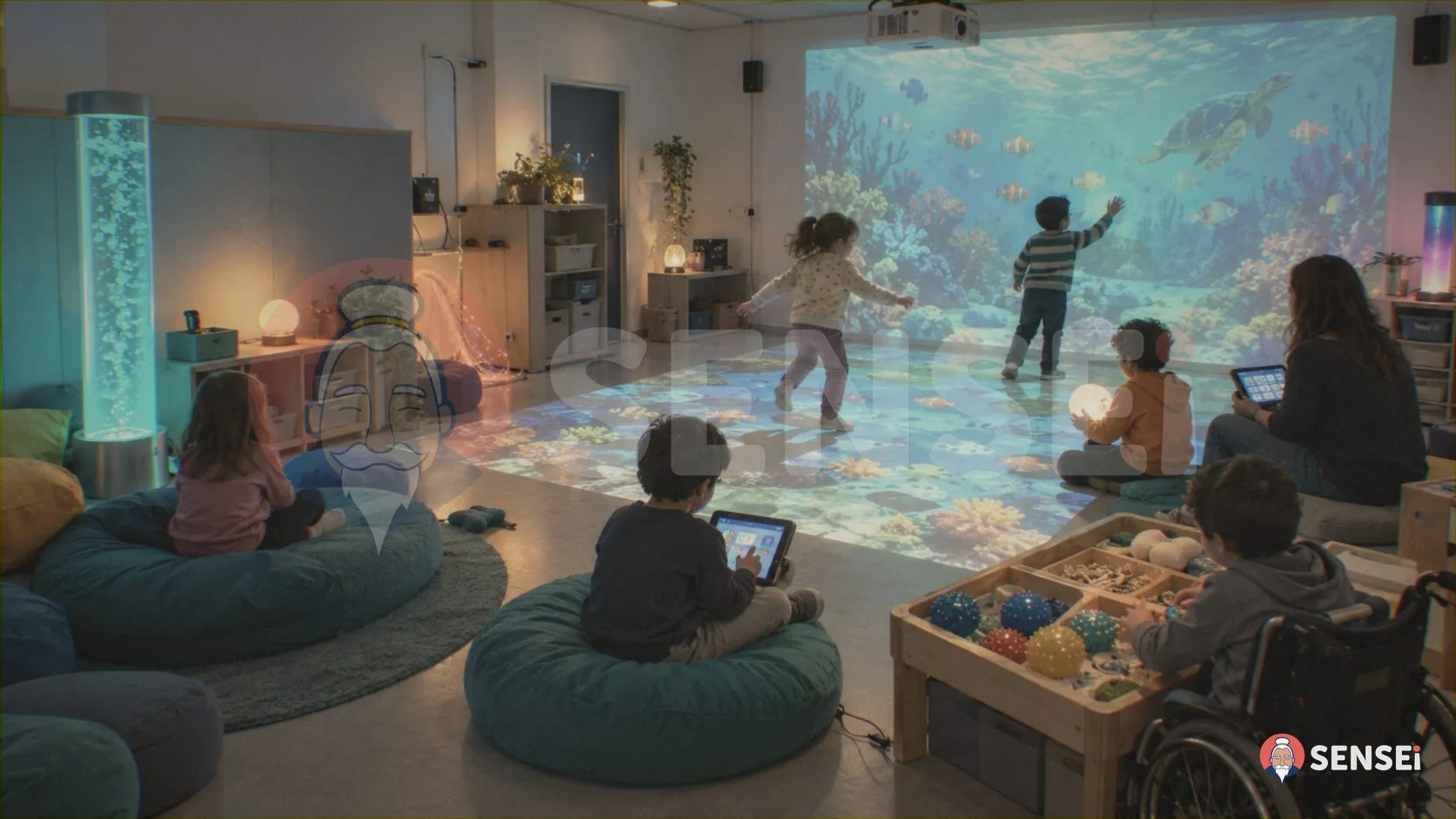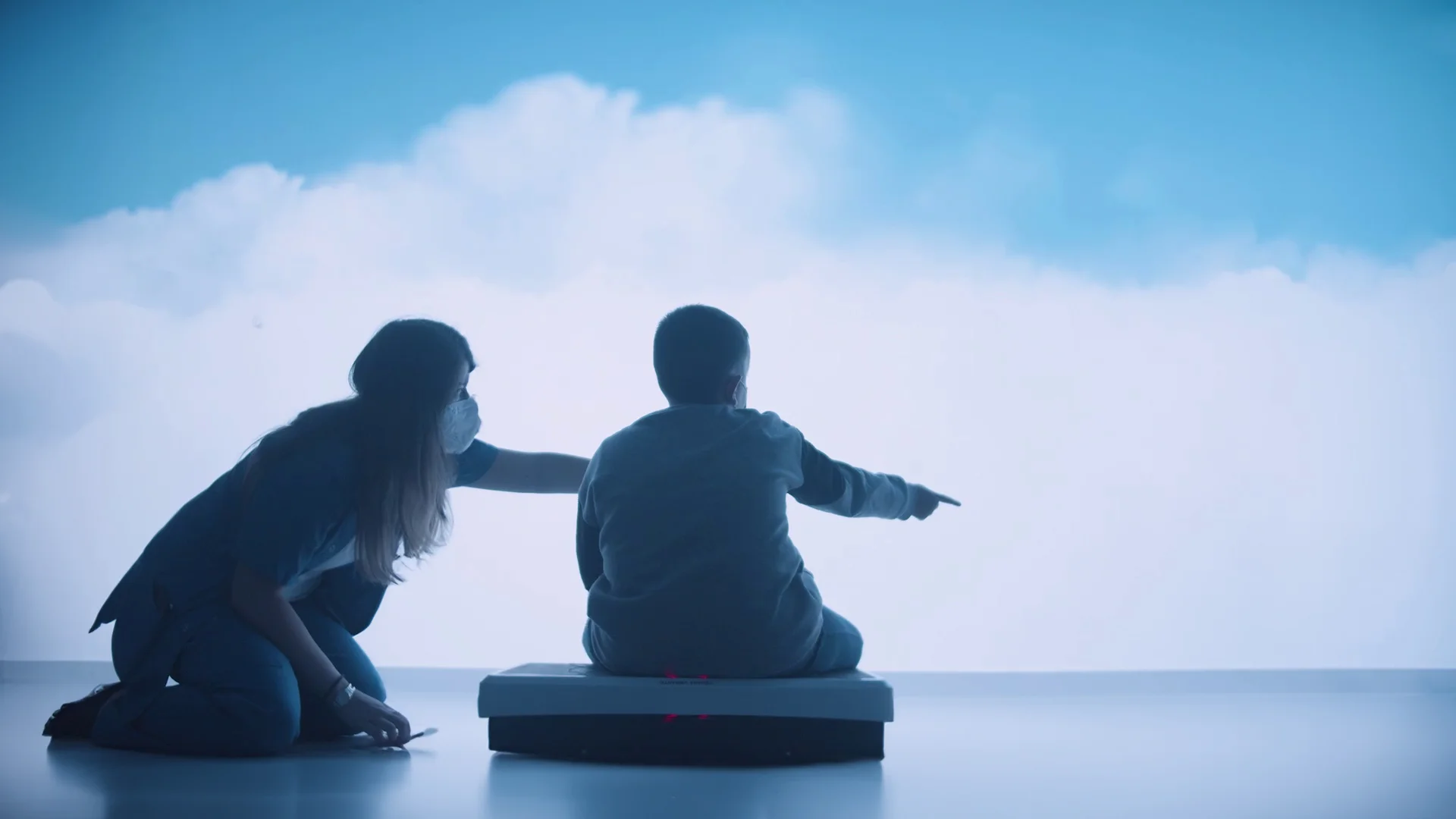

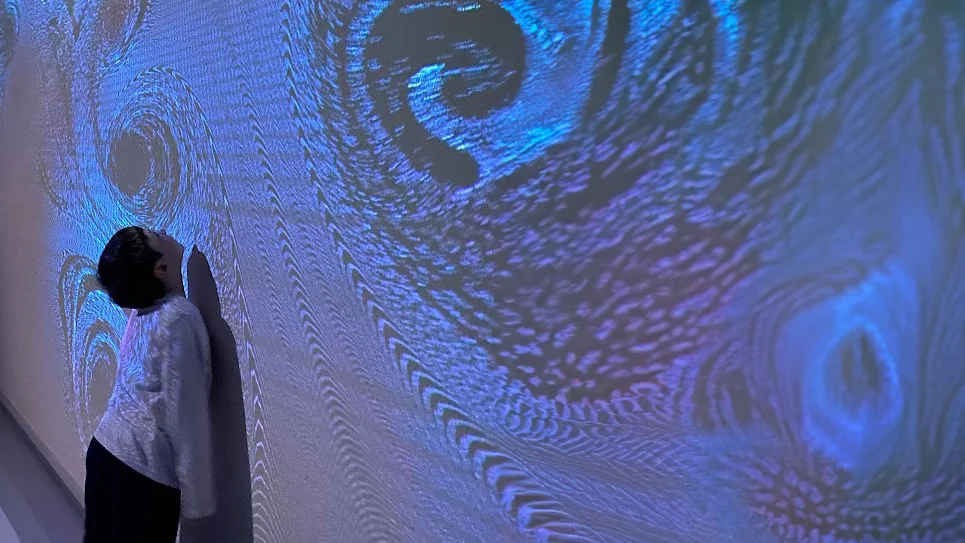
An immersive exhibition takes visitors inside the artwork: images on walls and floor, sounds and lights that respond to their movements. For a temporary show it is a powerful way to draw visitors, but it needs good design: it must tell a story, be accessible and be able to change with the next exhibition.
Where do you start?
With the story, not the projector. First ask yourself: what should visitors feel and understand when they leave? An artwork, a historical period, a place, an emotion. Technology comes afterwards, at the service of the story.
Immersive or interactive: what is the difference?
In an immersive room visitors watch: images flow around them. In an interactive room they change them: a step, a gesture, a touch. Interaction keeps attention high, engages children and families and makes every visit different.
The design steps
- Theme and audience: who will come? Schools, families, tourists, disabled visitors?
- The space: surfaces, daylight, routes, exits. Small rooms work too.
- The content: images and sounds drawn from the artworks, written with curators and educators.
- The interaction: what happens when visitors move or touch.
- Accessibility: adjustable stimuli, plain-language texts, a low-stimulation slot.
- Running it: who switches it on, who changes the scene, what happens if the network is down.
- Afterwards: what is left when the exhibition ends?
Why think about reuse from the start?
An installation built for a single show risks ending up in storage. With SENSEi ART the system is ceiling-mounted, the room stays free and content is selected from a tablet, exhibition after exhibition. It also works without internet. So the same room hosts the temporary show, then workshops with schools, then a quiet hour for visitors with sensory needs.
What should you ask a supplier?
- Can you change the content without them?
- Does the system work without internet?
- Can images be adjusted for visitors sensitive to light and sound?
- Do staff receive training?
- Is there support after the opening?
Have an exhibition coming up? Get in touch: we start from the story you want to tell.