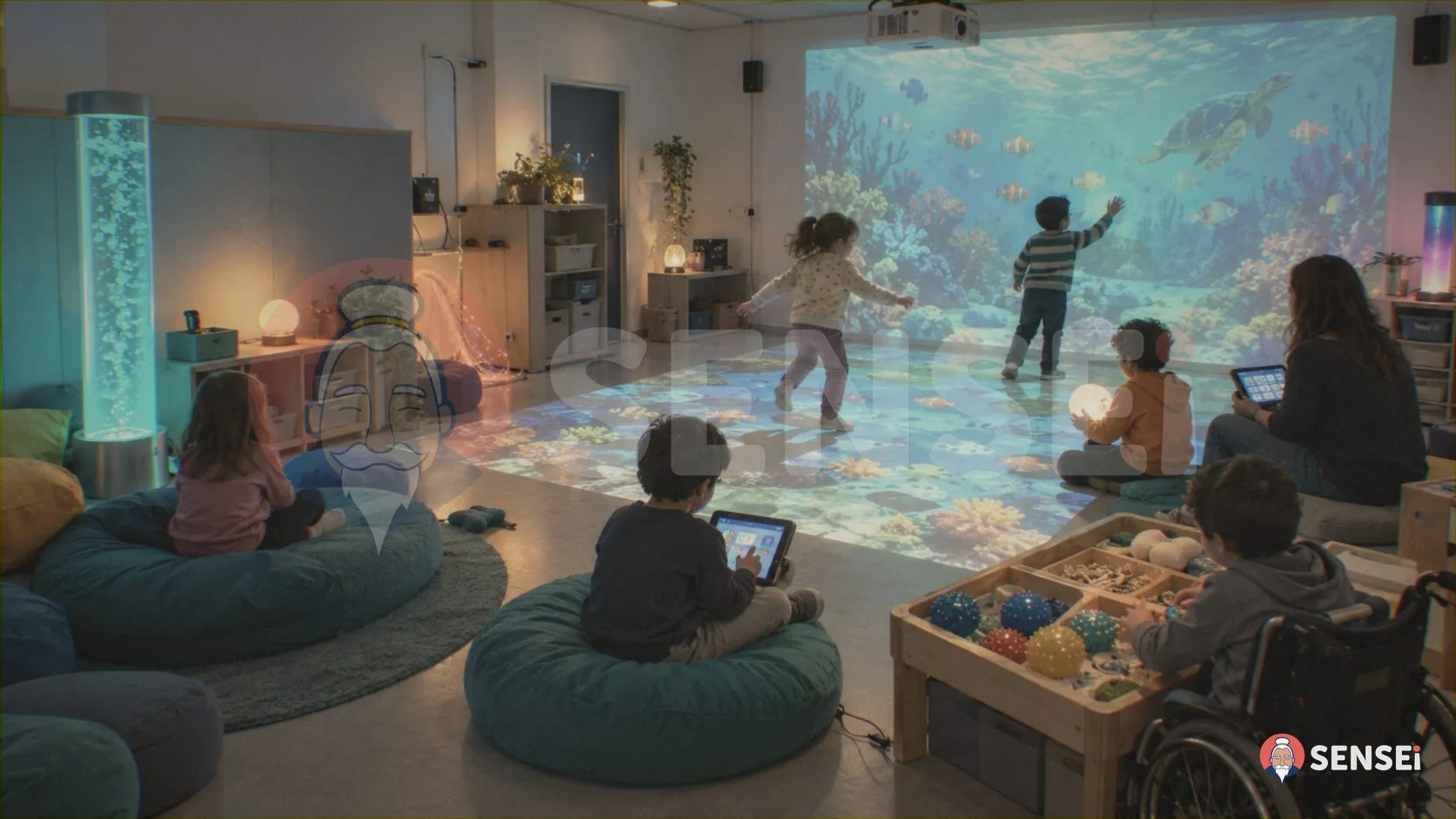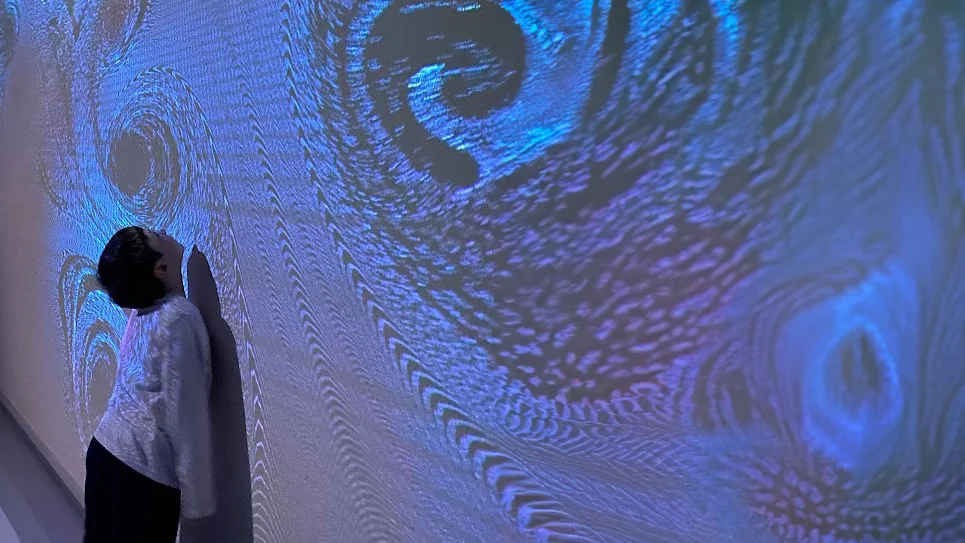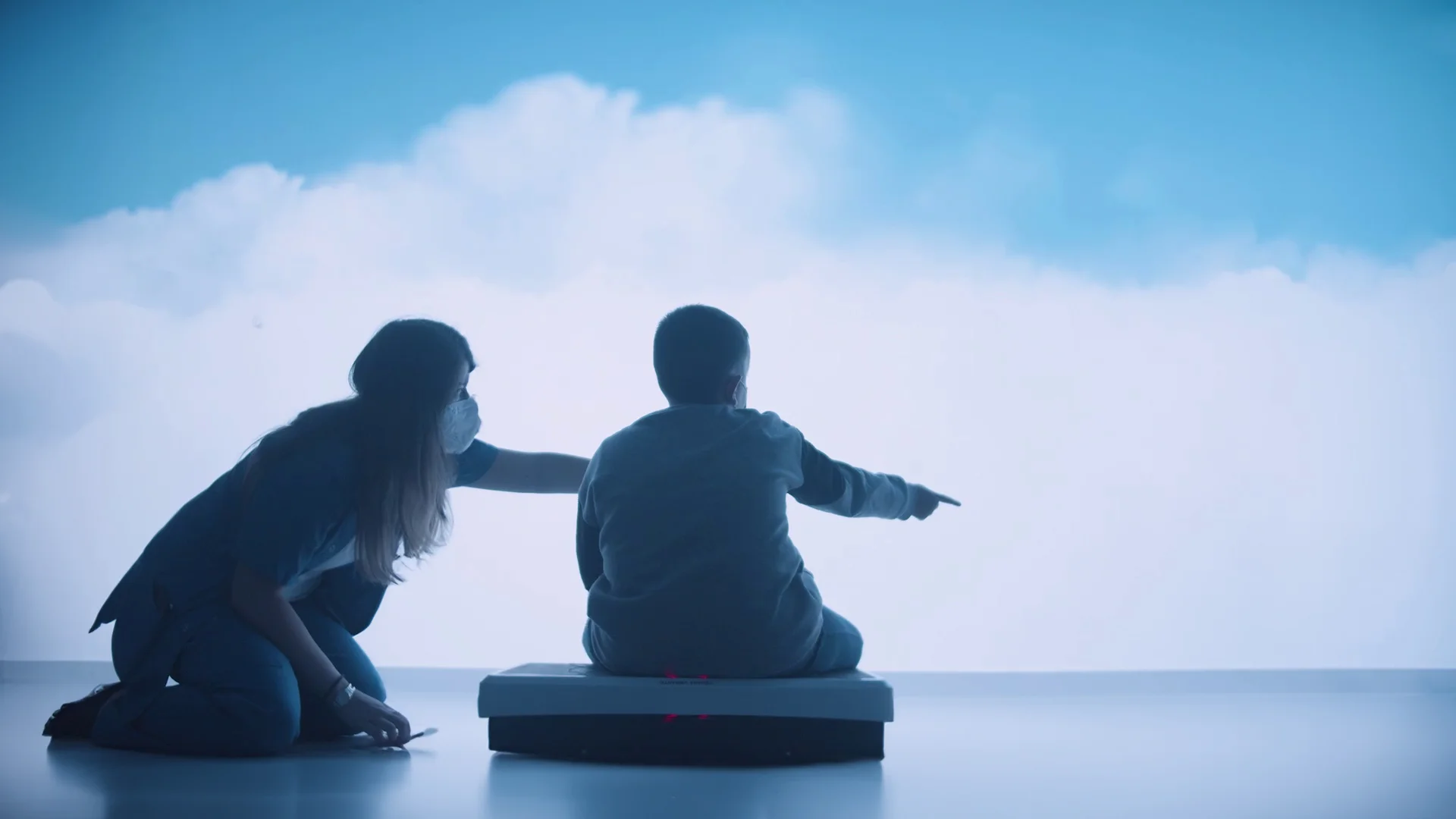

The research project Occhio per Occhio, Mente per Mente (Eye for an Eye, Mind for a Mind) was presented to the press at Fondazione Angelo Custode in Bergamo, Italy, which promoted it with support from Fondazione Istituti Educativi di Bergamo. SENSEi provides its technology: an immersive room that responds to children’s gaze.
What the project is about
Vision is the main channel through which children take in information about the world, and when it is fragile it also limits attention and learning. The project works on the visual attention of children aged 6 to 11 with neurodevelopmental disorders, followed by the Foundation’s child neuropsychiatry service.
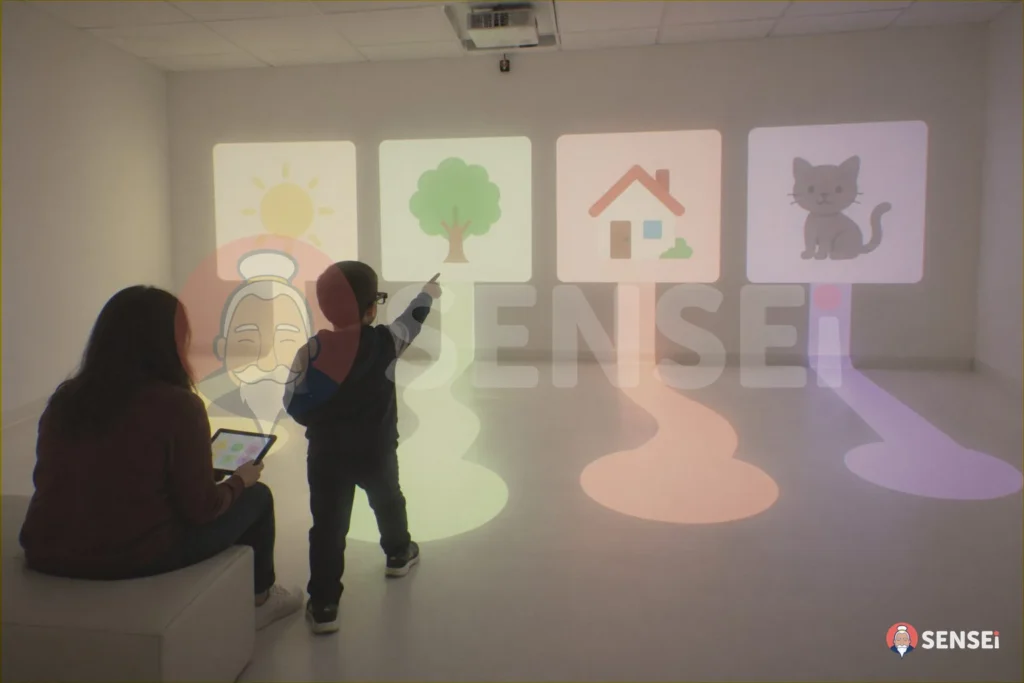
Children wear light eye-tracking glasses that need no calibration. Gaze becomes a way to interact with the projections, for example choosing a card by looking at it for about one second, and at the same time a continuous measure of how the child looks. The scientific leads are Silvio Maffioletti for optometry and Mirko Gelsomini for technology, together with the Foundation’s teams.
What the press wrote
- L’Eco di Bergamo (read the article (PDF, Italian)), “Stanza multisensoriale per aiutare i bambini con disabilità cognitiva” (A multisensory room to help children with cognitive disabilities): the immersive room that responds to the child’s gaze and more;
- Corriere della Sera Bergamo (read the article (PDF, Italian)), “Uno sguardo sui disturbi dell’attenzione” (A look at attention disorders): the two phases of the project, data collection with the glasses and the set-up of personalised multisensory environments;
- BergamoNews, “Tecnologia per superare la fragilità cognitiva” (Technology to overcome cognitive fragility): the project, with statements from both Foundations and the City of Bergamo’s councillor for social policies;
- Bergamo TG and SeilaTV News: the TV reports below (in Italian).
TV reports
Bergamo TG
SeilaTV News
How the study went
The study is complete. Twenty children, randomly assigned to two groups, took part in seven weeks of sessions with no dropouts. The group that worked in the SENSEi room showed improvements in visual attention and oculomotor skills similar to those of traditional therapy, and children and families rated the sessions more highly. The glasses collected more than 200 recordings and about 3,700 trials without asking children for any extra activity.
Two scientific papers are under review, and full results will be shared on publication. To see how SENSEi is used every day at the Foundation, read the Fondazione Angelo Custode case study.