
The SEND reform proposals for England do not require schools to build sensory rooms. They point towards more inclusion in mainstream schools, a national network of Inclusion Bases and flexible spaces that respond to specific, evidenced sensory needs.
This guide explains what has been proposed, what the Department for Education (DfE) has already published as guidance, and what it means for pupils, teachers, SENCOs and school leaders who are planning a sensory room or a multisensory space. One point matters above all: at the time of writing (October 2026), the reform is a set of proposals under consultation. It is not law.
What is the SEND reform 2026?
The Schools White Paper Every Child Achieving and Thriving and a consultation called SEND Reform: putting children and young people first are published on 23 February 2026. The consultation is open from 23 February to 18 May 2026 and covers the 0 to 25 special educational needs and disabilities (SEND) system in England.
According to the House of Commons Library, the main proposals include a shift of support towards mainstream settings, a new four-tier model of support (universal, targeted, targeted plus and specialist), digital Individual Support Plans and more specialist support for schools.
The consultation is now closed. The DfE says it is analysing the feedback, and the government response has not yet been published (October 2026).
Is the SEND reform law yet?
No. The legislative parts of the reform are meant to be taken forward by an Education for All Bill, announced in the King’s Speech on 13 May 2026. As of early October 2026, the Bill has not been introduced to Parliament. The current SEND system stays in place until the new one starts.
| Date | Milestone | Status (October 2026) |
|---|---|---|
| 23 February 2026 | White Paper and SEND reform consultation published | Published |
| 13 May 2026 | Education for All Bill announced in the King’s Speech | Not yet introduced |
| 18 May 2026 | Consultation closes | Government response awaited |
| June 2026 | Inclusive education estates design guidance | Published |
| 25 June 2026 | Inclusion bases in schools guidance | Published |
| September 2029 | New support system expected to start | Proposed |
| September 2030 | Earliest point at which existing EHCP support would change | Proposed |
For schools, the practical message is simple. Plans made today should work under the current system and still make sense if the proposals go ahead.
What are Inclusion Bases?
Inclusion Bases are provisions inside mainstream schools for children and young people with additional needs. In the DfE guidance, the term replaces “SEN unit”, “resourced provision” and “pupil support unit”. There are two models:
- Support bases, commissioned and funded by individual schools, academy trusts or local groups of schools;
- Specialist bases, commissioned and funded by the local authority.
The consultation states: “In time, we expect every secondary school will have an Inclusion Base, with an equivalent number of places in local primary schools.” It adds that where new places are needed, “including by repurposing and improving existing space”, this can be supported by the government’s capital investment. We cover funding in our guide to sensory room funding in England, and the design side in designing an Inclusion Base.
Does the reform make sensory rooms mandatory?
No. Nothing in the proposals or in the new guidance makes sensory rooms compulsory. In fact, the DfE asks schools to be careful. The Inclusive education estates guidance says that, because sensory needs vary so much between individuals, investment in sensory rooms should only be made “where there is a clear, specified need, with specialist and evidence-based advice on its benefits and usage, rather than as a generic intervention for all pupils” (p. 26).
The same document notes that some settings may need quiet, calm spaces more than sensory rooms. Where a clear need exists, it lists options such as “purpose-designed sensory rooms with controlled lighting, tactile features, soft play, and immersive equipment, such as bubble tubes and projected image systems” (p. 27). In its examples for early years settings, it describes multi-sensory rooms with controlled dimmable lighting, sound, textures and interactive equipment (p. 42).
The Inclusion bases in schools guidance goes one step further on flexibility. It says that “multi-purpose spaces rather than those with permanently installed sensory facilities can support a broader range of learning and sensory experiences than simply creating a ‘calming’ space” (p. 34).
What does this mean for a school planning a sensory room?
Read together, the proposals and the guidance suggest six practical principles.
- Start from needs. Document the sensory and learning needs of the pupils who will use the space, with advice from specialists such as occupational therapists or educational psychologists.
- Plan for several uses. One room may need to offer calm, sensory stimulation, small group teaching and one-to-one work across the same day.
- Prefer adaptable experiences. Light, sound and images that change for each pupil fit the guidance better than a single fixed set-up.
- Keep it close to the classroom. The estates guidance recommends low-stimulus spaces near teaching areas, so pupils can move with minimal disruption.
- Measure what happens. The Inclusion Base guidance asks schools to monitor engagement, wellbeing, behaviour and progress, including in sensory areas.
- Never use the space as a sanction. The guidance is explicit that access to an Inclusion Base “should never be used as a sanction or for removal from the classroom”.
Where does an interactive multisensory room fit?
A traditional sensory room is often designed around one purpose: relaxation. The direction of travel in England asks for something broader. Spaces should support regulation and learning, adapt to each pupil and show their impact.
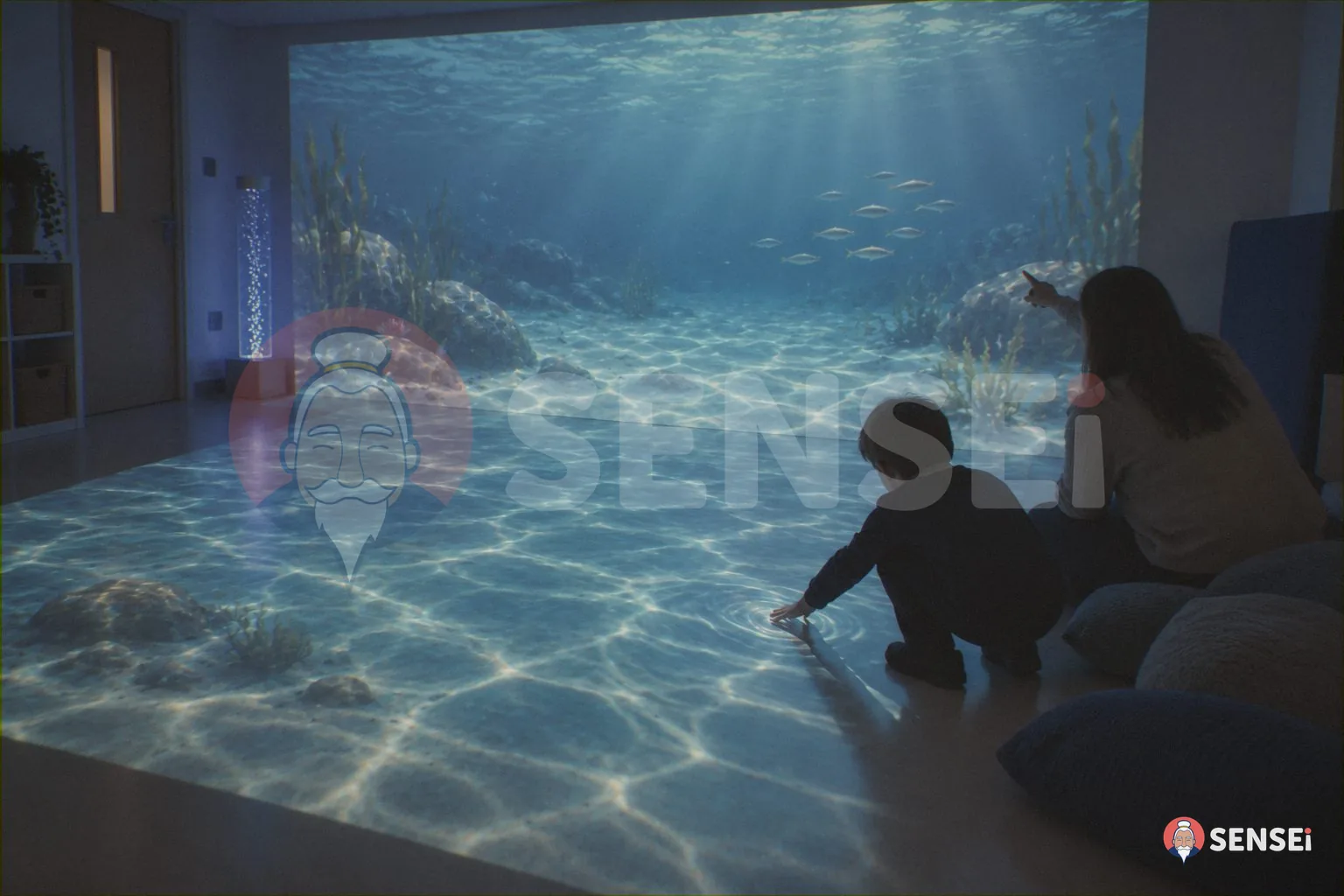
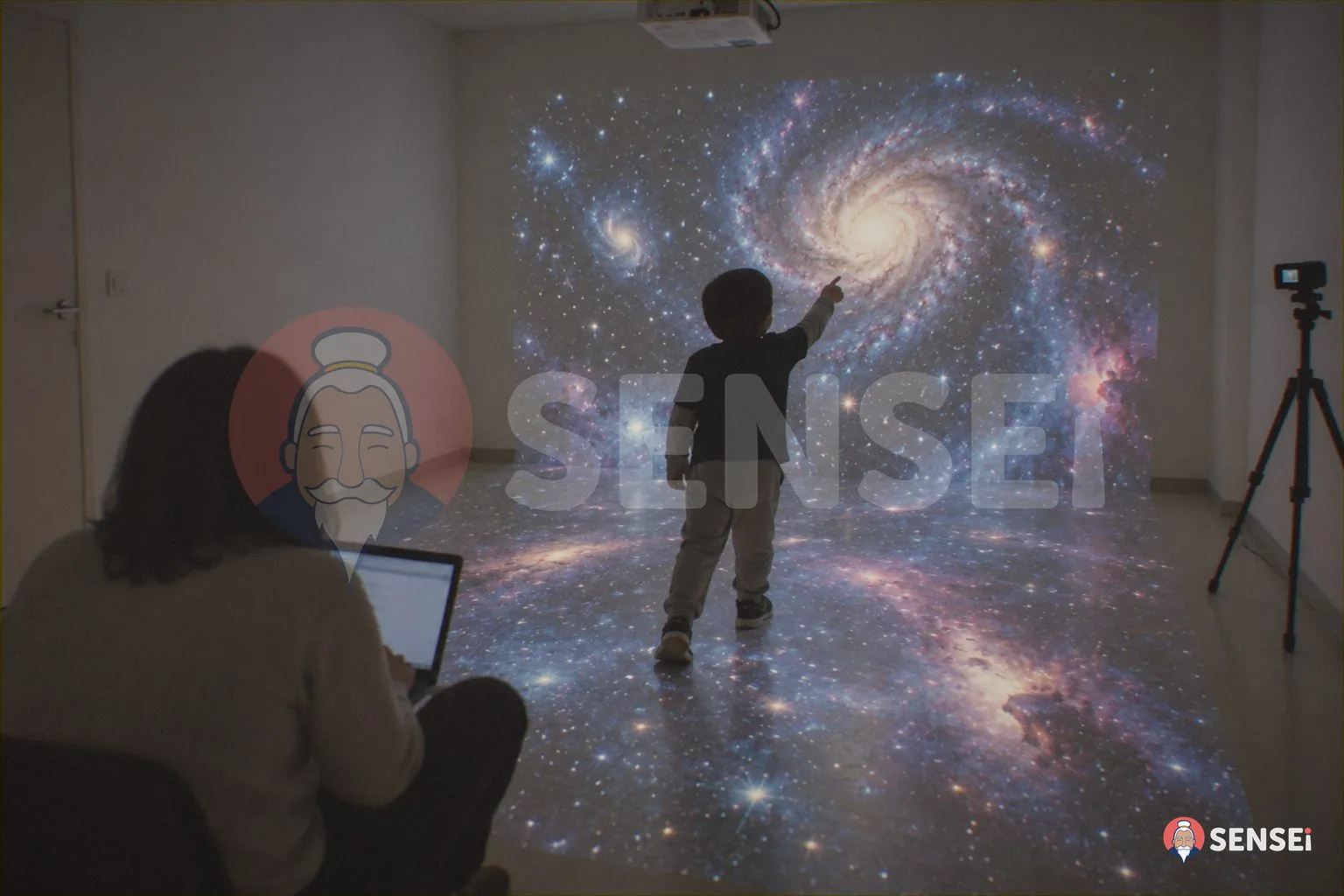
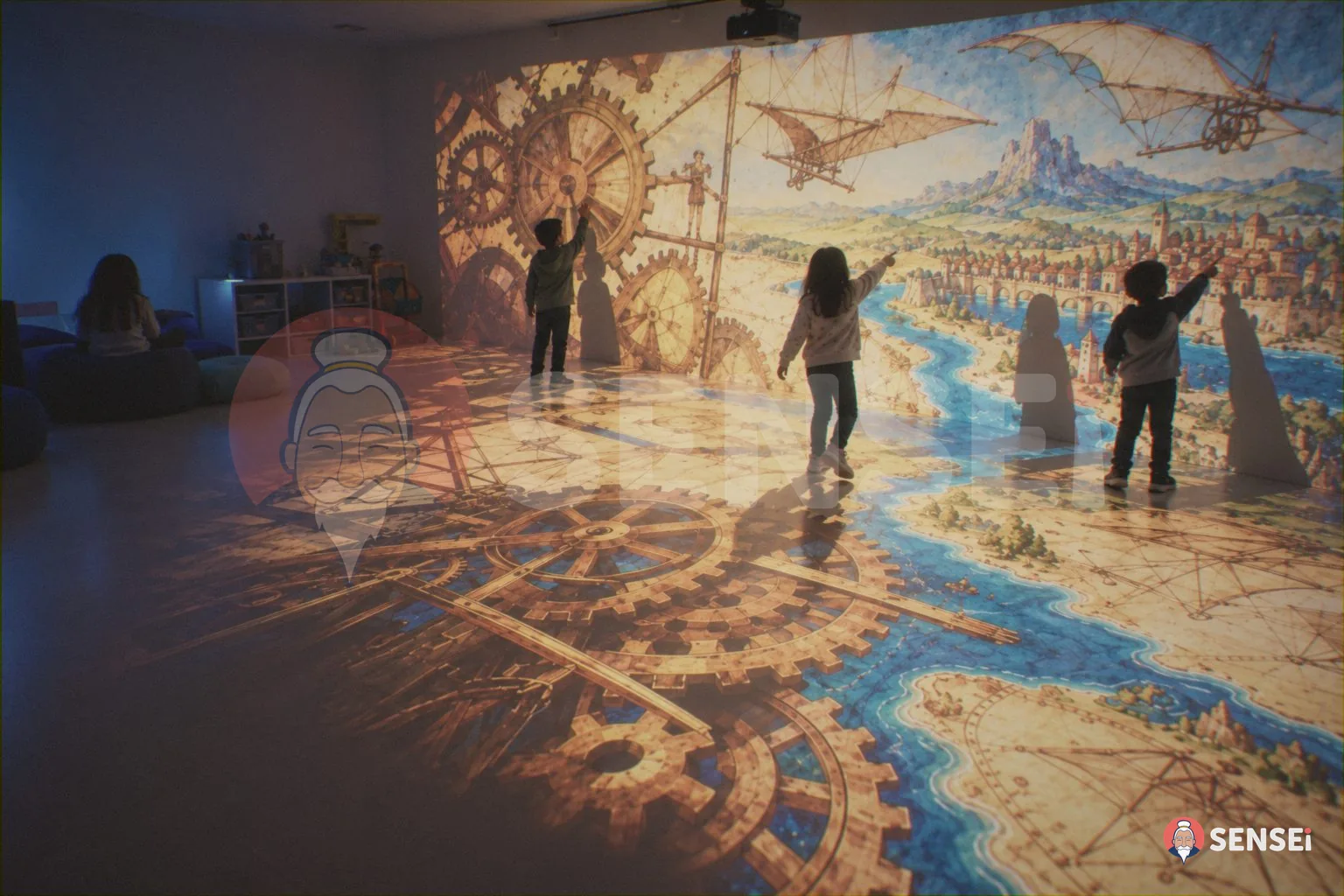
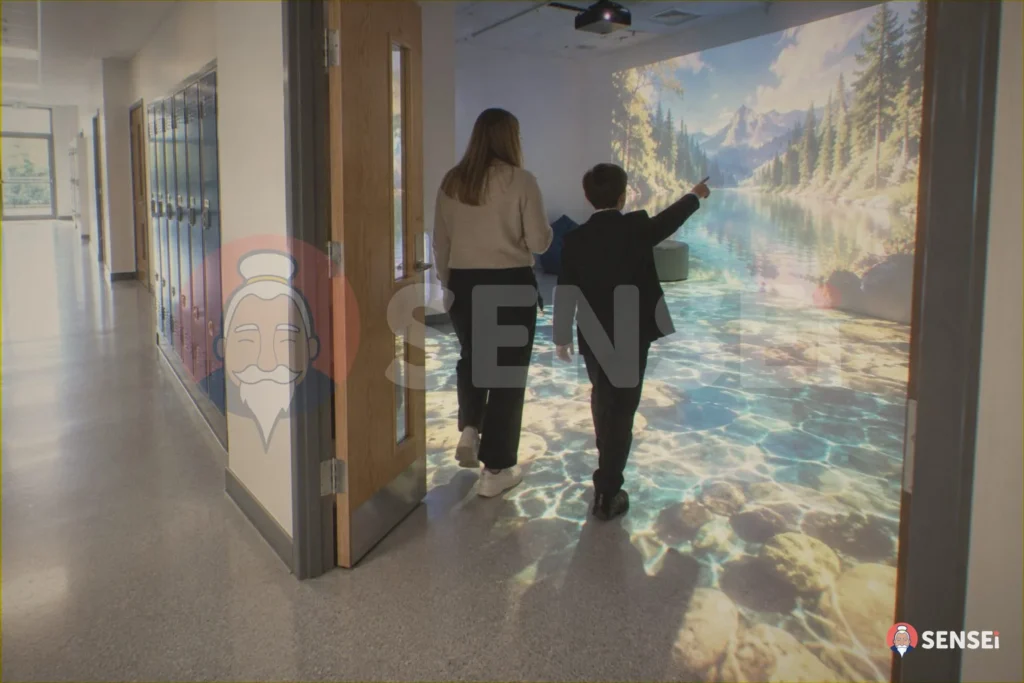
The SENSEi Magic Room turns an existing room into an adaptive multisensory environment: walls and floor become interactive and respond to pupils’ gestures and movement, with nothing to wear. The teacher or teaching assistant guides each session from a tablet, and the same room moves from a dim, quiet scene to an active group lesson in seconds. No purpose-built room is needed.
What does the research add?
The DfE asks for evidence-based advice before schools invest. SENSEi grows out of more than ten years of research in human-computer interaction at Politecnico di Milano, with the Magic Room and Magika projects, and today rests on more than 40 peer-reviewed publications on multisensory and interactive environments for children with neurodevelopmental conditions. The work continues with SUPSI in Switzerland, NTNU in Norway and UC Berkeley in the USA.
Two studies speak directly to the new guidance. In a field study with 175 children aged 6 to 10, published at ACM IDC 2023, the SENSEi research group compares different ways of interacting with a multisensory room and finds differences between them that matter for learning design. In a controlled study at ACM CHI 2020, 48 children aged 6 to 8 learn through whole-body movement in an immersive room, and the group finds educational potential in the approach.
Activities follow Universal Design for Learning and a principle we call reverse inclusion: they start from the most complex needs, so the whole class benefits.
What changes for pupils, staff and schools?
- Pupils find one space to calm down, move, play and learn, with experiences that adapt to their sensory profile.
- Teachers and teaching assistants lead sessions from a tablet, switch between calm and active scenes, and create curriculum-linked activities with Eureka.
- SENCOs receive interpretable session reports that support the monitoring of engagement, wellbeing and progress the Inclusion Base guidance asks for.
- Therapists and specialists co-design activities with school staff, aligned with each pupil’s goals.
- School leaders get one multi-purpose room for individuals, small groups and whole classes.
More than 50 SENSEi rooms are already in use in schools and care settings. Read our case studies and see how this works in SENSEi EDU for schools.
What should schools do now?
While the government response is awaited, schools can take some low-risk steps:
- audit existing spaces (empty classrooms, intervention rooms, libraries) that could become multi-purpose;
- gather evidence of pupils’ sensory needs with specialist input;
- publish the inclusion strategy statement required by the Inclusive Mainstream Fund conditions by 31 December 2026;
- talk to the local authority about its plans for Inclusion Base places and high needs capital;
- read the evidence on sensory room benefits before choosing what goes in the room.
Frequently asked questions
Is the SEND reform 2026 already in force?
No. It is a set of proposals. The consultation closed on 18 May 2026 and, as of early October 2026, the Education for All Bill has not been introduced. The current system remains until the new one starts.
When would the new SEND system start?
The proposals expect the reformed system to start from September 2029. Support set out in existing EHCPs would not change before September 2030.
Will every school need a sensory room?
No. The DfE guidance says sensory rooms should be funded only where there is a clear, specified need, backed by specialist and evidence-based advice. Calm spaces may be more useful in some settings.
What is an Inclusion Base?
A provision inside a mainstream school for pupils with additional needs. Support bases are funded by schools or trusts; specialist bases are funded by the local authority.
Does the reform apply to Wales, Scotland or Northern Ireland?
The proposals described here concern the SEND system in England. The devolved nations have their own frameworks.
See it in a real room
Want to see how one room can work as a calm space, a sensory space and a classroom? We can show you a SENSEi room in action and talk through your pupils’ needs. Book a demo.
Sources
- DfE and DHSC (2026). SEND Reform: putting children and young people first. Government consultation, GOV.UK
- House of Commons Library (2026). The Schools White Paper 2026: SEND reform (CBP-10550)
- DfE (25 June 2026). Inclusion bases in schools. GOV.UK guidance
- DfE (June 2026). Inclusive education estates (PDF)
- DfE (2026). Inclusive mainstream fund for schools: conditions of grant 2026 to 2027