Research suggests that sensory rooms can help some children and adults focus their attention and reduce repetitive, sensory and challenging behaviours during sessions. The evidence is still limited, however: studies are few and small, and the way the room is used seems to matter as much as what is in it.
This article summarises what peer-reviewed studies say about the benefits of multi-sensory rooms, where the evidence is weaker, and what this means in practice for pupils, teachers, SENCOs and therapists in schools and care settings.
What is a multi-sensory room?
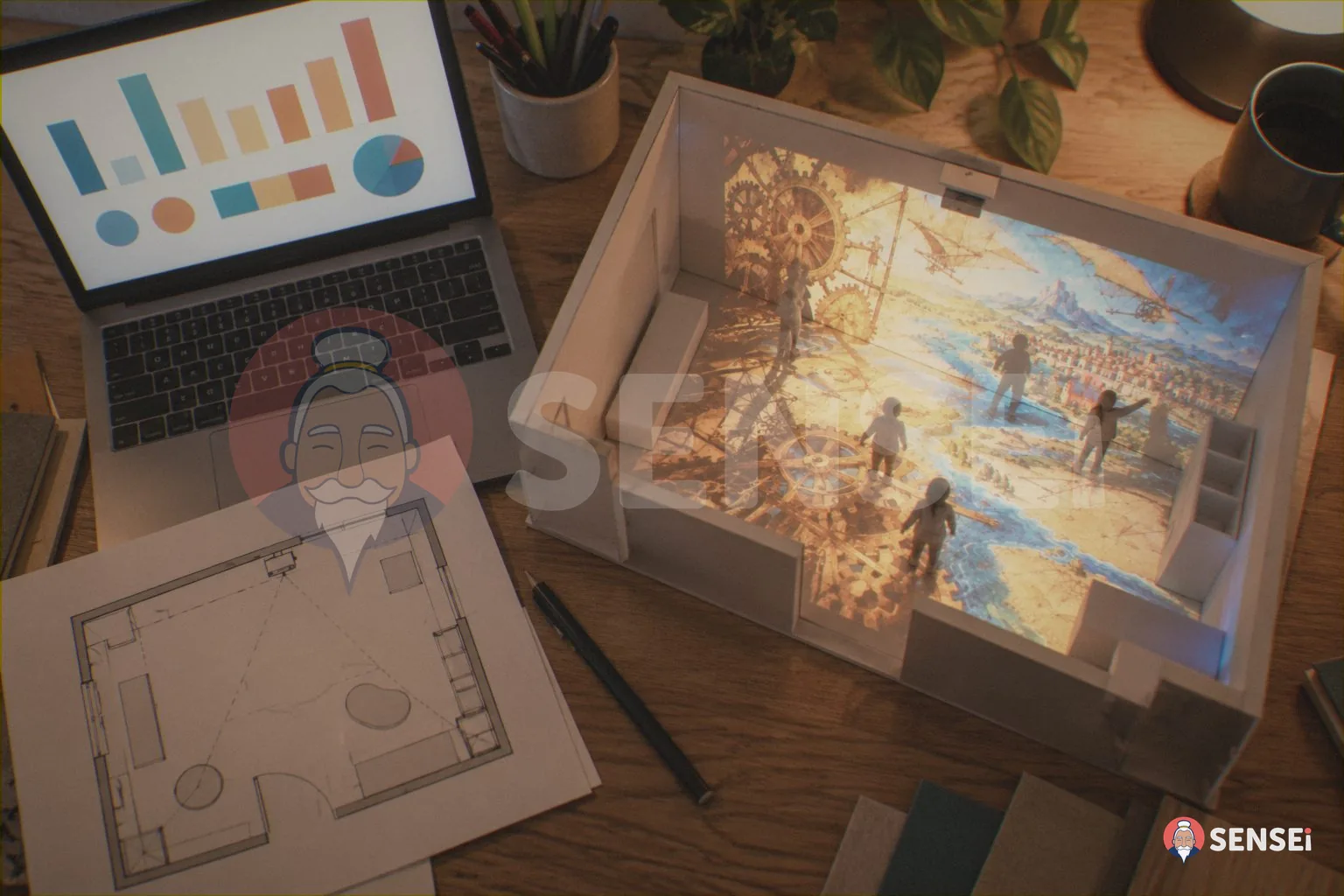
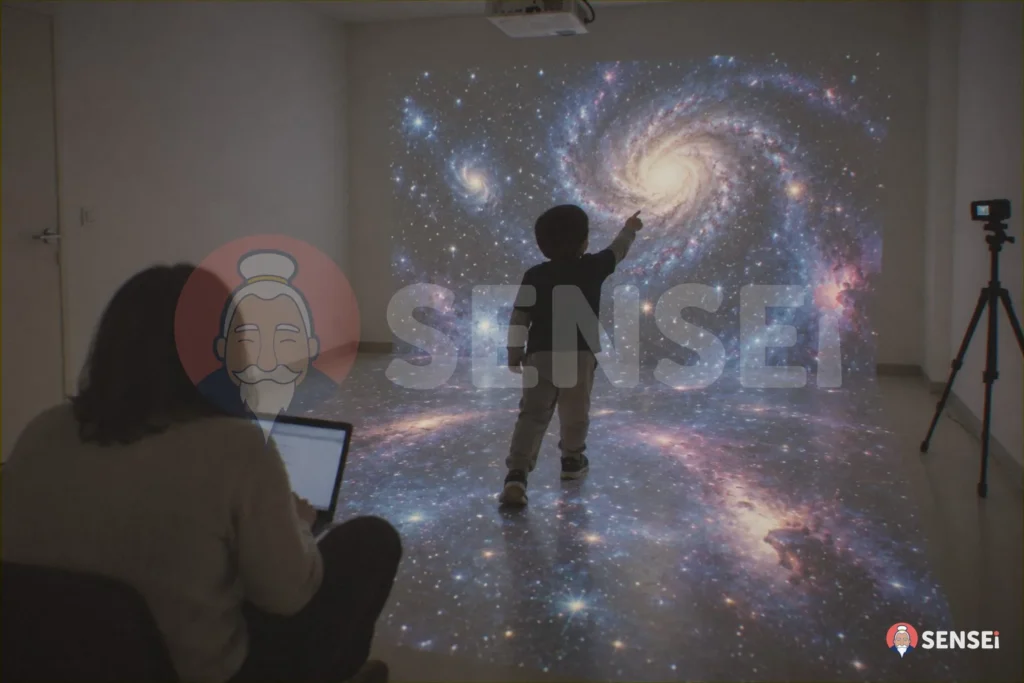
A multi-sensory room, also called a multi-sensory environment (MSE), sensory room or Snoezelen® room, is a space that creates experiences of light, sound, touch and sometimes smell, for example with bubble tubes, tactile panels or projected images. Traditional rooms are mostly designed for relaxation; newer rooms add interactivity, so the room responds to what people do.
What does the research say about sensory room benefits?
Systematic review in autism (2025)
Leonardi and colleagues screen 1,247 records and include 10 studies of multisensory environment interventions for autistic children and adults. Four studies report reductions in stereotypic behaviour, while others suggest positive effects on sustained attention and on aggressive and sensory behaviours. The authors conclude, however, that there is “insufficient evidence due to the paucity of literature, the significant variation between interventions, and the small sample sizes”.
Scoping review in intellectual and developmental disabilities (2020)
Breslin and colleagues review 13 studies on the within-session effects of MSEs for people with intellectual and developmental disabilities. They find “preliminary support” for using MSEs in clinical settings to reduce anxiety and challenging behaviours during care, and call for more research on efficacy.
Control of the room matters (2022)
At the Wales Autism Research Centre, Cardiff University, Unwin, Powell and Jones study 41 autistic children aged 4 to 12. Each child uses the same room in two ways: in one, the sensory changes happen automatically; in the other, the child controls them. With control, children pay more attention and show fewer repetitive and sensory behaviours, less stereotyped speech and lower activity levels. Social behaviour, anxiety, positive affect and arousal do not change significantly.
The authors note limitations: sessions are one-to-one with an unfamiliar adult, and the controlled condition includes more sensory changes. Their conclusion is careful but useful: providing control “may help create better conditions for learning”.
Children have different preferences (2024)
The same team observes how the 41 children choose to spend five minutes of free play. The bubble tube and a touch, sound and light board are the most popular; fibre optics and a tactile board receive less attention. Preferences are linked to each child’s sensory profile and non-verbal ability. In short, there is no single “best” experience for every child.
What practitioners report (2021)
Interviews with 10 practitioners and a survey of 102 more find shared beliefs: MSEs are perceived to benefit behaviour, attention and mood; use should be centred on the child’s needs; they work best when the practitioner plays an active role; and they can be used for teaching and learning. These are perceptions, not measured outcomes, but they help explain how rooms are used in schools.
Research on interactive multisensory environments
This is where the SENSEi research group works. For more than ten years, first at Politecnico di Milano with the Magic Room and Magika projects and now with partners such as SUPSI, NTNU and UC Berkeley, the group studies how interactive rooms can support play, learning and inclusion. The result is more than 40 peer-reviewed publications. Three studies stand out:
- Magic Room (IEEE Pervasive Computing): over four months, 19 children with severe neurodevelopmental conditions and 8 caregivers use the room in two therapeutic centres in Italy. The group describes the exploratory results as encouraging.
- Interaction modalities (ACM IDC 2023): a field study with 175 children aged 6 to 10 compares five ways of interacting, such as feet, hands and voice, and finds differences between them, with design implications for learning.
- Embodied learning (ACM CHI 2020): a controlled study with 48 children aged 6 to 8 finds educational potential in whole-body learning in an immersive room.
More recently, a study with UC Berkeley and NTNU in the British Journal of Educational Technology shows that, when pupils learn mathematics through movement, feedback from the system and feedback from the teacher are complementary. The common thread: the room works best as a partner to the adult, not a replacement.
Sensory room benefits at a glance
| Possible benefit | What studies indicate | Strength of evidence |
|---|---|---|
| Attention and engagement | Increased attention, especially when the child controls the room | Promising, few studies |
| Repetitive and sensory behaviours | Reductions reported in several studies | Promising, small samples |
| Challenging behaviour and anxiety | Reductions during sessions in clinical settings | Preliminary |
| Mood and wellbeing | Reported by practitioners; mixed in experiments | Limited |
| Learning | Better conditions for learning; educational potential of embodied, interactive activities | Emerging |
| Long-term change | Not yet well studied | Insufficient |
What the research does not show
Sensory rooms are not a treatment for autism or any other condition, and the studies do not support using them as a generic intervention for all pupils. The DfE takes the same line: its Inclusive education estates guidance says sensory rooms should be funded only where there is a clear, specified need, with specialist and evidence-based advice. For the policy context in England, see SEND reform 2026 and sensory rooms.
How to get the most out of a multi-sensory room
The research points to a few practical lessons:
- Give children control over what changes and when, through touch, movement or simple choices.
- Start from the individual. Observe each child’s sensory profile and preferences before planning sessions.
- Keep the adult active. Practitioners believe the room works best with an engaged adult, not as a place to leave a child.
- Set goals and record outcomes, such as attention, regulation and participation, so you can see what works.
- Use the room for learning too, not only for calm. See regulation rooms that do more.
Where SENSEi fits
SENSEi puts these lessons into practice. It turns an existing room into an adaptive multisensory environment that responds to the movement, gestures, touch and voice of several people at once, so children control the room with their own bodies, with nothing to hold or wear. Staff adjust the experience in real time from a tablet, and activities are designed starting from the most complex needs, so the whole group can take part.
What changes in practice? Pupils get choice and control, which is exactly what the Cardiff research points to. Teachers and therapists lead sessions they can shape around each child, and co-design new activities with the SENSEi team. SENCOs receive interpretable progress reports that show what each child responds to, which turns observation into evidence. Learn more about SENSEi CARE and SENSEi EDU, or read our case studies.
Frequently asked questions
Are sensory rooms proven to work?
Not conclusively. Reviews find promising results for attention and some behaviours, but the evidence is limited by small, varied studies. More research is needed.
Who can benefit from a sensory room?
Studies mainly involve autistic children and adults and people with intellectual and developmental disabilities. Benefits vary between individuals.
Do interactive sensory rooms work better than passive ones?
One experiment finds that giving autistic children control of sensory changes increases attention and reduces repetitive behaviours. That is an encouraging sign for interactive rooms, but not final proof.
Which sensory room experiences do children prefer?
Preferences vary. In one study of 41 autistic children, the bubble tube and a touch, sound and light board are the most popular, and choices are linked to each child’s sensory profile, so there is no universal option.
Can a sensory room replace therapy?
No. A sensory room can support the work of teachers and therapists. It is not a substitute for professional assessment or therapy.
See it in a real room
Curious how research on control and interactivity looks in a real room? We will show you a SENSEi session and the reports it produces. Book a demo.
Sources
- Leonardi, S. et al. (2025). The use of multisensory environments in children and adults with autism spectrum disorder: a systematic review. Autism, 29(8), 1921-1938. doi:10.1177/13623613251320424
- Breslin, L., Guerra, N., Ganz, L., Ervin, D. (2020). Clinical utility of multisensory environments for people with intellectual and developmental disabilities: a scoping review. American Journal of Occupational Therapy, 74(1)
- Unwin, K. L., Powell, G., Jones, C. R. G. (2022). The use of Multi-Sensory Environments with autistic children: exploring the effect of having control of sensory changes. Autism, 26(6), 1379-1394. doi:10.1177/13623613211050176
- Unwin, K. L., Powell, G., Price, A., Jones, C. R. (2024). Patterns of equipment use for autistic children in multi-sensory environments. Autism, 28(3), 644-655
- Unwin, K. L., Powell, G., Jones, C. R. G. (2021). A sequential mixed-methods approach to exploring the experiences of practitioners who have worked in multi-sensory environments with autistic children. Research in Developmental Disabilities, 118, 104061
- Wales Autism Research Centre, Cardiff University. Sensory Room Guide: supporting the learning and wellbeing of autistic children
- Garzotto, F., Gelsomini, M. (2018). Magic Room: a smart space for children with neurodevelopmental disorder. IEEE Pervasive Computing
- Cosentino, G., Gelsomini, M., Sharma, K., Giannakos, M. (2023). Interaction modalities and children’s learning in multisensory environments: challenges and trade-offs. ACM IDC 2023. doi:10.1145/3585088.3589385
- Gelsomini, M., Leonardi, G., Garzotto, F. (2020). Embodied learning in immersive smart spaces. ACM CHI 2020. doi:10.1145/3313831.3376667
- DfE (June 2026). Inclusive education estates (PDF)
Snoezelen® is a registered trade mark of its respective owners.