

Sensory room funding in England comes mainly from two public streams in 2026: High Needs Provision Capital, paid to local authorities, and the Inclusive Mainstream Fund, paid to schools. The two work very differently: the Inclusive Mainstream Fund cannot be used for capital works, while capital funding reaches schools through their local authority.
This guide explains who receives each fund, what it can and cannot pay for, the key dates, and how to build a strong case for a sensory or multisensory space: one grounded in evidence and focused on what changes for pupils. It does not cover prices: the cost of a room depends on its configuration.
Which funds can pay for a sensory room in 2026?
| Fund | Who receives it | Size | Capital works? | Key dates |
|---|---|---|---|---|
| High Needs Provision Capital | Local authorities | At least £3.7bn between 2025 and 2030; £860m in 2026-27 | Yes, for new places and improving existing provision | Allocations announced by the DfE |
| Inclusive Mainstream Fund (schools) | Academy trusts directly; maintained schools via the local authority | £1.6bn over three years from 2026-27; £400m per year for schools | No, capital works are excluded | Inclusion strategy by 31 December 2026; spend by 31 March 2028 |
| Experts at Hand | Delivered through local areas | £1.8bn over three years | No, it funds access to professionals | Being developed |
All figures come from DfE publications listed in the sources below. Remember that the wider SEND reform is still a consultation, not law. These funds, however, are already allocated for 2026-27. For the policy background, read SEND reform 2026: what it means for sensory rooms.
What is High Needs Provision Capital?
High Needs Provision Capital is money the DfE allocates to local authorities to create new places and improve existing provision for children and young people with SEND or who need alternative provision. The DfE describes “the £860 million we are investing in the 2026 to 2027 financial year”.
The Inclusion bases in schools guidance calls the expansion of Inclusion Bases “a core component” of the government’s high needs capital investment, “at least £3.7bn between 2025 and 2030”. The SEND reform consultation adds that where new places are needed, “including by repurposing and improving existing space, this can be supported by our capital investment”.
How does a school access it?
Schools do not apply to the DfE directly. The money goes to the local authority, which decides how to use it in line with its own plans for places. A school that wants to create or improve a space for an Inclusion Base should speak to its local authority SEND and capital teams early, ideally with evidence of need and a clear plan.
What is the Inclusive Mainstream Fund?
The Inclusive Mainstream Fund is a £1.6 billion revenue grant over three years from 2026-27. The DfE methodology states that the fund is worth over £500 million per year, of which “£400 million per year is for schools”. Academy trusts receive it directly; for maintained schools it goes through the local authority.
Can the Inclusive Mainstream Fund pay for a sensory room?
Not for building works. The conditions of grant list “capital works” among the things the grant cannot pay for. It also cannot cover general running costs or subsidise activity that already exists, and every use must align with at least one of the DfE’s seven principles of inclusion.
The conditions do allow schools to use the grant alongside “separate capital investment in the development or expansion of high-quality inclusion bases”. Eligible uses include planning and implementing inclusive universal provision, early evidence-based targeted support, and staff time to engage with the Experts at Hand offer.
Whether a specific item counts as capital or revenue is a question for your business manager, finance lead or local authority, based on the conditions of grant and your accounting policies. Do not assume either way.
Key dates
- Publish your 2026 to 2027 inclusion strategy statement by 31 December 2026.
- Unspent funds can be carried forward but must be used by 31 March 2028.
What is Experts at Hand?
Experts at Hand is a proposed £1.8 billion investment over three years to bring education and health professionals, such as speech and language therapists and educational psychologists, closer to early years settings, schools and colleges. It does not fund equipment, but it matters: the DfE guidance asks for specialist, evidence-based advice before investing in a sensory room.
How to build a strong funding case for a sensory space
Whatever the source, a strong case answers the questions a local authority or trust board will ask.
- What is the need? Describe the pupils who will use the space and their sensory, learning and regulation needs, with specialist input. The estates guidance says investment should be made only “where there is a clear, specified need”.
- How will the space be used? Show a weekly timetable that covers calm use, sensory work, small group teaching and whole-class visits. Multi-purpose use is favoured by the Inclusion Base guidance.
- What does the evidence say? Refer to the research on sensory room benefits, including its limits.
- What will change for pupils and staff? Name the outcomes you expect to see, such as attention, regulation, participation and time back in class.
- How will you measure impact? Explain how you will record engagement, wellbeing, behaviour and progress.
- What is capital and what is revenue? Separate building and installation costs from training, activity design and staff time.
- How will staff be trained? A room is only as useful as the people who run it.
Why evidence strengthens your case
Funders want to know a space will be used well and that its effects can be shown. A published research base helps. SENSEi grows out of more than ten years of research at Politecnico di Milano, from the Magic Room and Magika projects, and today rests on more than 40 peer-reviewed publications on interactive multisensory environments for children with neurodevelopmental conditions.
That research looks at learning as well as calm. In a controlled study at ACM CHI 2020, 48 primary pupils learn through whole-body movement in an immersive room, and the SENSEi research group finds educational potential in the approach. A more recent study with UC Berkeley and NTNU, published in the British Journal of Educational Technology, shows that when pupils learn mathematics through movement, feedback from the system and feedback from the teacher are complementary.
Common mistakes to avoid
- Planning to use the Inclusive Mainstream Fund for building works.
- Buying equipment before documenting need and getting specialist advice.
- Designing a room that can only be used for relaxation, one pupil at a time.
- Forgetting the inclusion strategy deadline of 31 December 2026.
- Leaving the local authority out of plans that depend on capital funding.
How SENSEi can help
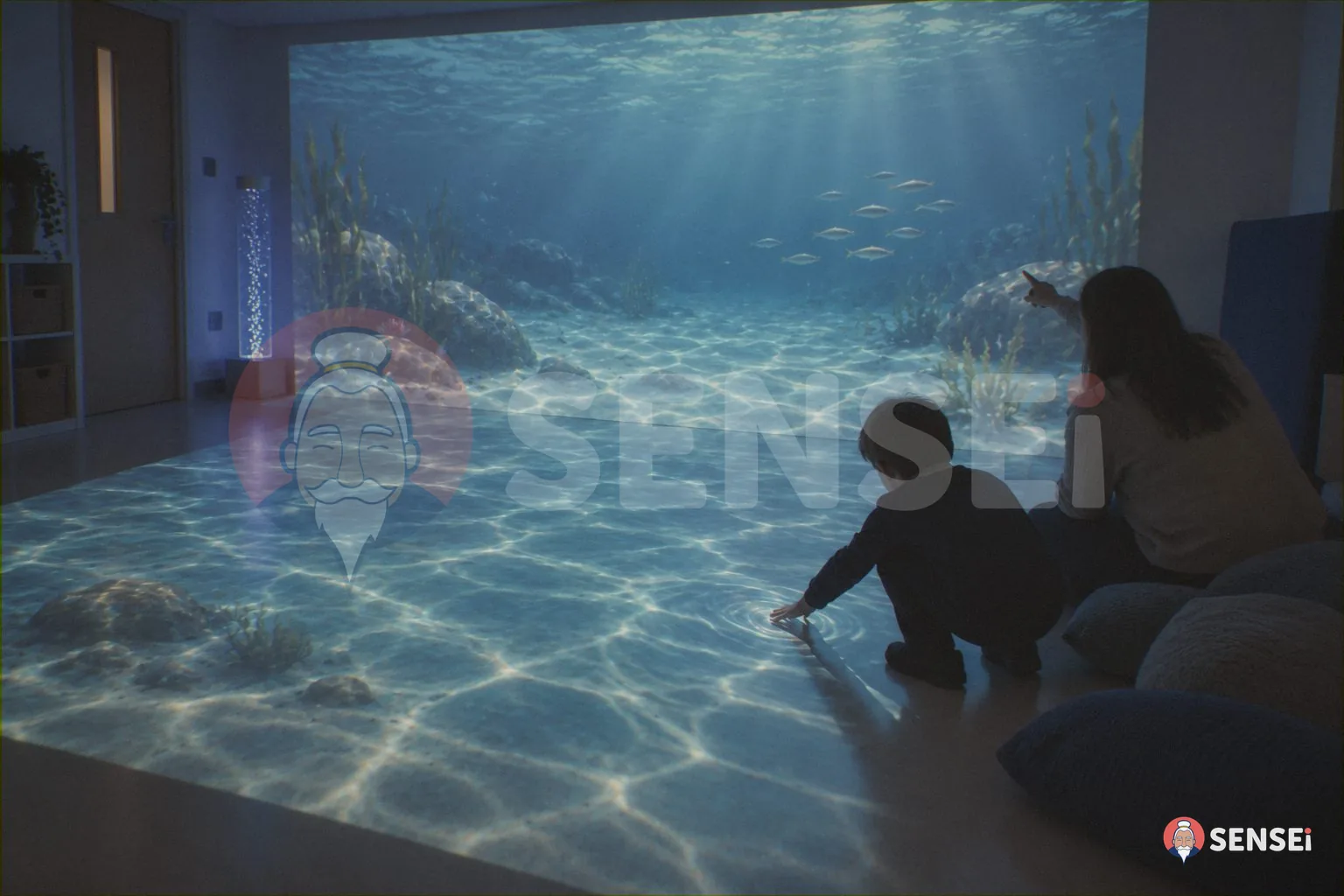
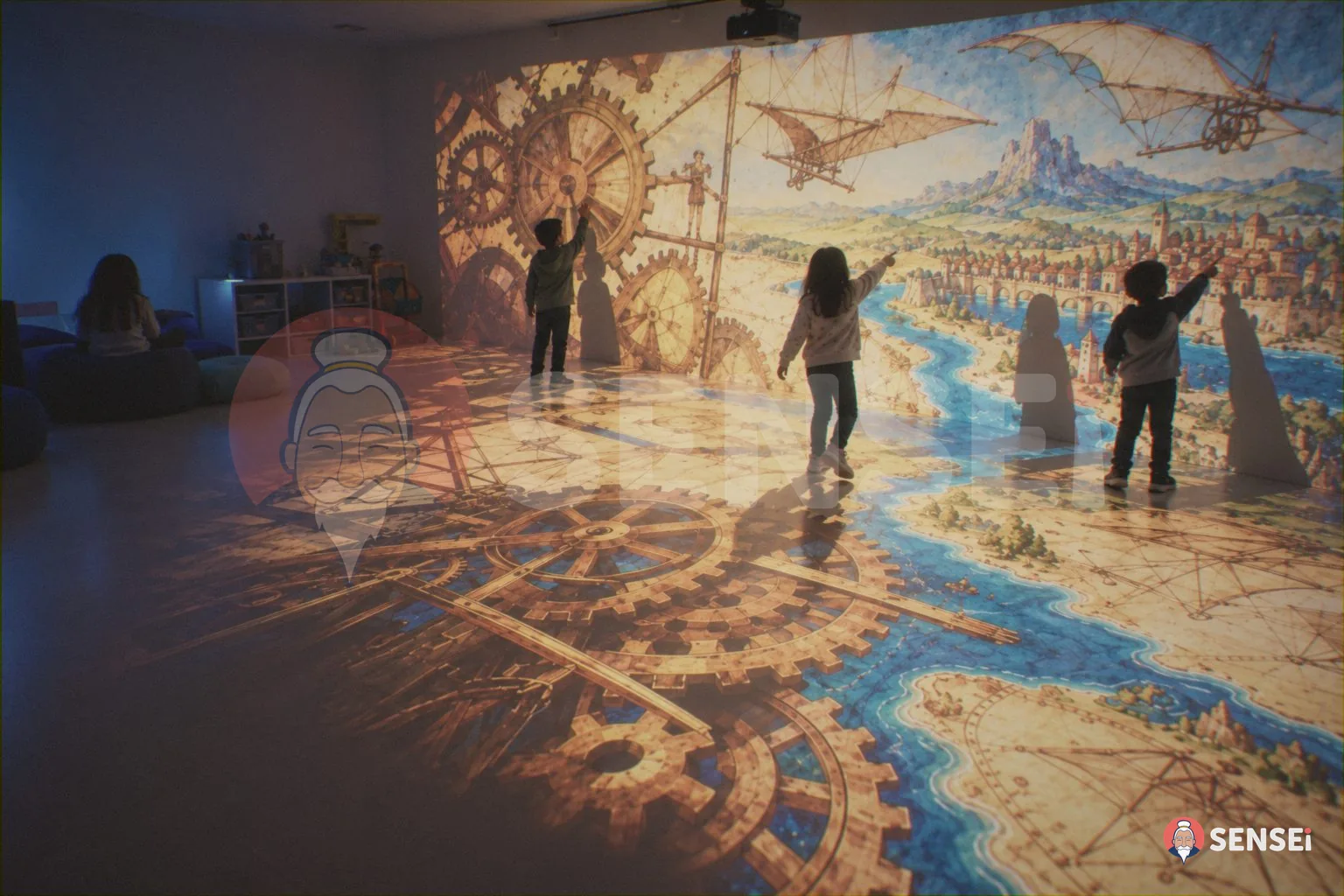
SENSEi turns an existing room into an adaptive multisensory environment, where walls and floor become interactive and respond to pupils’ movement. It fits a strategy of repurposing existing space, serves calm, sensory and learning uses across the day, and its session reports feed your impact evidence.
Pupils get one space that adapts to them; teachers, SENCOs and therapists get activities co-designed around pupils’ goals and a clear record of what works. Our services include installation, co-design of activities with your staff and training, and our case studies show the approach in real settings. Cost depends on the configuration. We can help you describe the options clearly for your funding case.
Frequently asked questions
Can the Inclusive Mainstream Fund be used to build a sensory room?
No. The conditions of grant exclude capital works. The fund can be used alongside separate capital investment in Inclusion Bases, for eligible revenue activity.
Can my school apply directly for High Needs Provision Capital?
No. It is allocated to local authorities, which decide how to invest it. Talk to your local authority SEND and capital teams.
How much does a SENSEi room cost?
It depends on the configuration. Contact us and we will help you scope options for your space and needs.
When must schools publish their inclusion strategy?
The Inclusive Mainstream Fund conditions require schools to publish their 2026 to 2027 inclusion strategy statement by 31 December 2026.
Is the SEND reform funding guaranteed?
The 2026-27 allocations have been published. The wider reform is still a consultation, so later details may change. Always check the latest DfE publications.
See it in a real room
Preparing a funding case for a multisensory space? We can show you a SENSEi room and help you describe its uses, outcomes and configuration options. Book a demo.
Sources
- DfE. High needs provision capital allocations. GOV.UK
- DfE (2026). Inclusive mainstream fund for schools: conditions of grant 2026 to 2027
- DfE (2026). Inclusive mainstream fund for schools: methodology 2026 to 2027
- DfE (25 June 2026). Inclusion bases in schools. GOV.UK guidance
- DfE and DHSC (2026). SEND Reform: putting children and young people first. Government consultation, GOV.UK
- DfE (June 2026). Inclusive education estates (PDF)