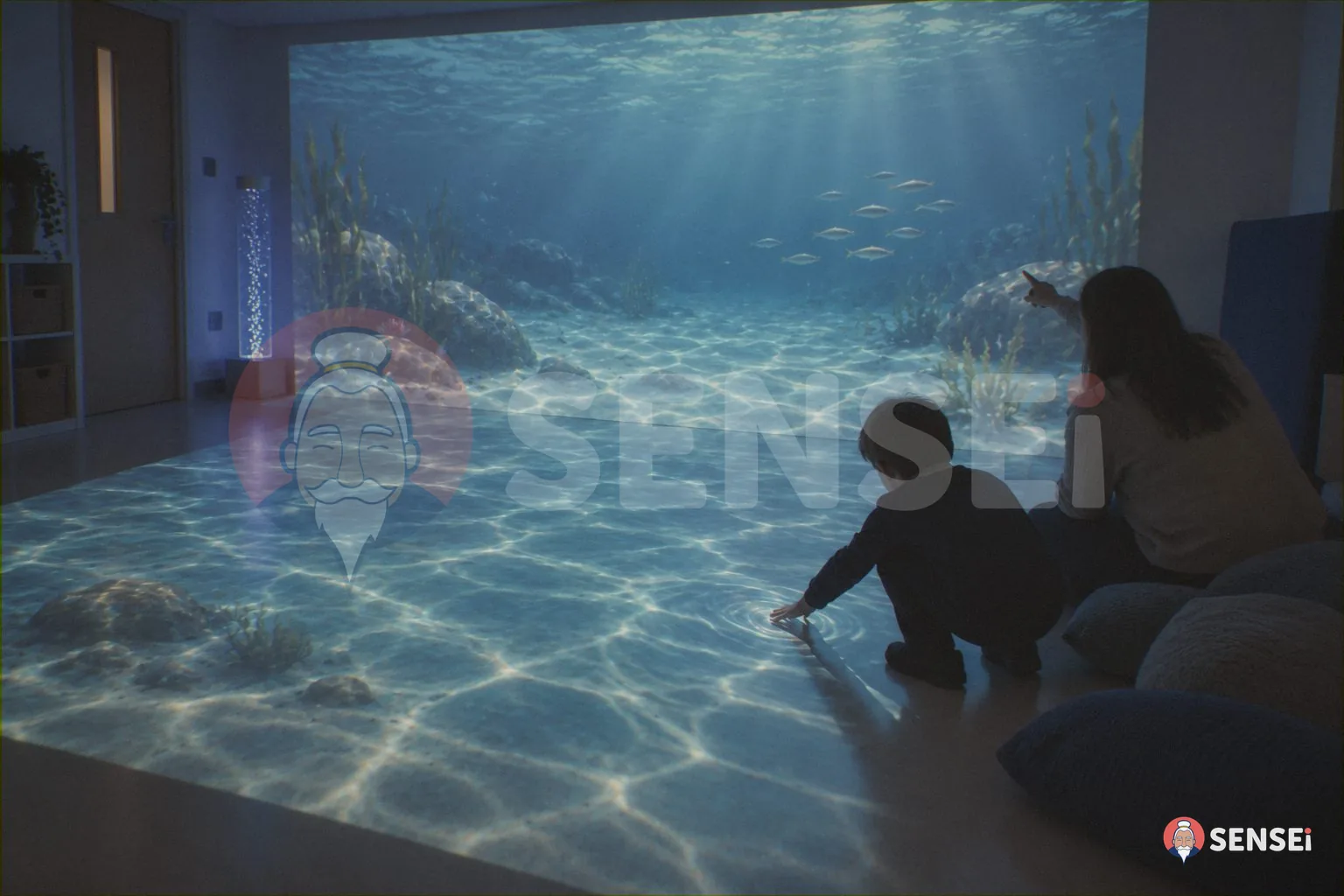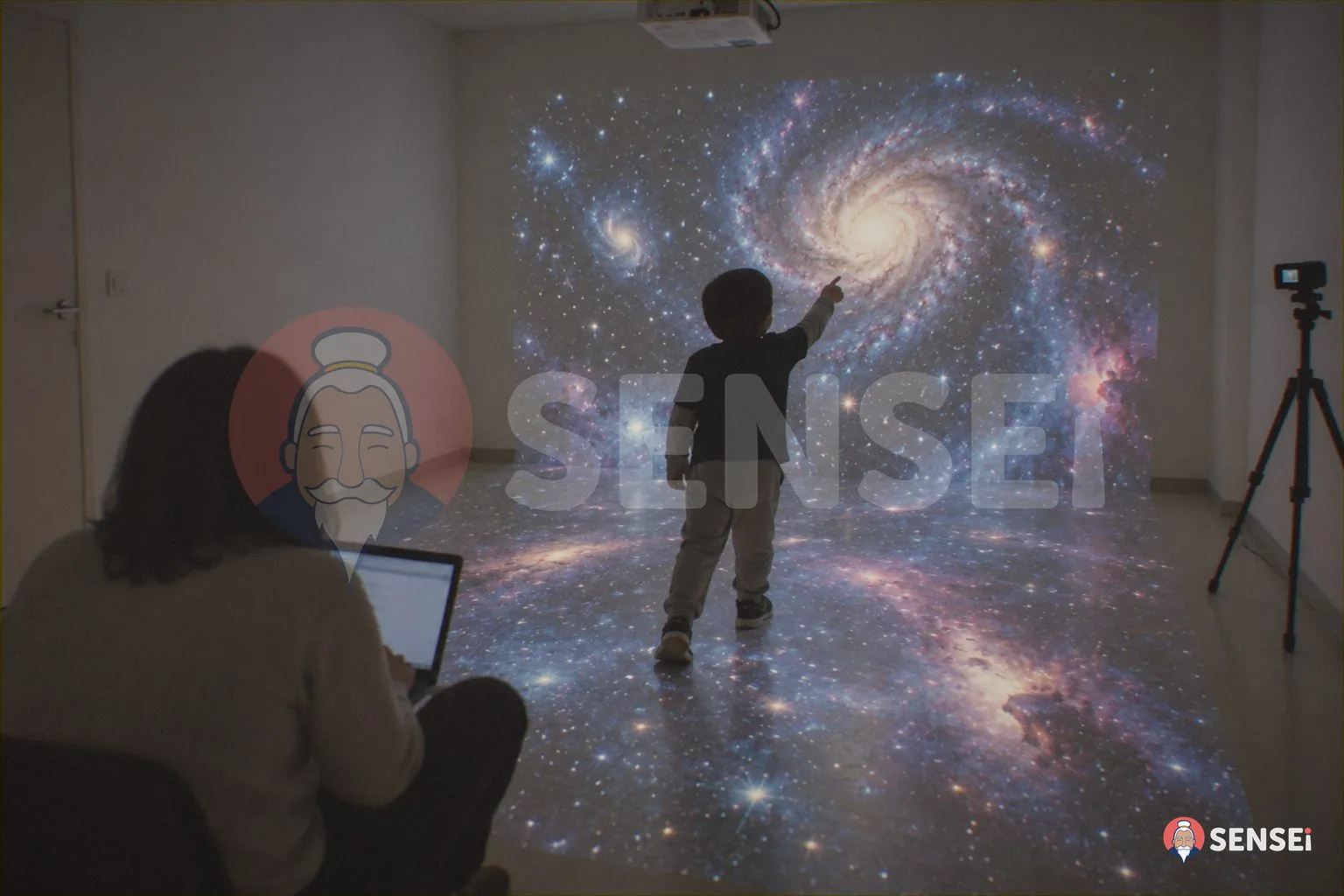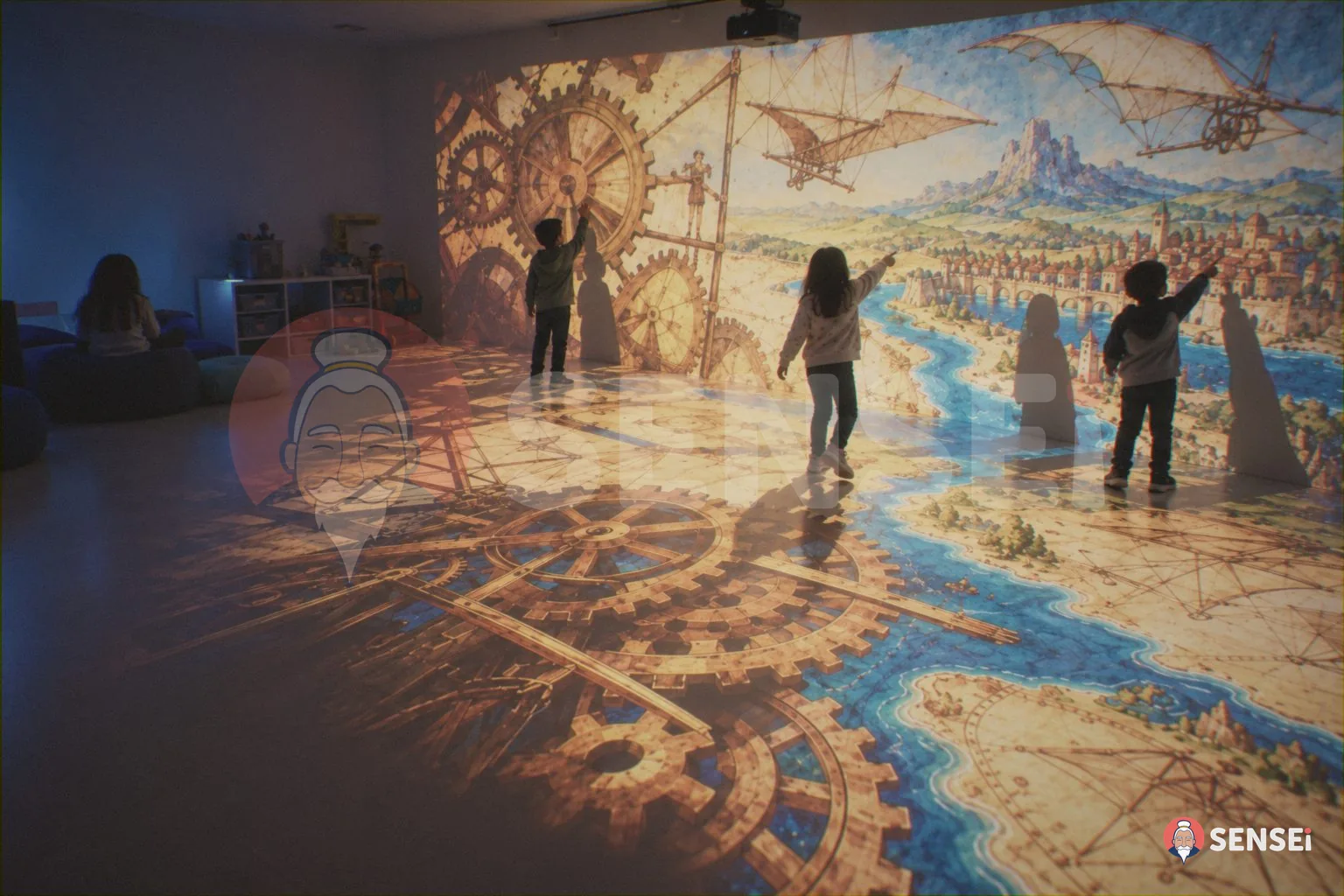

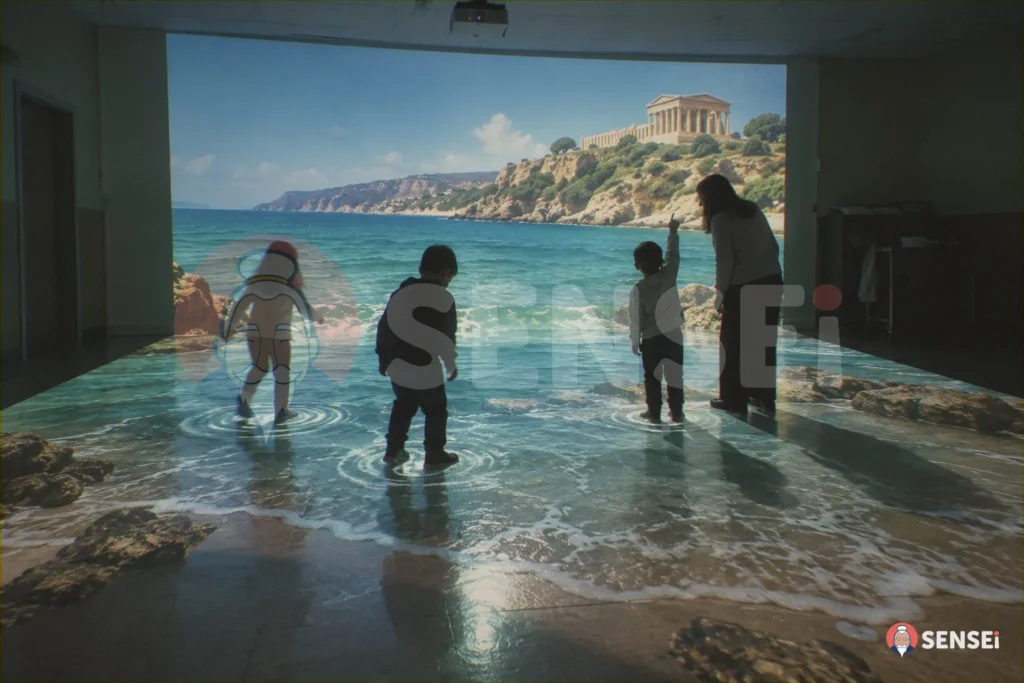
In Sicily, several primary and lower secondary schools choose SENSEi for their immersive and multisensory classrooms. These classrooms are installed with partner resellers and local technicians, supported remotely, and designed to combine active learning and inclusion. A model that takes research born in Milan all the way to classrooms on the island.
The context: a region investing in immersive schooling
In recent years the Regione Siciliana (the Sicilian Regional Government) has been investing heavily in immersive environments at school, with calls for immersive teaching and one for multisensory classrooms. Many schools are therefore looking for solutions that combine active learning and inclusion, and that stay alive well after the opening day.
The challenge is twofold: offering high-quality classrooms across the whole region, even far from the big cities, and making teachers autonomous in everyday use, because a classroom is worth what happens in it every day with the pupils.
The project: a tailor-made classroom, a replicable model
Each classroom is designed around the school’s space. Images wrap around the walls, children interact by touching them with their hands, and the teacher guides everything from a tablet. In some schools, scents come into play as well.
The classrooms are assembled by local technicians following the SENSEi installation manual, with remote support. It is a model that makes it possible to work across the whole region while maintaining the quality of the project. Other classrooms are currently being designed.
What happens in the classroom?
The activities also celebrate the local area. Some examples:
- Ancient history: travelling into the island’s past without leaving school.
- The sea: marine environments to observe, talk about and describe together.
- Science and language: quizzes, sequences and stories in which the whole class takes part.
- Their own content: teachers can create activities with Eureka.
The link with research
The Sicilian classrooms carry far from Milan a body of research that began at Politecnico di Milano, continued at SUPSI and with international partners, and is documented in more than 40 publications. One of its questions closely concerns a whole class: touching, moving or speaking, what best supports learning? The SENSEi research group studies it in the field with primary school children and reports the results in Touching, moving, speaking.
In the island’s schools this knowledge becomes everyday practice: whole groups taking part together, activities that the teacher adapts to each child’s needs. The publications can be found on the Research page.
The impact
- Classrooms active in several provinces, in primary and lower secondary schools.
- Local skills: local technicians able to install and look after the classrooms, with SENSEi support.
- Teachers in the lead: ready-made activities and the possibility to create new ones, including about their own area.
- Inclusion for the whole class: activities in which everyone takes part, each with their own way of interacting.
Why is this a significant case?
The Sicilian schools show how a centrally designed system can be installed and supported remotely without losing quality. It is a concrete path for schools that are creating a classroom with regional funding.
If your school is among those funded, read the guide to multisensory classrooms in Sicily and the guide on how to fund a multisensory classroom.
Frequently asked questions
Can SENSEi be installed anywhere in Sicily?
Yes, with local technicians who follow the SENSEi manual and with remote support.
Can the activities be adapted to the local area?
Yes. In addition to the ready-made activities, teachers can create their own with Eureka, including on local history, environment and culture.
Are more classrooms on the way?
Yes, other classrooms are currently being designed with schools on the island.
How much does an environment like this cost?
It depends on the configuration: space, experiences, training and services. Contact us for an assessment.
Do you work in a school, a centre or a museum and want an environment like this? Tell us about your project: we start from the needs of the people who will use it.