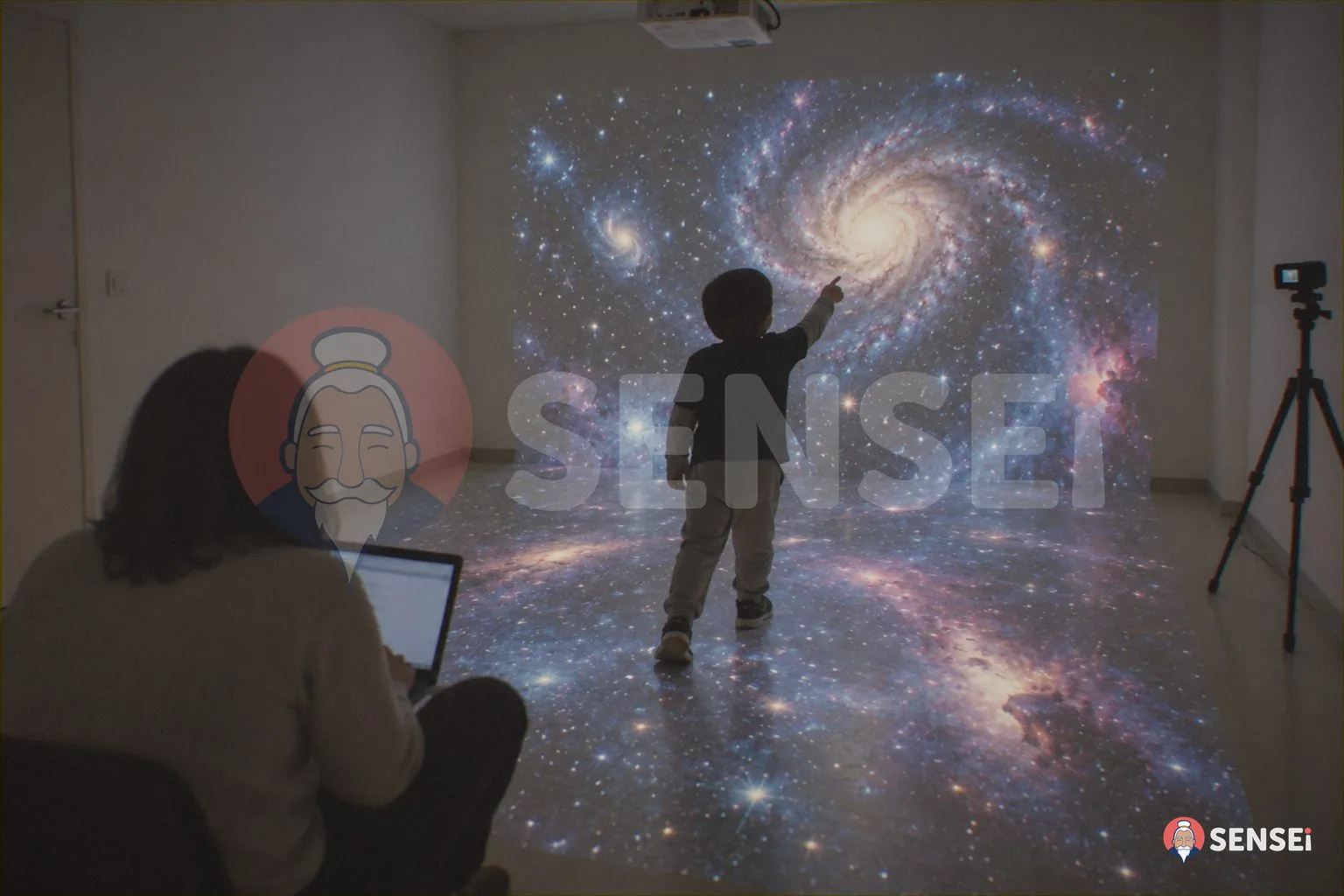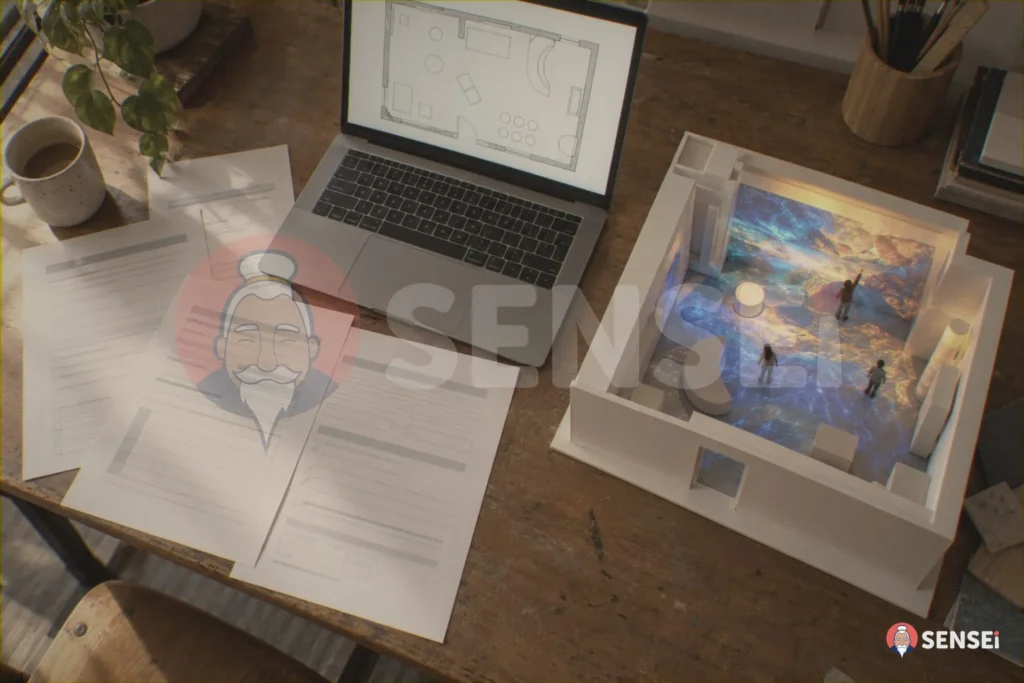
A multisensory classroom can be funded through dedicated regional calls, through the PNRR (Italy’s National Recovery and Resilience Plan) lines for innovative learning environments and through local resources such as local authorities and foundations. In 2026-2027 the most concrete example is the Regione Siciliana call for multisensory classrooms, which shows clearly how these funding schemes are built and which mistakes to avoid.
In this guide you will find a table of verified funds, a method for reading a call, the most frequent mistakes and the supplier’s role. We do not talk about prices: the cost of a classroom depends on the configuration and the goals of the project.
What funds exist for a multisensory classroom?
The table summarises the main public funding lines that in recent years have covered multisensory or immersive environments in schools. The amounts are those stated in the official documents.
| Source | Beneficiaries | What it funds | Status |
|---|---|---|---|
| Regione Siciliana, Circular no. 11 of 30/03/2026 “Aule multisensoriali (Snoezelen Room)” | State primary and lower secondary schools in Sicily | A single multisensory classroom per school, up to 55,000 euros: furniture, tactile and olfactory materials, software, teacher training, extracurricular activities | Applications closed on 24/04/2026; 258 applications; with DDG 3107 of 01/08/2026, 46 schools admitted for about 2.5 million euros |
| Regione Siciliana, Circular no. 24 of 31/10/2024 “Didattica immersiva” | Primary and lower secondary schools in Sicily | Immersive classrooms for teaching with virtual and augmented reality, up to 55,000 euros per project | Closed; 5 million announced, then 6.8 million for 127 schools |
| Regione Siciliana, Circular no. 6 of 16/04/2025 (second edition) | Primary and lower secondary schools in Sicily | Additional immersive classrooms, up to 55,000 euros per project | Closed; 3.5 million additional |
| PNRR, Piano Scuola 4.0 (DM 161 of 14/06/2022) | School institutions | Transformation of classrooms into innovative learning environments (Next Generation Classrooms) and labs for digital professions (Next Generation Labs), 2.1 billion in total | Line launched in 2022: check with your own school how the resources have been used |
Beyond these lines, many schools and services combine different resources: contributions from municipalities and unions of municipalities, banking foundations, third-sector organisations, fundraising by parents’ associations. In these cases the rules change from body to body, but the project logic is the same.
What does the Sicilian call on multisensory classrooms teach us?
The Sicilian call is a good model because it is very detailed. It is worth reading even if your school is in another region. For a full analysis, see our guide to the Regione Siciliana call.
How costs are divided
- Main item A, up to 50,000 euros: specific furniture (enveloping seats, poufs, hammocks, tactile mats), materials for tactile and olfactory experiences, necessary software and accessories, plus percentage caps for transport (1%), acceptance testing (1%), minor adjustments to installations (2%), administrative staff (1.5%) and up to 5,000 euros for teachers’ participation in training, which must involve at least 20 teachers.
- Main item B, up to 5,000 euros: teaching and auxiliary staff for activities outside school hours.
What is required of the supplier
The equipment must have a supplier certification for use in schools. Supplier support for at least five years, a five-year manufacturer’s warranty and training for teachers are required.
Mandatory activities
Every project must include: setting up the environment, staff training, personalised activities (in particular for pupils with special educational needs, BES), a system for monitoring results and a closing event open to institutions, families and the educating community.
Timing and reporting
The classroom and activities must be completed by 31 August 2027 and reported by 31 October 2027. The grant is paid with an 80% advance and a balance of up to 20% after reporting. The final declaration must be accompanied by a video showing at least one activity carried out and the classroom in operation, including with the trained teachers present.
And the schools left out?
Applications were processed in order of arrival until the funds ran out. The circular provides that, if new resources become available, the administration may select further proposals, again in order of arrival. For the roughly 200 applications remaining on the list, it is therefore wise to be ready: update the project, check the spaces, gather compliant quotes.
Why it is worth applying: research and impact
A call is an opportunity to shape an educational project, not just to buy equipment. Schools that make good use of a multisensory classroom describe it as a space in which pupils with different needs take part in the same activity, teachers observe the class from another perspective and families see progress in a concrete way.
Evaluation panels and calls increasingly ask for monitoring and results. This is why it matters to choose an approach with solid foundations: SENSEi grew out of more than ten years of research at Politecnico di Milano, with the Magic Room and Magika projects, and is documented in more than 40 scientific publications, collected in the Research section. In Sicily, a region that invests heavily in immersive schooling, several primary and lower secondary schools choose SENSEi for their classrooms. At IC Silvio Pellico in Arluno, the Piano Scuola 4.0 becomes an opportunity to rethink spaces: a focus group with teachers leads to a SENSEi environment in every school building.
How to read a call for a multisensory classroom?
Every call has its own rules, but the questions to ask are always the same. Before starting, read the text with a checklist:
- Who can apply? School level, legal status (state, publicly recognised private, organisation), space requirements.
- How many proposals? Often only one per institute.
- What is eligible? Furniture, technologies, software, training, staff. Watch out for items with percentage caps.
- What is excluded? For example, costs incurred before the application or equipment intended for other labs.
- Which documents? Form, project sheet, declaration on the spaces, resolution of the school’s governing bodies, any partnership letters, digital signatures.
- How is selection made? A points-based ranking or chronological order of arrival: this completely changes the strategy.
- What obligations afterwards? Training, monitoring, final event, video, privacy, reporting.
- Which deadlines? Submission, start (often an order or a decision to contract), completion, reporting.
If the call works on order of arrival, preparing in advance is decisive: those who arrive with complete documentation in the first hours have a better chance. To build your proposal, you can find a template on the multisensory classroom project page.
What are the most frequent mistakes?
The Sicilian decree of 1 August 2026 shows this clearly: of 10 excluded applications, 9 were excluded for missing or non-compliant documentation, one for failing to meet the applicant requirements. Typical mistakes are:
- forgetting the resolution of the Consiglio di Istituto (school council) specifically referring to the application;
- documents not digitally signed by the head teacher;
- forms different from the templates attached to the call;
- partnership letters not signed by both parties;
- sending the application from a certified email (PEC) address not registered to the school or with the wrong subject line;
- including ineligible costs or exceeding percentage caps;
- underestimating subsequent obligations (training of at least 20 teachers, video, final event).
A cross-check by two people (for example the school business manager, DSGA, and the inclusion coordinator) before submission greatly reduces the risk of exclusion.
What role does the supplier play?
The supplier does not write the project on the school’s behalf, but can help a great deal. A good supplier:
- provides documentation and certifications consistent with the call’s requirements;
- clarifies what falls under the eligible items;
- guarantees support, warranty and teacher training within the required timeframes;
- is available on MEPA (the Italian public administration e-marketplace) or in the planned public procurement procedures;
- supports the school in the monitoring, video and final event phase, helping it tell what has changed for pupils and teachers.
SENSEi EDU works with schools in this phase too, offering installation, co-design and training services. The cost depends on the configuration: for an estimate suited to your project, contact us.
Frequently asked questions
Can the PNRR be used for a multisensory classroom?
The Piano Scuola 4.0 has funded innovative learning environments. Whether and how a multisensory classroom fits depends on the rules of the specific line and on the resources still available in your school: check with the head teacher and the DSGA.
Is the Sicilian call for multisensory classrooms still open?
No, applications closed on 24 April 2026. Schools that were not funded remain on the list and could be admitted in order of arrival if new resources become available.
How much does a multisensory classroom cost?
It depends on the configuration, the space and the goals. Contact us for a tailored proposal.
Is a resolution of the Consiglio di Istituto needed?
In the Sicilian call it is mandatory, on pain of exclusion. In general, it is good practice to always have one.
Can we start purchasing before the funding decree?
Usually not: many calls exclude costs incurred before the application. Always read the article on ineligible costs.
Book a demo
Are you preparing an application or do you want to be ready for the next call? Book a demo: we show you the room and help you understand which configuration meets the requirements. To better understand what an immersive classroom is, also read the guide to the immersive classroom at school.
Sources
- Regione Siciliana, Circular no. 11 of 30/03/2026, Aule multisensoriali
- Regione Siciliana, Notice ref. 16635 of 19/05/2026, final list of applications
- Regione Siciliana, DDG 3107 of 01/08/2026, multisensory classrooms ranking
- Regione Siciliana, Immersive teaching: 5 million for schools (2024)
- Regione Siciliana, A further 3.5 million for immersive classrooms (2025)
- Italian Ministry of Education, Piano Scuola 4.0 published