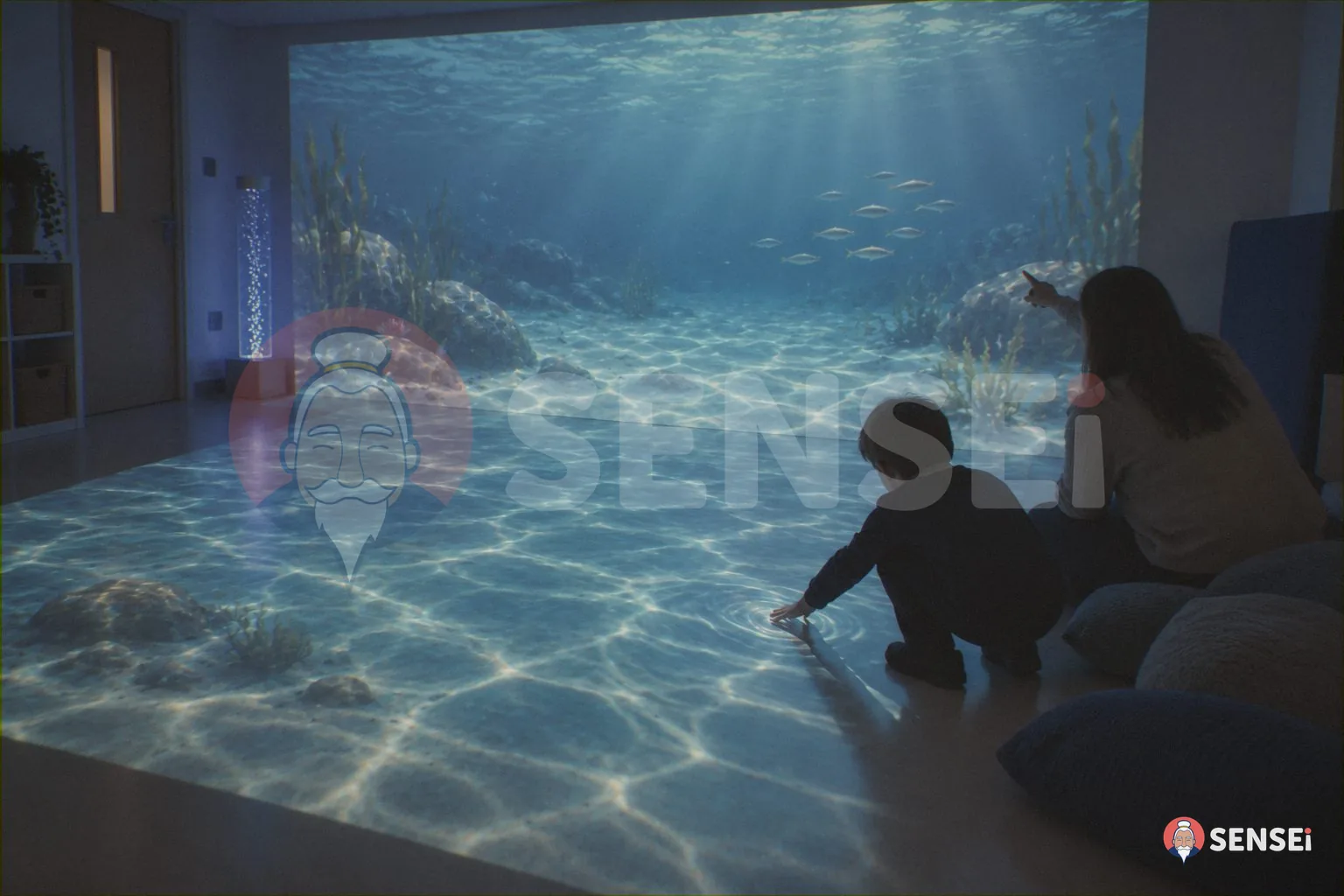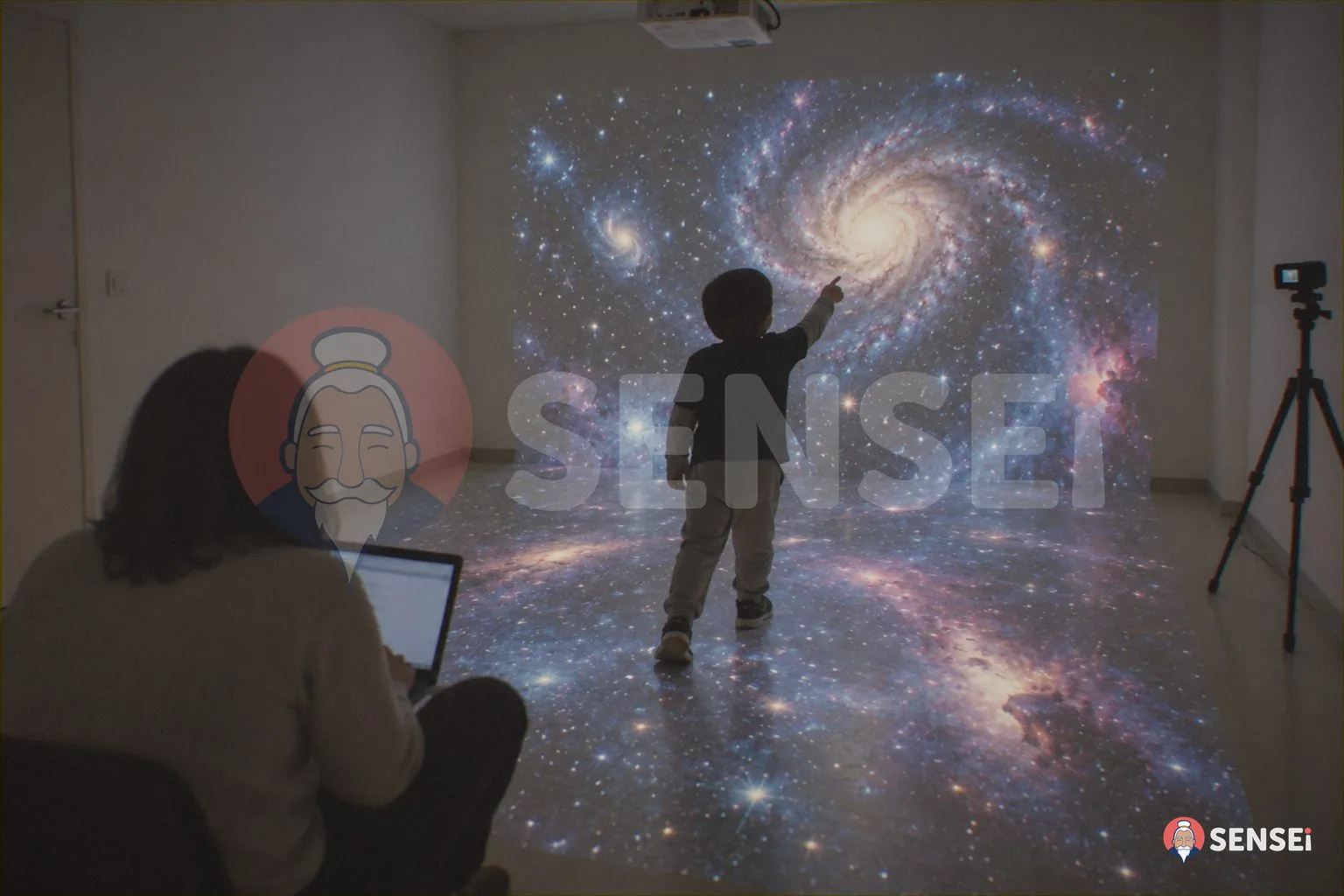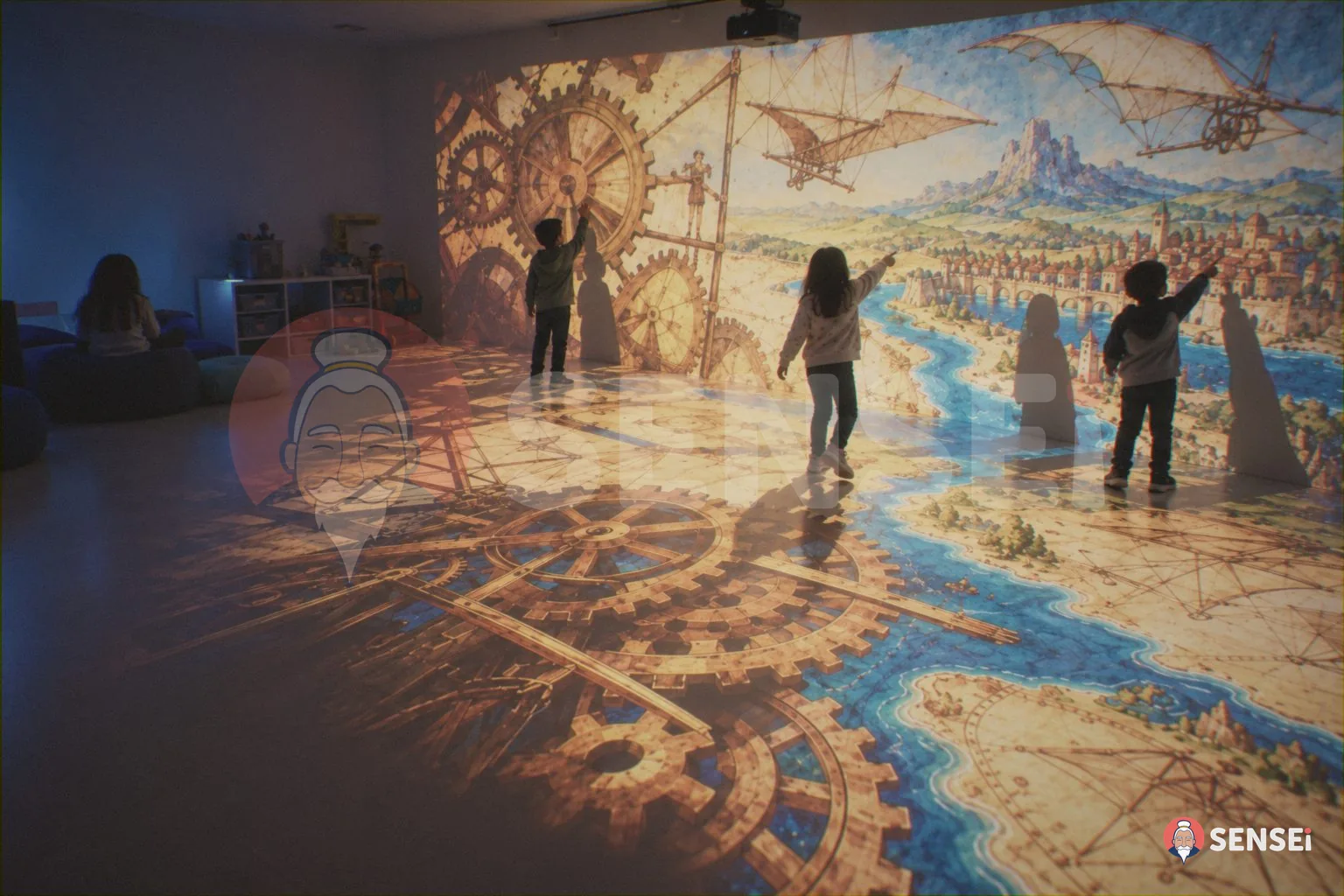

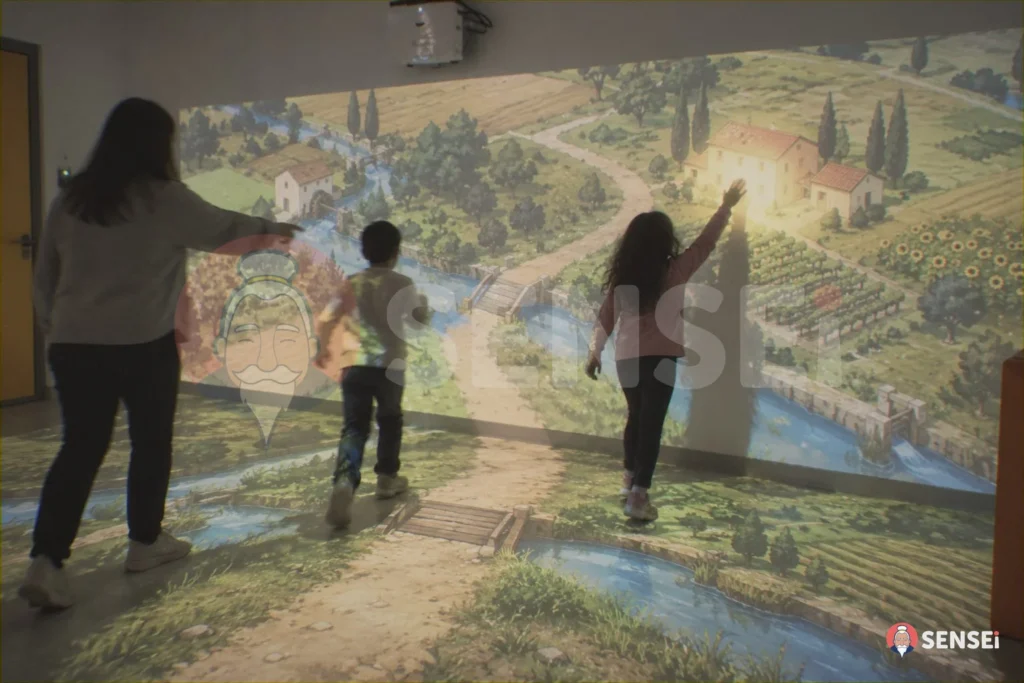
At IC Silvio Pellico in Arluno no class has to move to another building to enter the magic room: each school building has its own SENSEi multisensory environment. Four environments, born from a focus group with the teachers and each designed for its own users.
A distributed design choice that makes the immersive experience part of everyday teaching, not a special event.
The context: rethinking the school’s spaces
The institute includes the Marconi lower secondary school and the Pellico, De Filippo and Aldo Moro primary schools. With the Piano Scuola 4.0 (the national School 4.0 Plan), the school takes the opportunity to rethink its spaces, and SENSEi supports the design process together with the teachers.
The starting question is not “which technology should we buy” but “which experiences do we want to offer our pupils”.
The project: starting from the teachers’ ideas
A focus group gathers the teachers’ ideas. From there, proposals for each building are developed, shared and reviewed with the teachers before any purchase.
The result is a set of environments that differ from one another, each with its own vocation: an immersive classroom in the lower secondary school, a technology room with a coding corner, an immersive classroom with space for psychomotor activities. In each one, the images on the wall and floor react to the pupils’ gestures and steps, and the teacher leads the experience from a tablet.
The project also includes an outdoor classroom at the Pellico primary school, with covered gazebos and wall-mounted play panels for fine motor skills, hand-eye coordination and social skills, to take activities outside when the season allows.
The experiences: what happens in a SENSEi classroom
Here too, the starting point is a collection of templates: the structure of the game stays the same, while the teacher decides the content according to the subject.
- Immersion: the classroom becomes a 360-degree aquarium to explore;
- Place it: positioning the regions of Italy on a wall map;
- Collaborative story: the class draws on paper and the characters come to life on the wall;
- Path: following dinosaur footprints by walking on the floor.
Quizzes, memory games, sequences and categorisation games complete the offer, for working with the body on classroom content.
The link with research
Learning through movement is not only more engaging. SENSEi research studies embodied learning in immersive spaces (Embodied Learning in Immersive Smart Spaces) and how different interaction modes affect children’s learning.
In Arluno that research, which began at Politecnico di Milano with Magic Room and Magika and has grown to more than 40 publications, takes a distributed form: not a single classroom, but an environment in every building. The principle of reverse inclusion applies: activities designed for pupils with the most complex needs become resources for the whole class. The publications are on the Research page.
What changes
- One environment per building: four immersive spaces close to the classes, which can use them more often;
- teachers in the lead: the ideas from the focus group become concrete projects;
- tailor-made spaces: each environment responds to the age and needs of its own building, inside and outside;
- ongoing support: user instructions and assistance to make teachers independent.
Why is this a significant case?
Arluno is an example of distributed design: one environment per building, each designed for its own users, instead of a single special classroom for the whole institute. For more ideas, read the guide to the multisensory classroom in primary school and the one on the immersive classroom in lower and upper secondary school, or discover SENSEi EDU.
Frequently asked questions
Is it better to have one environment per building or one for the whole institute?
It depends on spaces and distances: in Arluno each building has its own, so classes use it more often.
How are teachers involved?
With an initial focus group and by sharing the proposals before any purchase.
Can the activities be adapted to different subjects?
Yes. The activity templates stay the same, while the content changes according to the class and the subject.
How much does an environment like this cost?
It depends on the configuration: space, experiences, training and services. Contact us for an assessment.
Do you work in a school, a centre or a museum and want an environment like this? Tell us about your project: we start from the needs of the people who will use it.