
Can a room adapt to each child, instead of asking the child to adapt to the room? The Magic Room, created at the Politecnico di Milano, is the first answer to this question: a smart space for children with neurodevelopmental disorders and for those who care for them.
It is the first research nucleus from which SENSEi was born. We tell its story through two peer-reviewed publications: an article in IEEE Pervasive Computing and a chapter in the volume Social Internet of Things.
What is the research question?
Children with neurodevelopmental disorders have very different profiles. The chapter mentions intellectual disability, autism spectrum disorder, Down syndrome and ADHD.
This is why therapists need stimuli that can be dosed, combined and changed from one child to another. The starting question is simple: can Internet of Things (IoT) technologies make a room truly adaptable to each child?
The study in brief
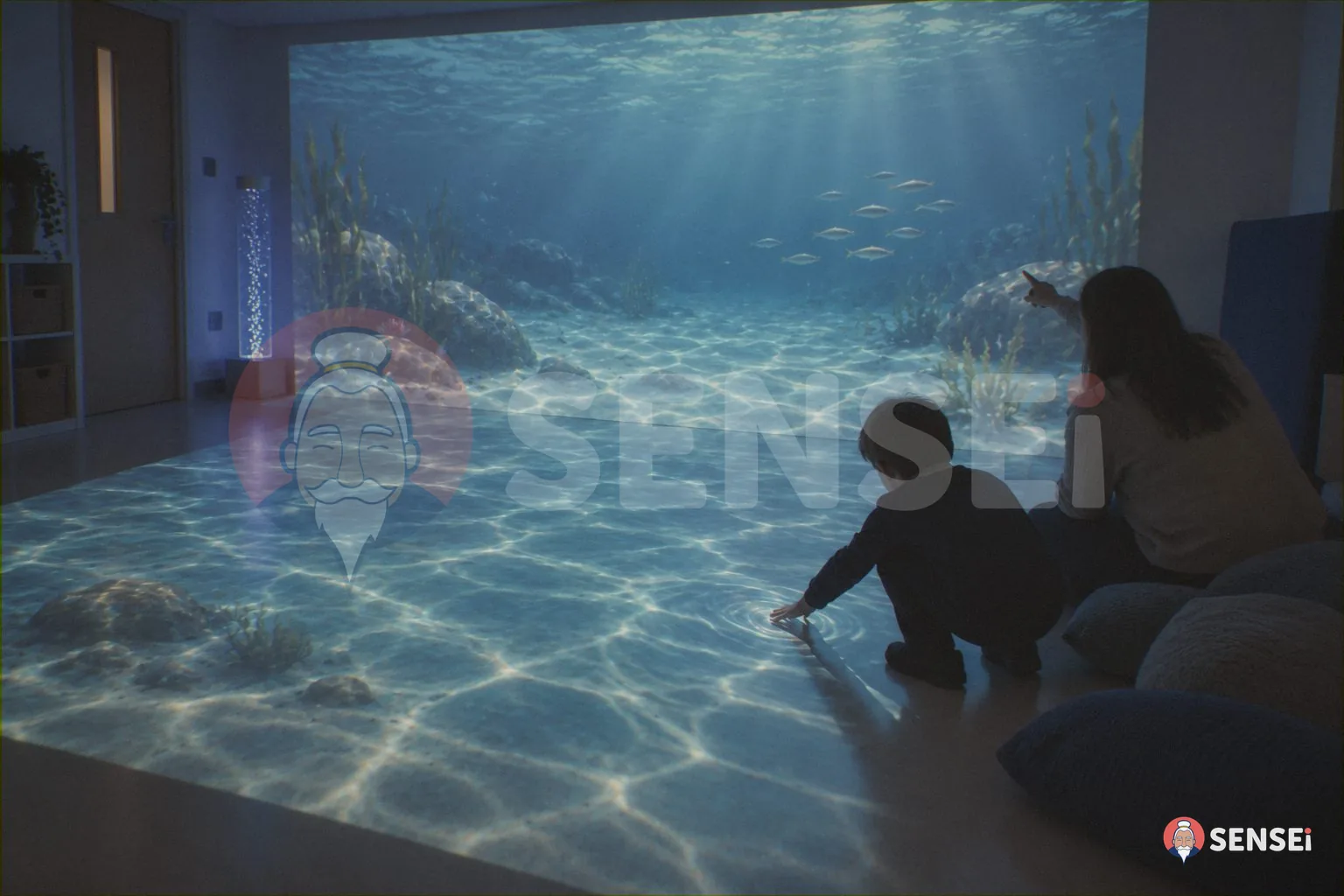
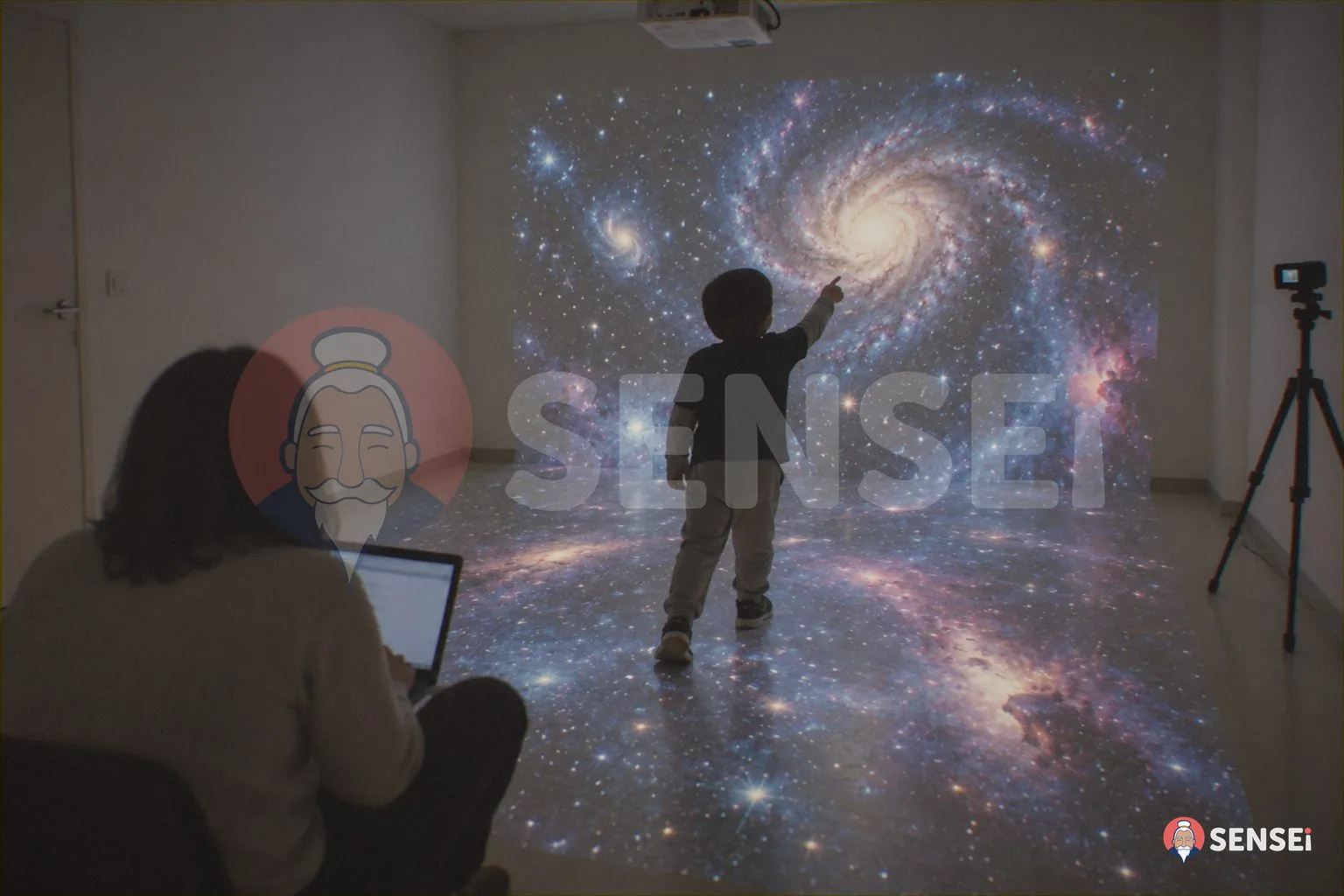
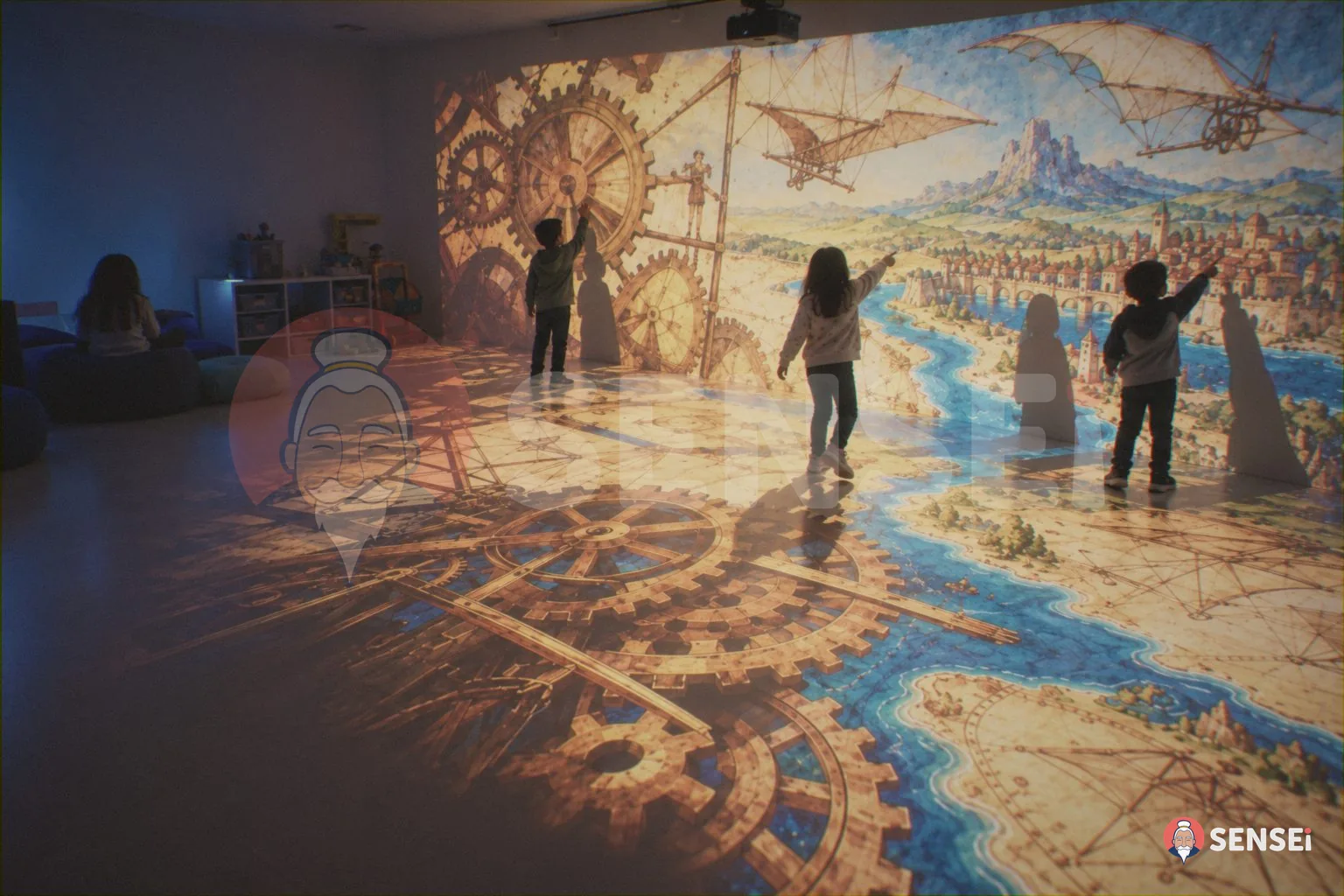
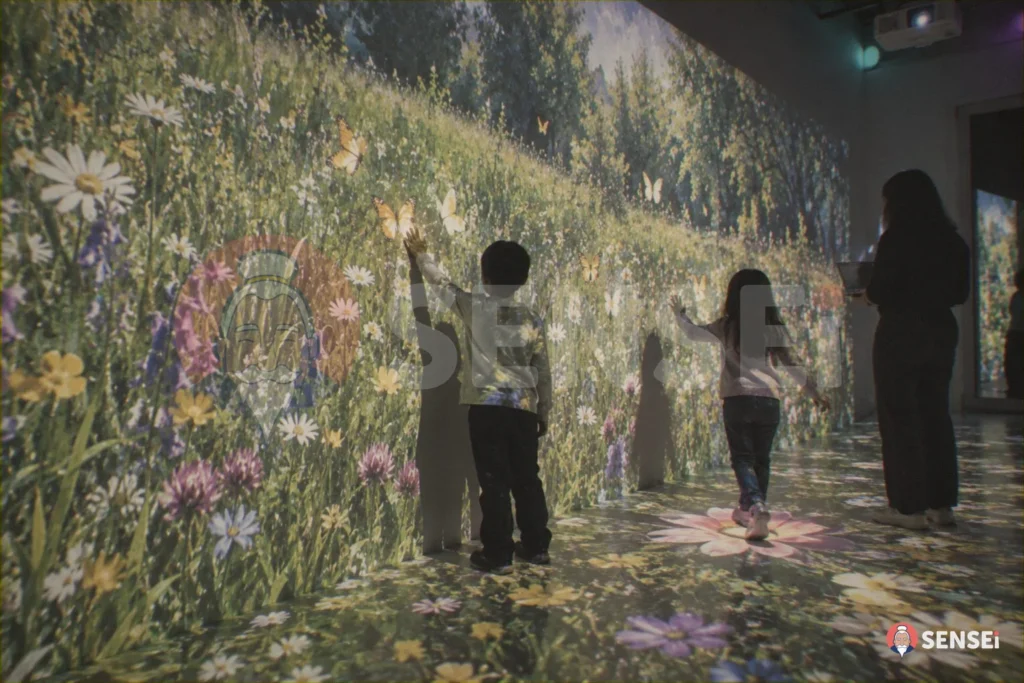
In the Magic Room, objects and the environment become “smart”. The child moves, handles objects, observes what happens around them, and the room responds with sounds, projections, lights, soap bubbles, scents and connected toys.
The experiences offer controllable stimuli for the vestibular, proprioceptive and tactile systems, and engage sight, hearing, touch, smell and movement. One point is central: every activity is fully customisable by the therapist for each child. The technology does not decide in place of the adult; it puts in their hands the tools to adjust the experience.
The research group from which SENSEi originates designs the room together with specialists in neurodevelopmental disorders from a local care centre. At the time of publication it is installed in two therapy centres in Italy. The exploratory study involves 8 caregivers and 19 children with severe impairments, who use the room for four months.
What emerges?
The group describes the results as “encouraging”: they may pave the way for new research and inspire new forms of intervention for these children.
The result should be read with due caution. It is an exploratory study, with a small group and no claim to demonstrate clinical effects. Its value lies in showing that an interactive, adjustable space can be used in a real therapeutic setting, in the hands of those who work with children every day.
Why does it matter today?
That first room was the start of a journey spanning more than ten years, now documented in more than forty published studies: after the Magic Room came Magika and the collaborations with SUPSI, NTNU and UC Berkeley. SENSEi is its evolution, and many principles born here are still at the heart of the SENSEi magic room:
- tailored stimuli: lights, projections, sounds, scents and bubbles are adjusted from the educator’s or therapist’s tablet;
- the body as interface: the room recognises the gestures and movement of several people, with no sensors to wear;
- personalisation: activities adapt to each person’s profile and goals;
- co-design: activities for therapy and well-being are created together with therapists.
What changes is the form. The Magic Room is a research prototype; SENSEi transforms an existing room, without building work. To understand the difference between a space you look at and one that responds, read the guide on interactive and passive rooms.
The two publications are in the Research and innovation section: Magic Room: A Smart Space for Children with Neurodevelopmental Disorder and Engaging Children with Neurodevelopmental Disorder Through Multisensory Interactive Experiences in a Smart Space.
Frequently asked questions
What is the Magic Room?
It is a smart room developed in a research setting for children with neurodevelopmental disorders. It combines projections, lights, sounds, aromas, bubbles and physical objects, adjusted by the therapist.
Does the Magic Room demonstrate therapeutic effects?
No. The study is exploratory, with 8 caregivers and 19 children over four months. The research group speaks of encouraging results, useful for new research, not of clinical effects.
What is the relationship between the Magic Room and SENSEi?
SENSEi is the evolution of the Magic Room and Magika projects. It keeps their principles: adjustable stimuli, interaction through the body, personalisation guided by the adult.
How much does an environment like this cost?
It depends on the configuration: space, experiences, training and services. Contact us for an assessment.
Do you work in a school, a centre or a museum and want an environment like this? Tell us about your project: we start from the needs of the people who will use it.
Sources
- Garzotto F., Gelsomini M. (2018). Magic Room: A Smart Space for Children with Neurodevelopmental Disorder. IEEE Pervasive Computing
- Garzotto F., Gelsomini M., Gianotti M., Riccardi F. Engaging Children with Neurodevelopmental Disorder Through Multisensory Interactive Experiences in a Smart Space. In: Social Internet of Things, Springer