
The Cooperativa Amicizia in Codogno builds its SENSEi room starting from a question to its care staff: what is really needed? In an internal survey, all 8 care workers involved rate a sensory and multimodal experience as useful for the people they support. From those answers comes a tailored environment for young people and adults with disabilities, including autistic people.
The context: services for young people and adults
The cooperative runs a residence for adults with disabilities and a supported housing project for young people with autism spectrum disorder. The need is to offer moments of well-being and growth to people with very different profiles, in small groups.
Listening before designing
The survey gives the project a precise compass:
- Goals: physical, mental and emotional well-being, quality of life, autonomy and self-determination, social inclusion.
- Desired activities: above all structured activities for relaxation and sensory stimulation, music and communication.
- Priority skills: behavioural, communicative, emotional and social.
- Groups: mostly 3 to 5 people per session.
- Immersive experience: 7 out of 8 care workers consider it useful, one in specific contexts.
These are observations gathered by the organisation, not a scientific study, but they guide every choice in the project. The care staff also ask for robust materials, suitable for intensive use.
The project: a tailored room
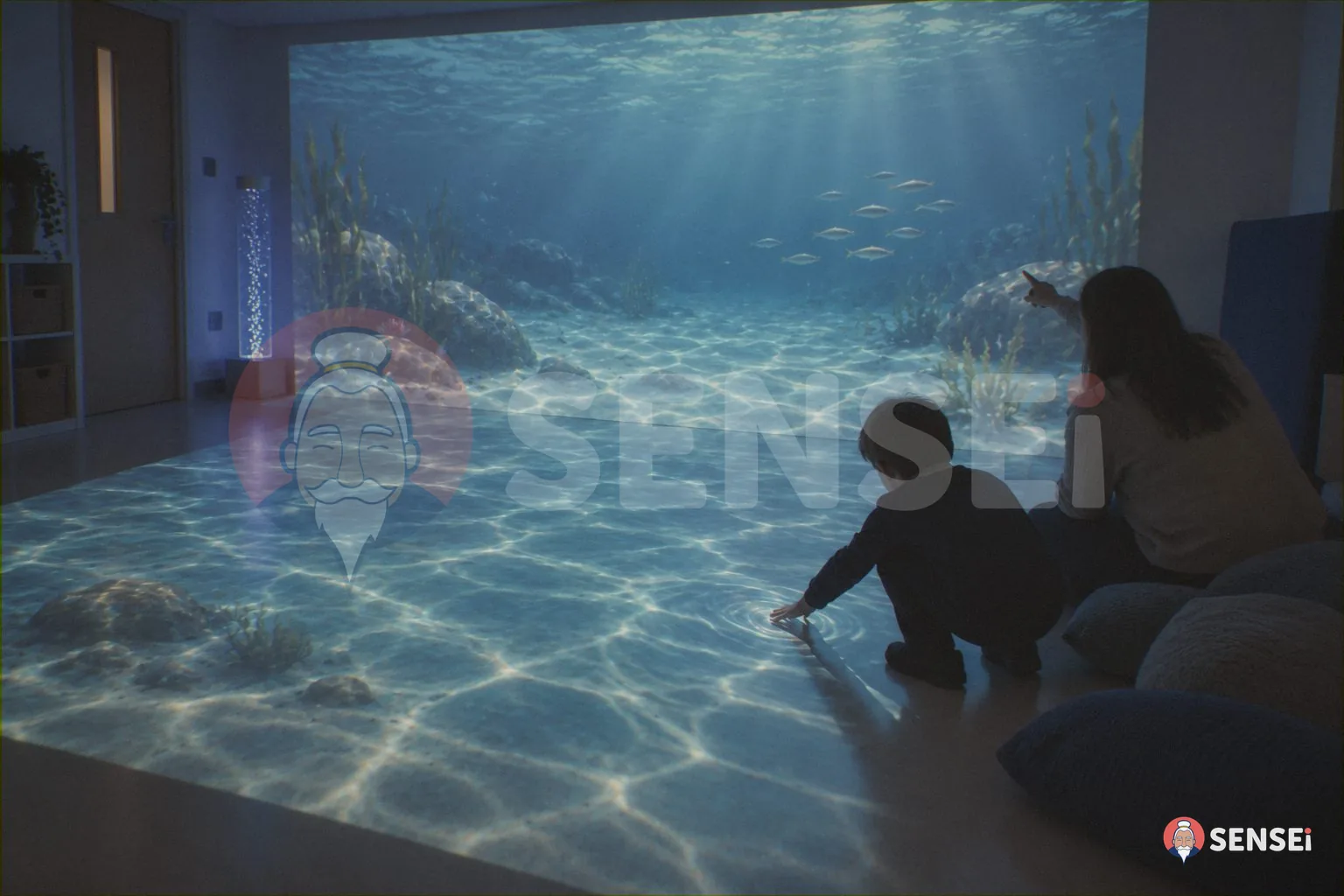
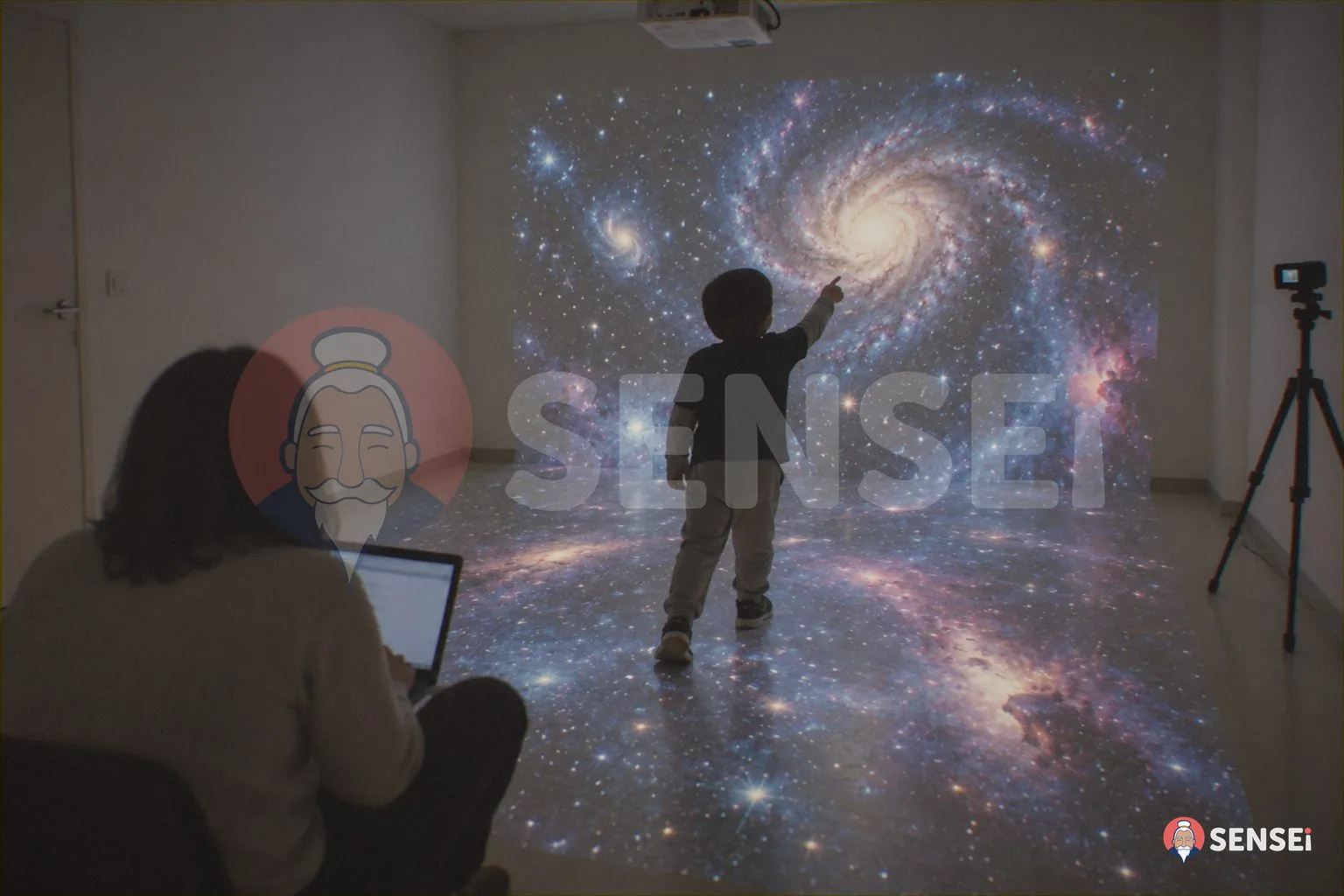
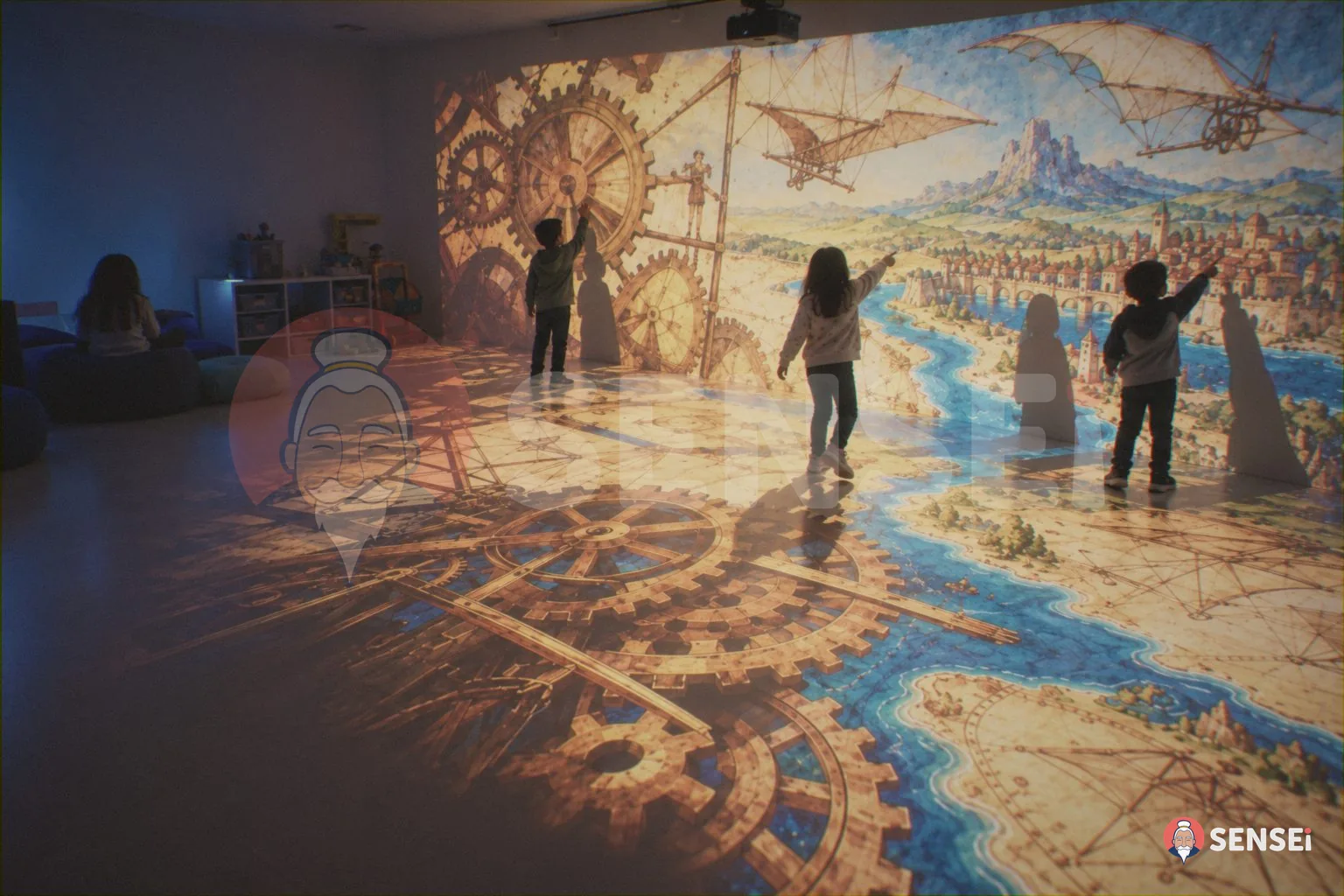
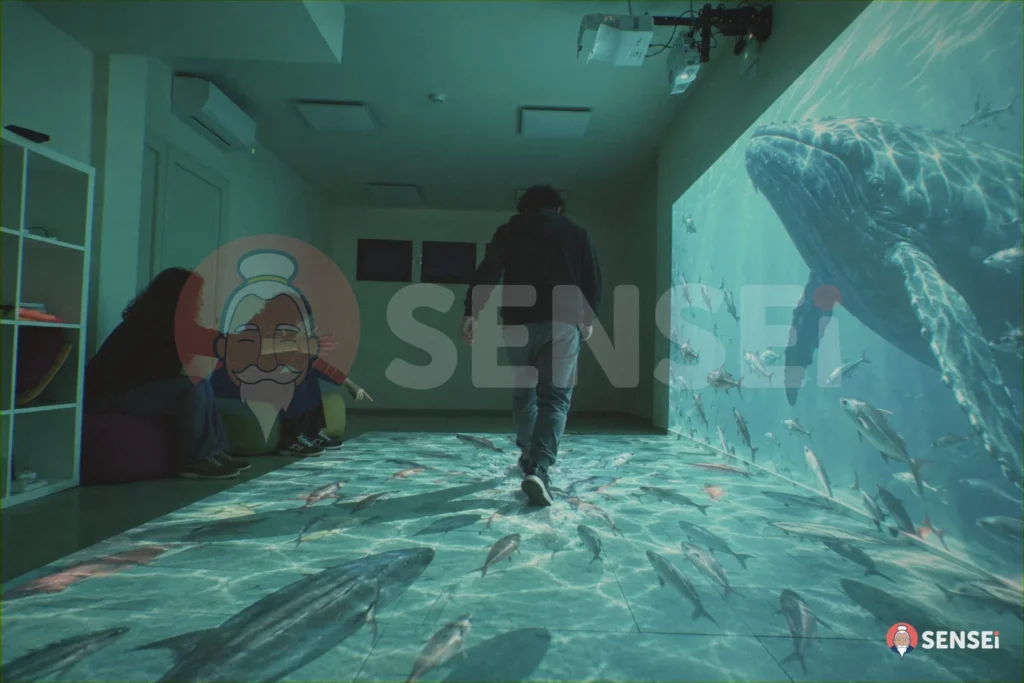
The process follows a clear rhythm: co-design, installation, training. The result is a room in which wall and floor become interactive and respond to gestures and movements, alongside sensory objects to touch and feel. The educator controls everything from a tablet, and a single button switches the room on and off.
The educators follow dedicated training to use the room independently, and support continues over time.
What experiences does the room offer?
In addition to a library of 50 activities, 10 more are co-designed and adapted to the people the cooperative supports. The experiences follow the priorities set by the care staff:
- relaxation, with immersive environments that help people slow down;
- structured sensory stimulation, with lights, sounds and tactile materials;
- music, to express oneself and be together;
- communication, with activities designed for small groups.
The link with research
Codogno applies a principle dear to the SENSEi research group: listen to those who will use the room before designing it. It is the participatory approach that runs through a body of work documented in more than forty scientific articles, collected on the Research page.
For adults with intellectual disability, the closest reference is an exploratory study on phygital interfaces, carried out in a social care centre, where physical objects and digital content work together.
What changes
- 8 out of 8 care workers help define goals and activities;
- 10 activities co-designed for the people supported, in addition to the library of 50;
- trained educators who use the room independently;
- an ongoing collaboration over time, with support and updates.
Why is this a significant case?
Starting from a survey of the care staff makes the project concrete: the room grows out of the needs of those who will use it every day, not out of a catalogue. It is a simple method that can be replicated in any service for adults. Discover SENSEi CARE and the training programme.
Frequently asked questions
Why run a survey before designing?
To understand goals, activities and group size: this way the room responds to real needs.
Does SENSEi also work with small groups of adults?
Yes, here typical groups are 3 to 5 people.
Which goals guide the room?
Those chosen by the care staff in the survey: physical, mental and emotional well-being, quality of life, autonomy and self-determination, social inclusion.
How much does an environment like this cost?
It depends on the configuration: space, experiences, training and services. Contact us for an assessment.
Do you work in a school, a centre or a museum and want an environment like this? Tell us about your project: we start from the needs of the people who will use it.