
A collaborative movement game, nine months of observation, a real classroom. A study by the research group from which SENSEi was born, with teachers and autistic students, indicates that movement-based activities can foster engagement and social interactions between classmates.
And there is more: the effect does not stay confined to the game, but also reaches those watching and the time in class after the activity.
What is the research question?
Some earlier research on movement games for autistic children takes place in a therapy centre. One example is the study on gesture-based games described in the case study Playing without touching.
The classroom, however, is a different environment. There are classmates, routines, teachers and the school timetable. The question is therefore: what impact do movement activities have on students’ behaviour right there?
The study in brief
It is a nine-month observational study, discussed at the ACM IDC conference. The group observes teachers and autistic students during a movement-based play activity, looking at three aspects:
- students’ engagement;
- social behaviours directed at classmates;
- motor skills.
What emerges?
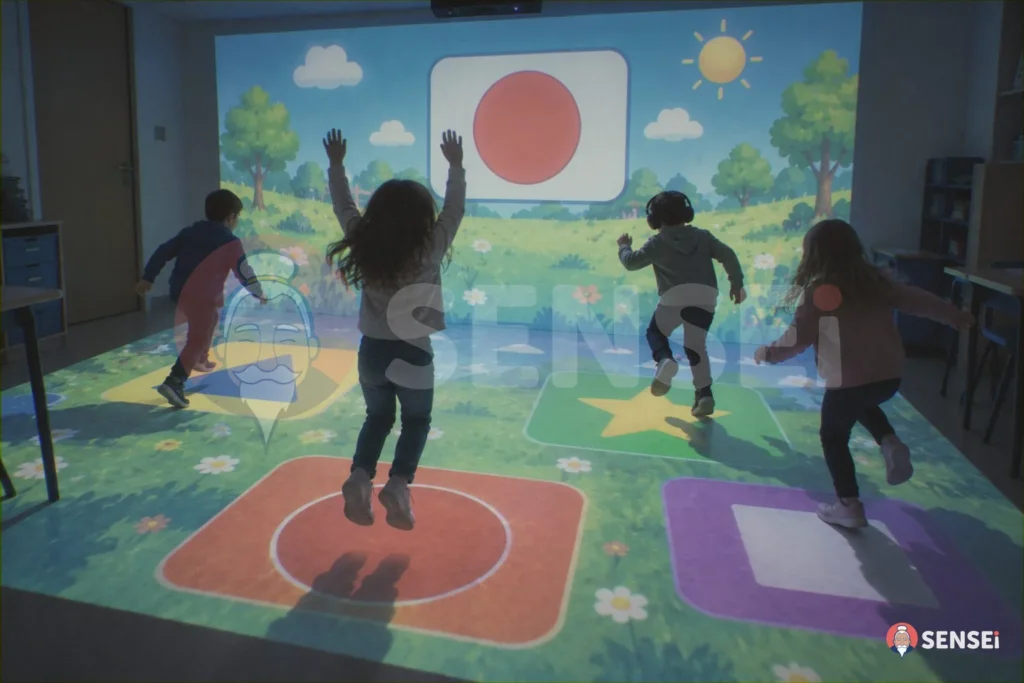
The first result: a collaborative game fosters the initiation of social activities between peers. It also elicits new body movements that the students do not show outside the game.
The group then describes a positive impact on the engagement of the whole class, in two forms:
- effect on onlookers (audience effect): classmates who are not playing turn to those who are, and vice versa;
- knock-on effect (spillover): the activity has a positive effect on social behaviour outside the game too.
Finally, the study identifies some key considerations for designing and introducing movement activities for autistic children in the classroom.
What can a teacher take into the classroom?
The study does not offer a recipe, but it suggests some practical points:
- Prefer collaborative games: in the study, these are the ones that support the initiation of interactions between classmates.
- Involve those watching too: those not playing still take part, because the audience effect creates opportunities for exchange.
- Observe what happens afterwards: it is worth noting what happens in class after the activity, not only during it.
- Allow time: the study lasts nine months. Routines are built through continuity.
Why does it matter today?
This study shifts the focus from the individual pupil to the group. A well-designed activity does not just “help” the autistic student: it creates opportunities for relationships for the whole class.
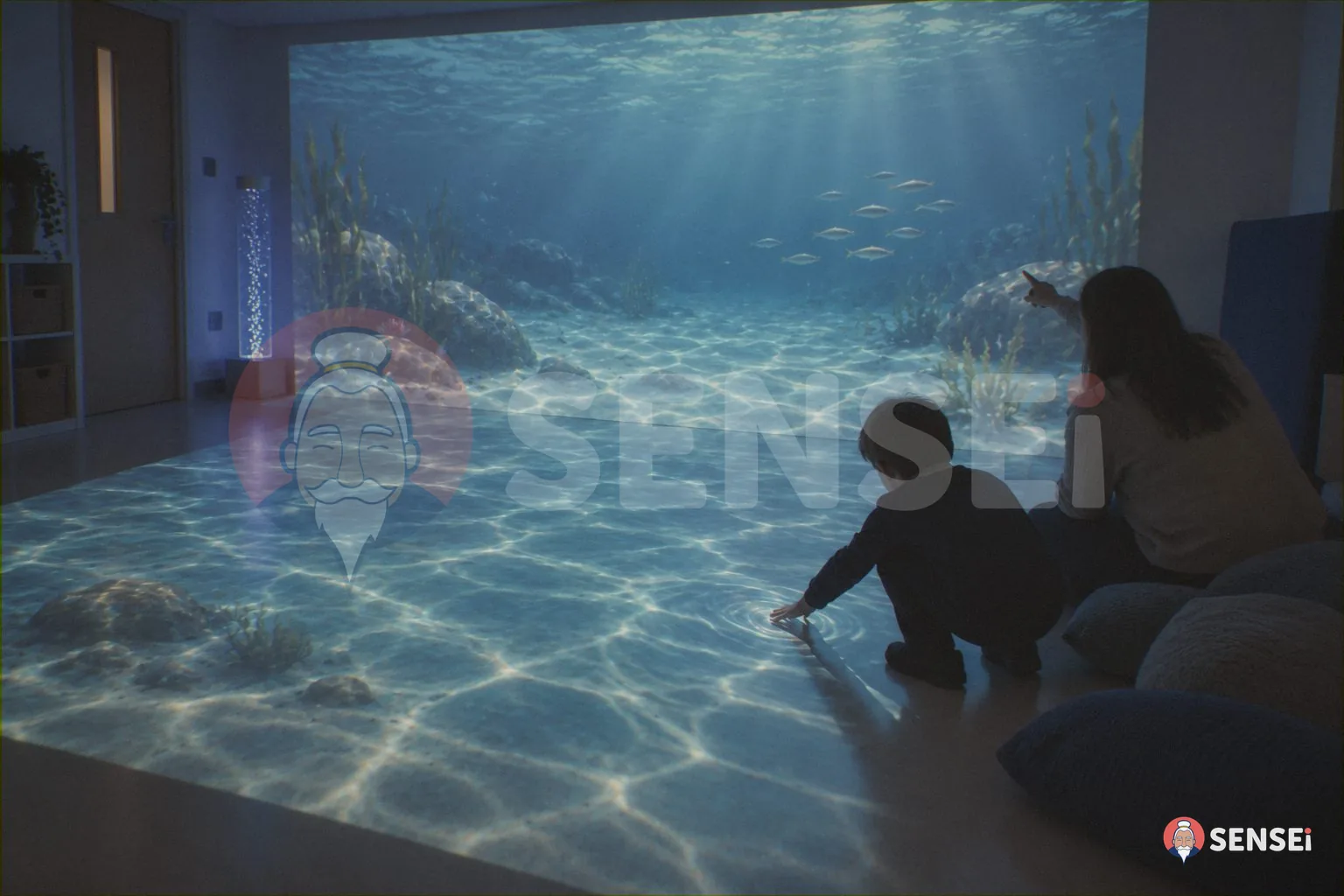
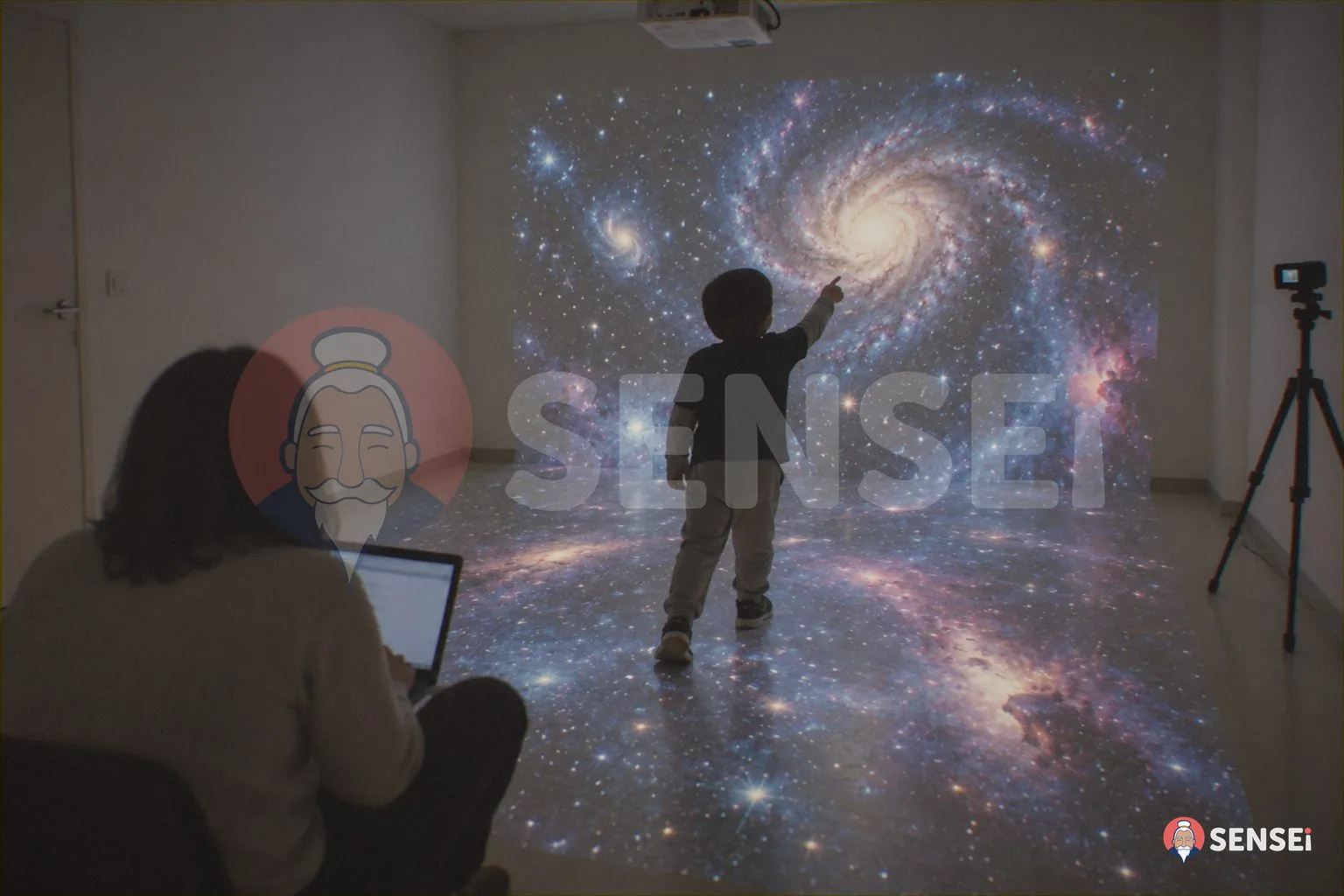
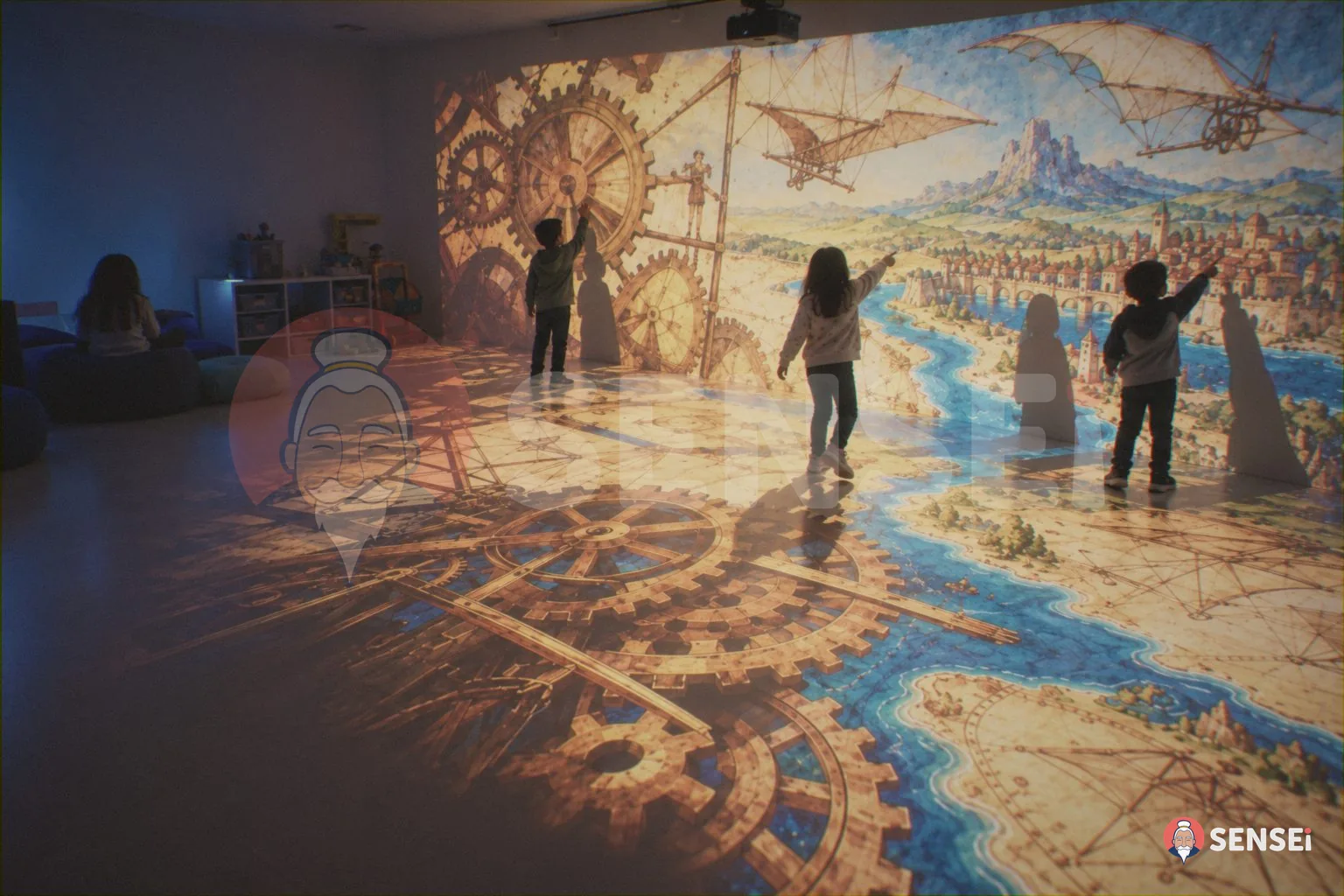
SENSEi calls this reverse inclusion: if a game is designed for the student who finds it hardest to connect with others, it becomes an opportunity for exchange for the whole class. In the magic room, walls and floor react to the movements and gestures of classmates playing together, while those watching remain part of the scene. Activities can be designed for collaboration, with different roles for those who act and those who observe, and the teacher guides them from the tablet.
For the SENSEi research group, this work marks a transition: from the therapy centre to the classroom, with its classmates and its routines. It is the same transition that SENSEi makes today at school. You will find practical ideas in the guide Sensory room and autism at school and on the page SENSEi for primary school.
The full article is in the Research section: Designing motion-based activities to engage students with autism in classroom settings. For the earlier study in therapy centres: the summary on gesture-based games evaluated with autistic children.
Frequently asked questions
How long does the study last?
Nine months. It is an observational study conducted in the classroom with teachers and autistic students.
What are the audience effect and the spillover effect?
The first is the phenomenon whereby those watching and those playing turn to each other. The second is the positive effect of the activity on social behaviour outside the game too, as observed in the study.
Are movement activities a therapy for autism?
No. The study indicates that they can foster engagement and social interactions in the classroom. They do not replace interventions by professionals.
How much does an environment like this cost?
It depends on the configuration: space, experiences, training and services. Contact us for an assessment.
Do you work in a school, a centre or a museum and want an environment like this? Tell us about your project: we start from the needs of the people who will use it.
Sources
- Bhattacharya A., Gelsomini M., Pérez-Fuster P., Abowd G. D., Rozga A. (2015). Designing motion-based activities to engage students with autism in classroom settings. IDC 2015, ACM
- Bartoli L., Garzotto F., Gelsomini M., Oliveto L., Valoriani M. (2014). Designing and evaluating touchless playful interaction for ASD children. IDC 2014, ACM