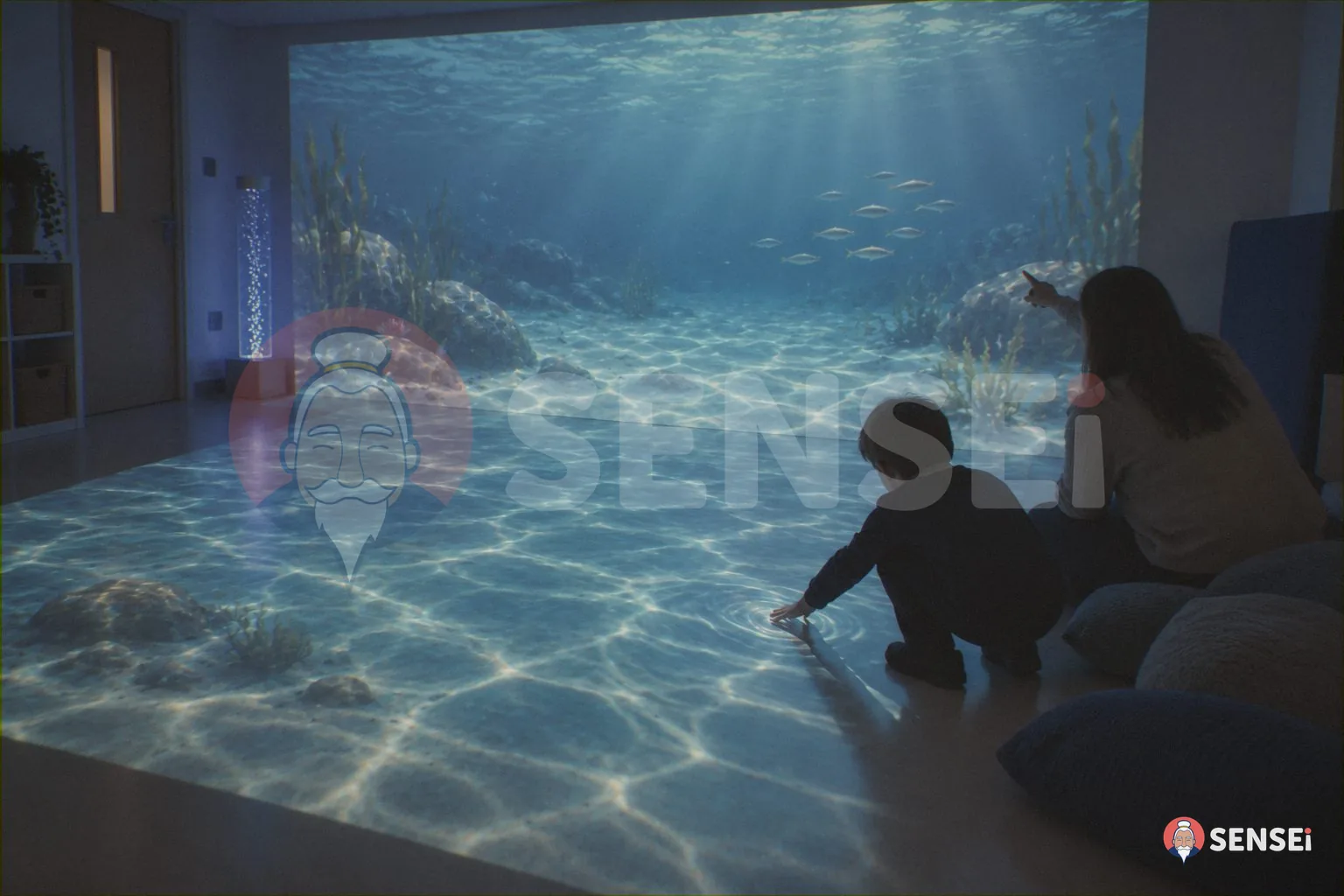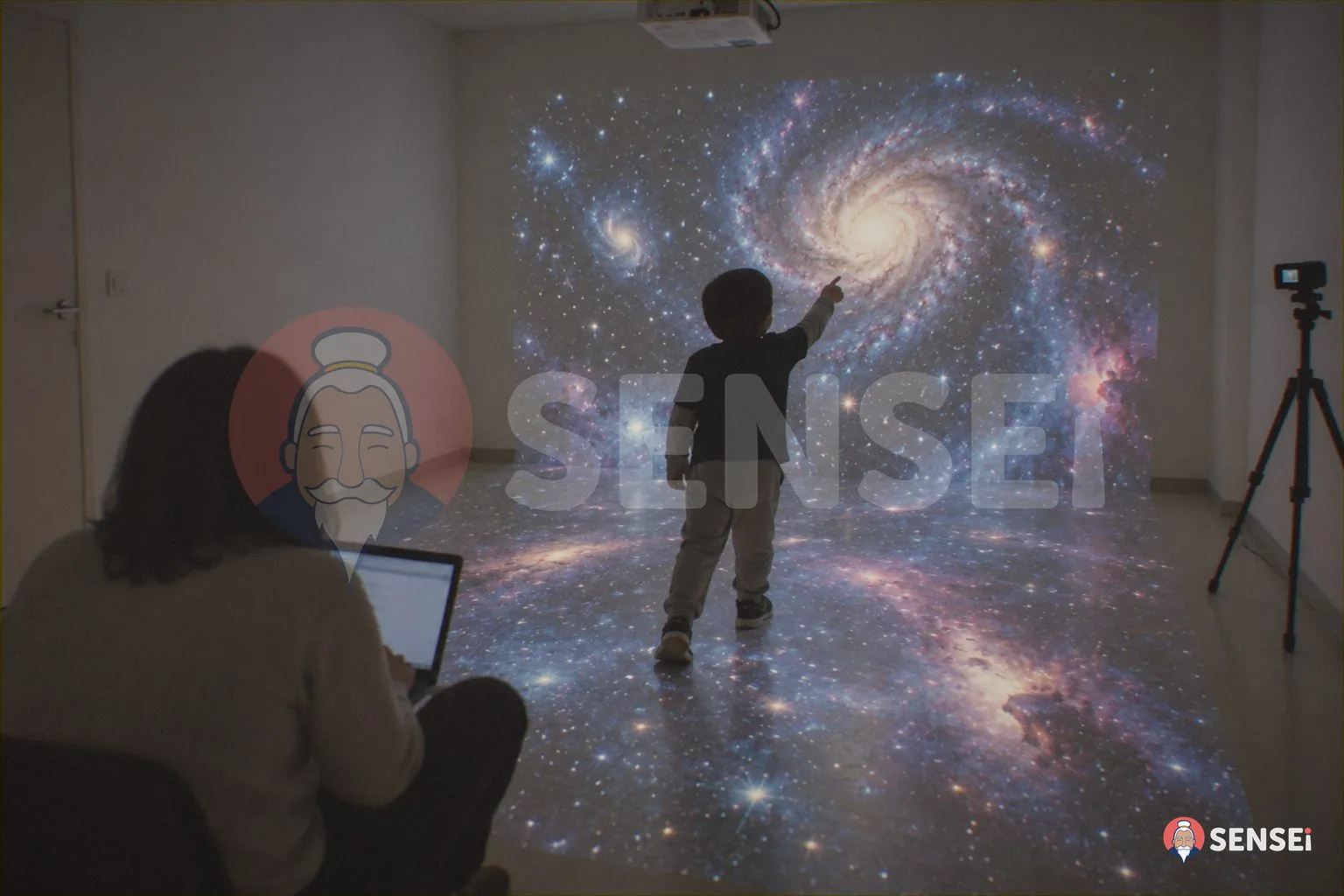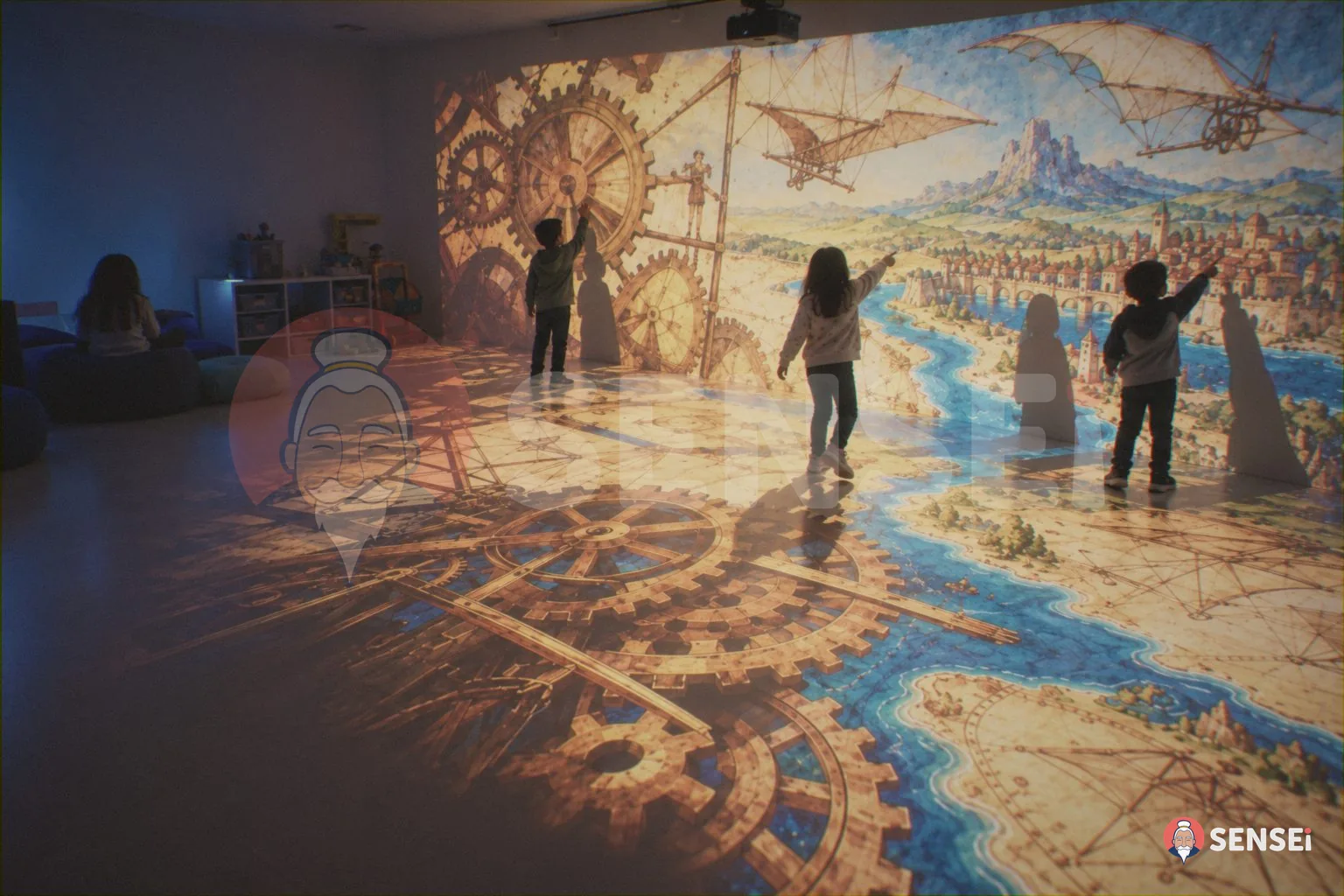

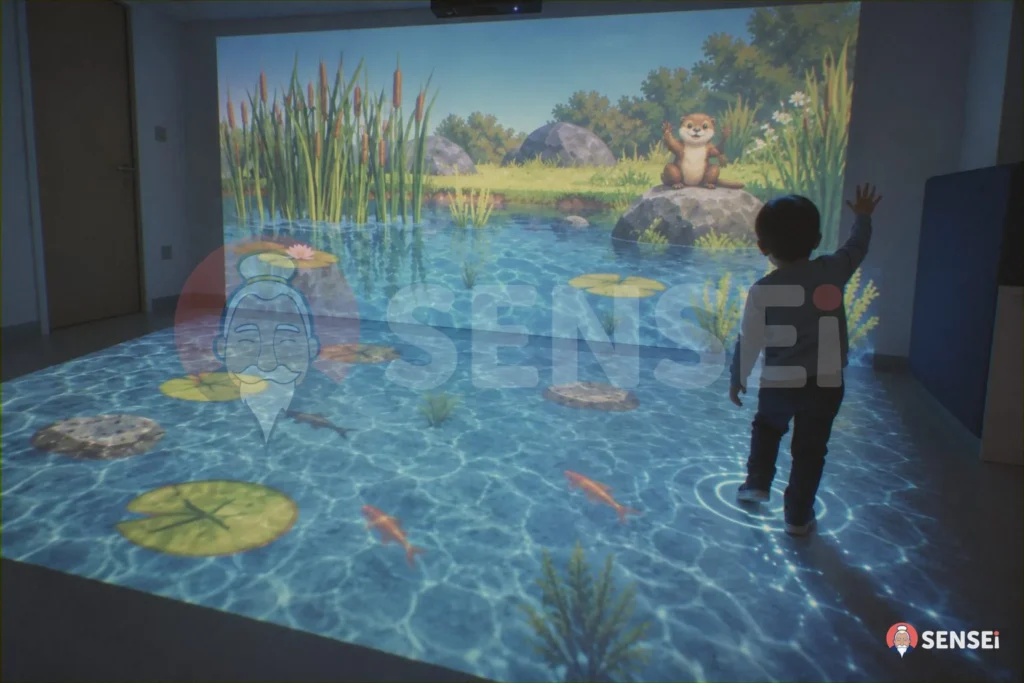
Nothing to wear, nothing to hold: just the body. Two studies design and evaluate touchless gesture-based games for autistic children, with results that confirm their potential.
They are among the first works of the research group from which SENSEi originates. And they explain why, still today, the magic room responds to movement without wearable sensors.
What is the research question?
Motion-based touchless interaction (motion-based touchless interaction) makes it possible to play with digital content without a mouse, keyboard or touchscreen. The system recognises body movements and the game responds.
As the group notes in the paper presented at the ACM IDC conference, studies on these applications for autistic children are still few. Above all, there is a lack of guidance on how to design them and what benefits they can bring. Hence the question: how do you design a gesture-based game that really works for these children, and for those who support them?
The study in brief
Pixel Balance: imitating and getting to know one’s own body
In the first work, presented at the AVI conference, the group designs Pixel Balance, a gesture-based game for children with autism spectrum disorder, and presents a preliminary evaluation. The game is designed to promote imitation skills, body schema awareness and social skills.
One stated goal is to develop tools that teachers and therapists can use independently, in class or during therapy activities.
Guidelines and three games in a therapy centre
The second work, published in the proceedings of the IDC conference, gathers a structured set of design guidelines. They distil the experience gained through empirical studies and collaborations with therapy centres.
On this basis, the group designs three touchless games and evaluates them in a controlled study in a therapy centre with children with medium-functioning autism spectrum disorder.
What emerges?
For the group, the results confirm the potential of touchless gesture-based games for technology-supported interventions with these children.
The work on Pixel Balance is a preliminary evaluation. The IDC study is controlled but limited to one centre. These are results that point in a direction, not evidence of clinical effectiveness.
Why can playing without touching help?
The studies do not measure these aspects one by one, but some practical advantages are intuitive:
- the child does not have to wear anything, which matters for those with particular tactile sensitivity;
- the whole body becomes the play tool, with no intermediary devices to learn;
- the adult can observe and guide without interrupting the action.
Why does it matter today?
Touchless interaction remains a pillar of SENSEi. In the magic room, walls and floor respond to the gestures and movement of several people at once, and the educator or therapist leads from the tablet. Compared with the first games, the experience is richer: images, lights, sounds, scents and tactile objects.
The idea of teacher and therapist independence also becomes central: they are the ones who choose, adapt and create the activities. Pixel Balance already stated it as a goal; in the SENSEi room it becomes the normal way of working.
To learn more, read the use of multisensory rooms in autism, the guide Sensory room and autism at school and the Therapy and well-being page.
The publications are in the Research section: Motion-based touchless interaction for ASD children: a case study and Designing and evaluating touchless playful interaction for ASD children.
Frequently asked questions
What is a touchless game?
It is a digital game controlled with body movements. No mouse, keyboard, touchscreen or wearable devices are needed.
What is Pixel Balance?
It is a gesture-based game for autistic children designed to promote imitation, body schema awareness and social skills.
Do these games cure autism?
No. The research group speaks of potential for technology-supported interventions. They are tools available to professionals, not therapies.
How much does an environment like this cost?
It depends on the configuration: space, experiences, training and services. Contact us for an assessment.
Do you work in a school, a centre or a museum and want an environment like this? Tell us about your project: we start from the needs of the people who will use it.