
An inclusive augmented reality is a digital layer superimposed on physical space that adapts to people with different needs, instead of assuming a standard user. It is the theme of the workshop Designing Inclusive Future Augmented Realities, organised at the international ACM CHI conference.
Among the organisers is Mirko Gelsomini, founder of SENSEi, together with Michael Nebeling, Mika Oki, Gillian R. Hayes, Mark Billinghurst, Kenji Suzuki and Roland Graf. A question about the future, and one that a SENSEi room already lives every day.
The research question: who are we designing for?
The organisers’ starting point is that augmented and mixed reality are advancing rapidly thanks to new displays, sensors and artificial intelligence. With generative AI it becomes easier not only to create content, but also to adapt and personalise it.
It is an opportunity: environments that welcome people with different needs thanks to layers of “augmentation” designed for accessibility. But it is also a risk, if design remains aimed at the few. The workshop has a goal on two levels:
- removing barriers through adaptations and accommodations;
- creating a sense of belonging, by involving people directly.
The workshop in brief
The work is organised in three stages:
- critical review: discussion of examples brought by organisers and participants, to analyse the landscape of accessible and inclusive design;
- rapid prototyping: bodystorming (designing by moving through the space) and simple mixed-material prototypes, to imagine how to make a physical space more personal, even beyond what is technically possible today;
- research agenda: collective work on future directions towards augmented realities that promote equal opportunities.
The organisers choose to start from physical space in order to prototype without technical constraints, noting that the techniques are probably also applicable to immersive virtual environments. The summary is Designing Inclusive Future Augmented Realities.
What emerges?
A workshop does not produce experimental data: it produces shared questions, ideas and an agenda. The central message is that accessibility is not a final add-on. It must be designed from the start, together with the people who will use the environment.
Why it matters today
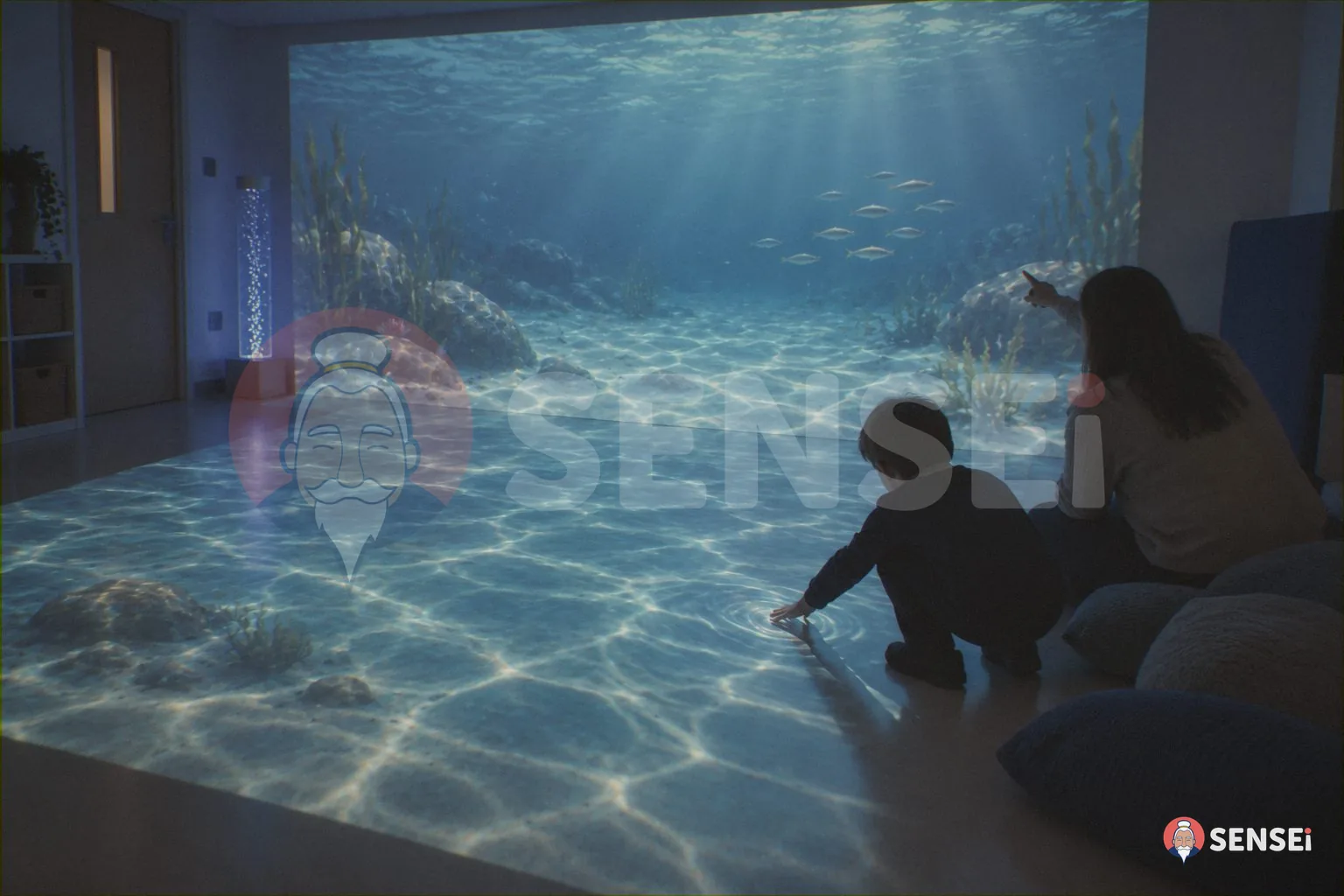
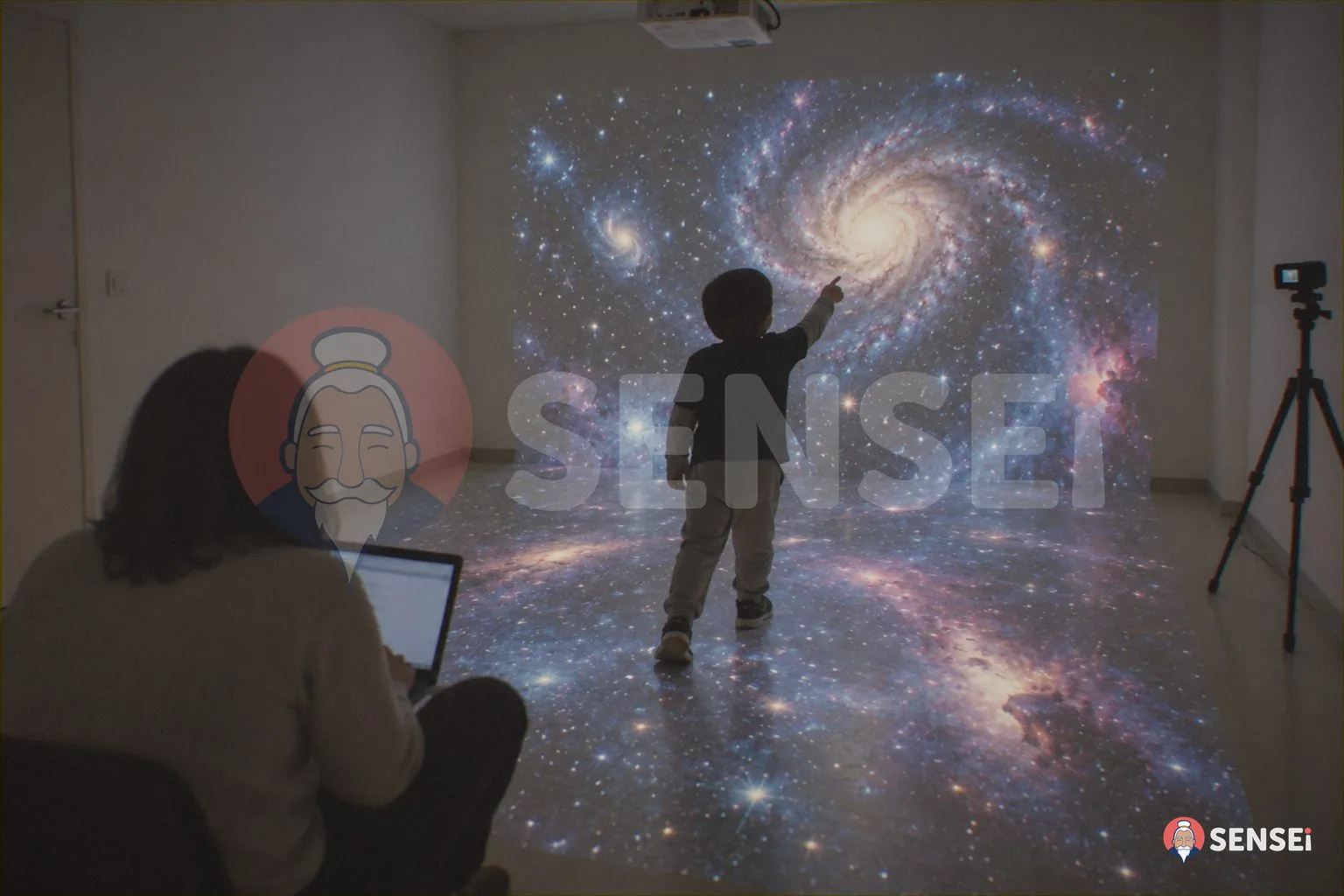
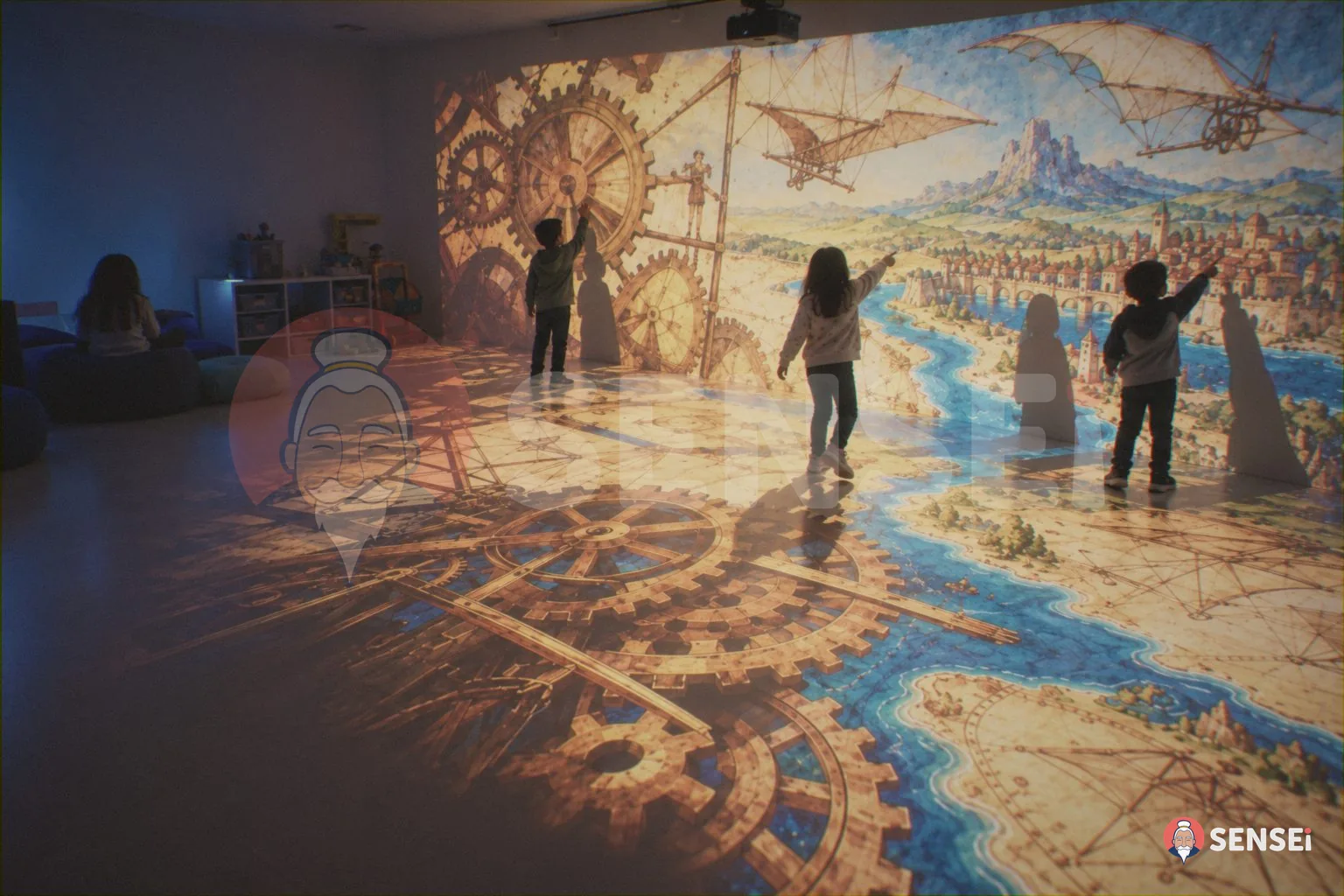
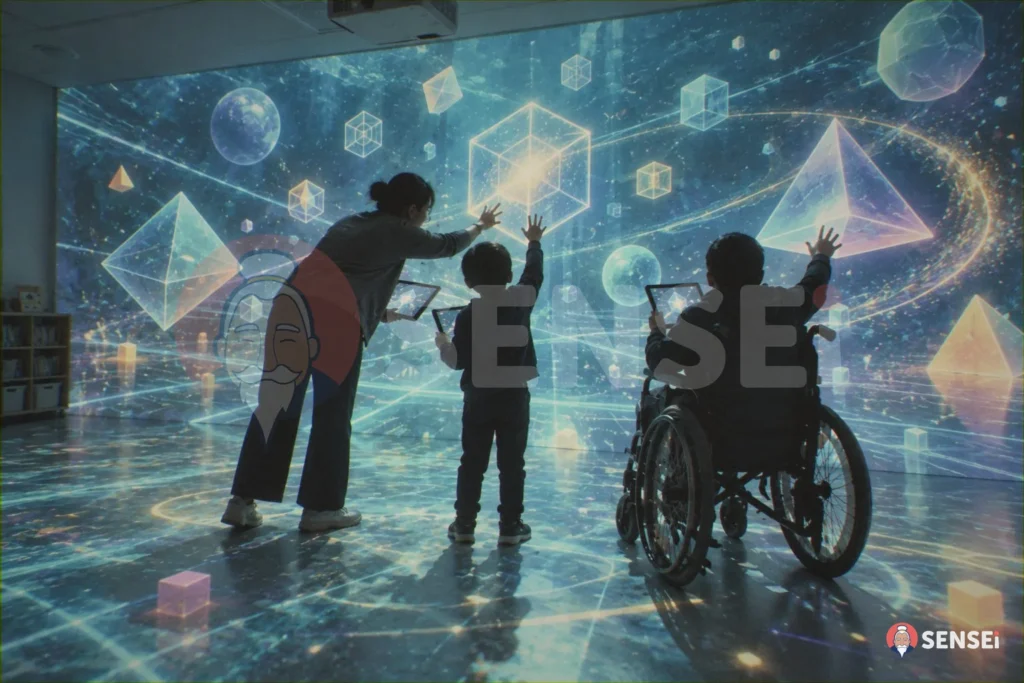
A SENSEi room can be seen as a form of shared augmented reality. Real walls and floors are enriched with images, lights, sounds and scents, without headsets, and several people live the same experience in the same space. This is SENSEi’s interpretation, not a conclusion of the workshop, but the principles coincide:
- reverse inclusion: as the workshop calls for, accessibility comes in at the start; you begin with those who have the most complex needs and the experience improves for the whole group;
- Universal Design for Learning: multiple ways of representing, acting and expressing oneself;
- personalisation with AI: with Eureka educators and therapists create and adapt activities;
- co-design: activities are created together with therapists, teachers and partners.
It is a vision that SENSEi research pursues in more than 40 publications, from Magika to the work with SUPSI and international partners. For teaching that starts from the senses, read Multisensory teaching: definition and examples.
Frequently asked questions
What is inclusive augmented reality?
An augmented reality designed to welcome people with different needs, with layers of digital content that remove barriers and foster belonging.
What is bodystorming?
A design technique in which ideas are explored by physically moving through the space, instead of only discussing them around a table.
Is SENSEi augmented reality?
SENSEi enriches physical space with images, lights, sounds and scents, without headsets. It is not augmented reality in the classic sense, but it shares the idea of enriching the real environment.
How much does an environment like this cost?
It depends on the configuration: space, experiences, training and services. Contact us for an assessment.
Do you work in a school, a centre or a museum and want an environment like this? Tell us about your project: we start from the needs of the people who will use it.
Sources
- Nebeling M., Oki M., Gelsomini M., Hayes G. R., Billinghurst M., Suzuki K., Graf R. (2024). Designing Inclusive Future Augmented Realities. CHI EA 2024. DOI 10.1145/3613905.3636313
- SENSEi summary: Designing Inclusive Future Augmented Realities
- Gelsomini M. et al. (2019). Magika, a Multisensory Environment for Play, Education and Inclusion. CHI EA 2019. DOI 10.1145/3290607.3312753