
The best sensory room ideas for autistic pupils start from each child’s sensory profile, give pupils control over what happens, and combine a calm zone with a space for movement and learning. Research and DfE guidance both point away from one-size-fits-all rooms and towards flexible, needs-led spaces.
Below are twelve practical ideas for schools, from low-cost first steps to interactive multisensory rooms, each linked to what research or guidance says, and to what it changes for pupils and staff.
Before you start: what makes a sensory room work for autistic pupils?
Autistic pupils experience the sensory world in different ways. One pupil may seek strong input; another may need to avoid it. A study by the Wales Autism Research Centre finds that preferences in a sensory room vary with each child’s sensory profile and non-verbal ability. The DfE also asks schools to invest in sensory rooms only “where there is a clear, specified need”, with specialist advice. So the first idea is not a piece of equipment at all.
12 sensory room ideas for autism in schools
1. Map sensory profiles first
Work with your SENCO, an occupational therapist or an educational psychologist to understand which pupils seek or avoid sound, light, touch or movement. Use this to decide what goes in the room, and what stays out.
2. Give pupils control
Let pupils start, stop and change effects themselves, by touch, gesture or a simple choice. In a Cardiff University study of 41 autistic children, having control is associated with more attention and fewer repetitive and sensory behaviours.
3. Create a low-stimulation zone
A den, pod or screened corner with soft seating, muted colours and soft lighting. The DfE estates guidance lists these as good options for calm, predictable spaces. More ideas in regulation rooms that do more.
4. Offer a stimulation zone with choice
Some pupils need sensory input to stay regulated. In the Cardiff study, the bubble tube and a touch, sound and light board are the most popular items in free play. Offer two or three choices rather than everything at once.
5. Build in predictability
Use the same opening and closing routine, a visual timetable and “Now and Next” boards. The DfE Inclusion Base guidance lists these as useful predictability resources.
6. Make the atmosphere adjustable
Light and sound that can be softened or brightened, plus soft furnishings to reduce echo, let the same room suit different pupils on different days.
7. Use the walls and floor for movement
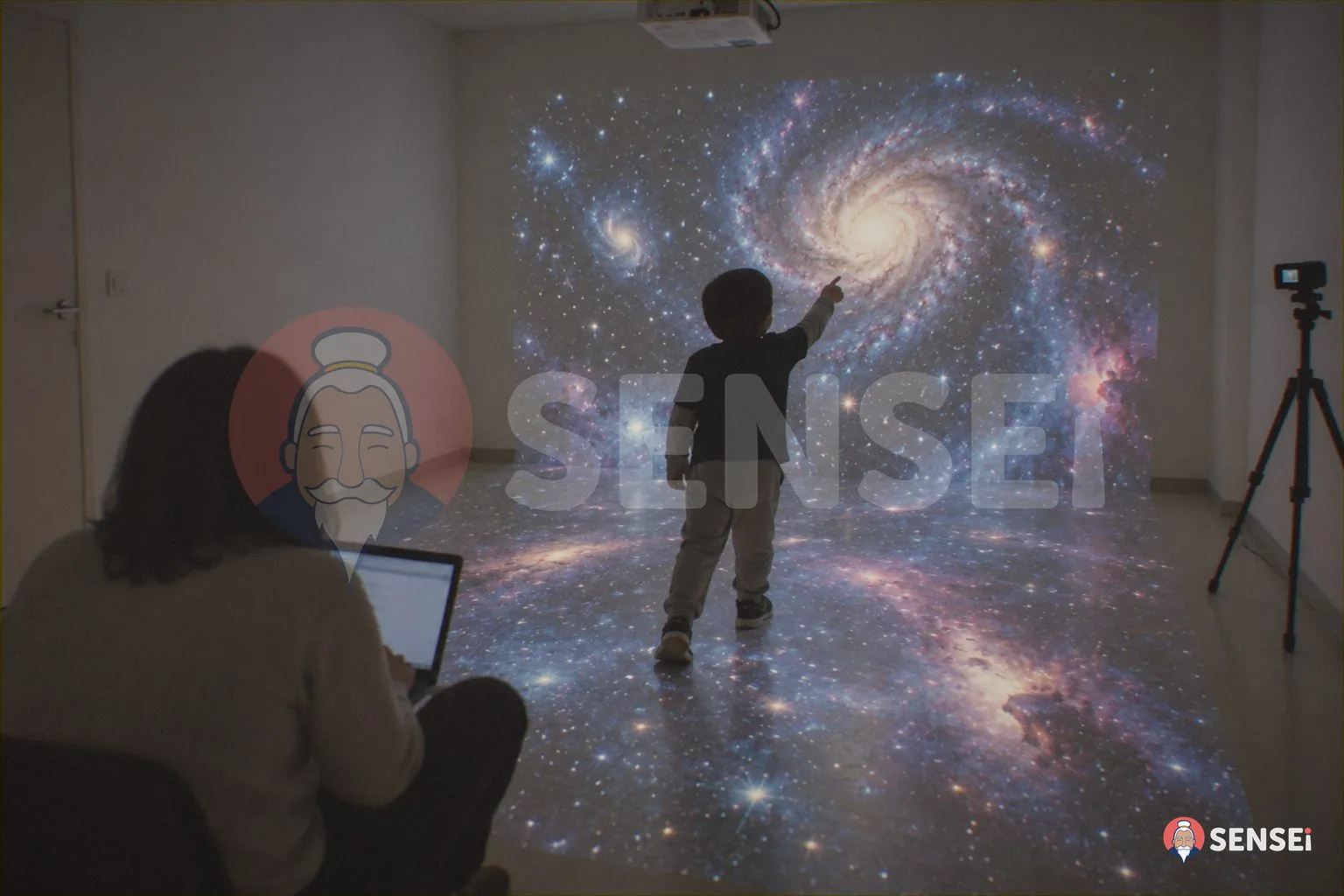
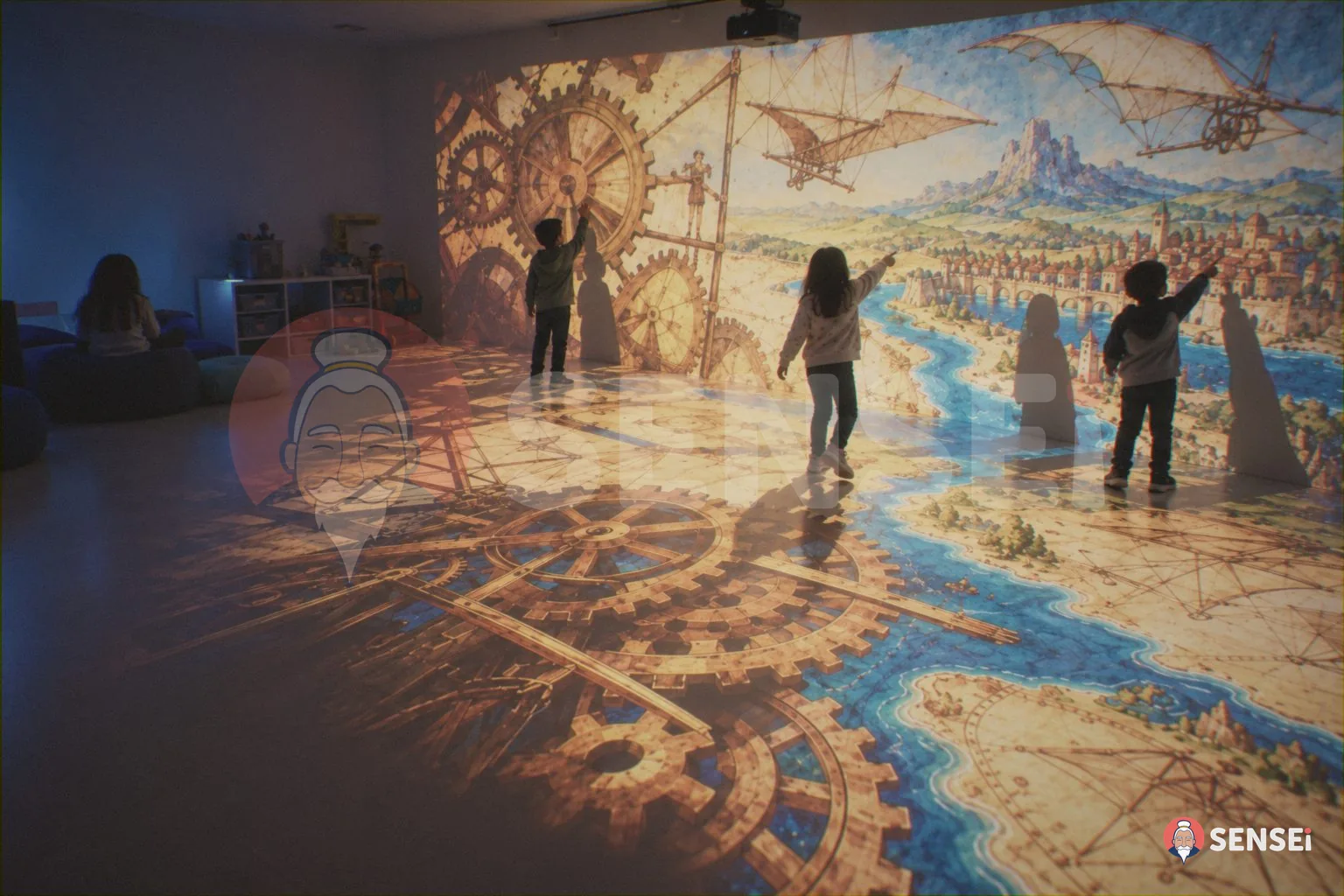
Interactive experiences on walls and floor invite pupils to move, jump or reach to make things happen. In a nine-month classroom study co-authored by SENSEi founder Mirko Gelsomini (ACM IDC 2015), a collaborative motion-based game encourages autistic students to start social interactions with peers, and positive social behaviour carries over beyond the game.
8. Plan small group play, not only one-to-one
The same study observes an “audience effect”: classmates who are not playing approach the players, and players approach them. Group activities in a sensory room can support social interaction as well as regulation.
9. Support communication with symbols
Add pictograms to activities for pupils who use augmented and alternative communication (AAC). Choice boards for “calm”, “move” or “play” let pupils say what they need.
10. Keep the room multi-purpose
The DfE Inclusion Base guidance prefers multi-purpose spaces to permanently installed sensory facilities. Keep the floor clear, furniture movable and content changeable. See Inclusion Base design for a zone plan.
11. Keep an adult actively involved
Practitioners surveyed by the Cardiff team believe multi-sensory rooms work best when the adult plays an active role. Plan who leads each session and what they are looking for.
12. Observe and record
Note which activities help each pupil focus, calm or join in. Short, regular notes are enough to spot patterns and adjust the room.
Low-cost sensory room ideas to start with
Not every school can create a dedicated room straight away. The DfE estates guidance itself suggests small, informal spaces. Simple first steps include:
- a screened corner of a classroom with cushions and soft lighting;
- ear defenders and a quiet place to use them;
- a box of tactile objects chosen with the pupils;
- a visual timetable and a “calm card” pupils can use to ask for a break.
What to avoid in a sensory room for autistic pupils
- Sensory overload: too many lights, sounds and colours at the same time.
- One-size-fits-all equipment chosen without knowing who will use it.
- Using the room as a sanction. The DfE guidance says access to an Inclusion Base should never be used as a sanction or to remove pupils from class.
- Leaving pupils alone without a clear plan or an engaged adult.
- Expecting the room to treat autism. A sensory room can support regulation and learning; it is not a treatment for autism. See what the research says.
Interactive sensory room ideas with SENSEi
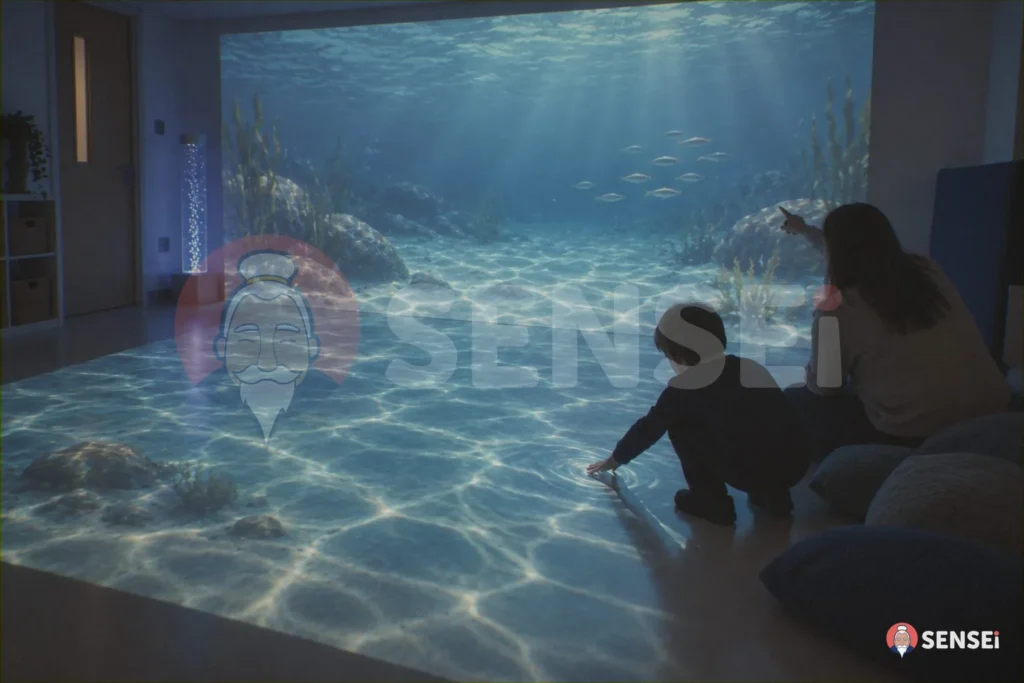
SENSEi brings many of these ideas together in one adaptive room. Walls and floor become interactive and respond to pupils’ movement, gestures, touch and voice, with nothing to wear. Staff choose calm or active scenes from a tablet and adjust intensity for each pupil, so the same room can be a quiet den in the morning and a group game in the afternoon. Activities can include ARASAAC pictograms, and teachers can build their own with Eureka.
The ideas above are not new to us. They come from more than ten years of research at Politecnico di Milano, from the Magic Room and Magika projects to today’s work with SUPSI, NTNU and UC Berkeley, documented in more than 40 peer-reviewed publications on interactive environments for children with neurodevelopmental conditions, including autism. Activities are designed starting from the most complex needs, so they work for the whole class.
What changes for the school? Autistic pupils get control and choice in a space that fits their profile. Teachers and teaching assistants run calm and learning sessions in the same room. SENCOs and therapists co-design activities and use session reports to see what helps each pupil. Explore SENSEi EDU for schools and our case studies.
Frequently asked questions
What should be in a sensory room for autistic pupils?
It depends on the pupils. A good starting point is a calm zone, a stimulation zone with a few choices, adjustable light and sound, and tools for predictability such as visual timetables.
What is the most popular sensory room equipment?
In one study of 41 autistic children, the bubble tube and a touch, sound and light board are the most visited. Preferences vary with each child’s sensory profile.
Can a sensory room help autistic pupils learn?
Research suggests it can create better conditions for learning, especially when pupils control the room and adults are actively involved. Evidence is still limited.
How can we make a sensory room on a small budget?
Start with a screened calm corner, soft lighting, ear defenders, tactile objects and visual supports. The DfE guidance lists dens, nooks and pods as valid options.
Should a sensory room be dark?
Not always. Some pupils need low light to calm down, others need brighter input. Adjustable lighting lets you adapt for each pupil.
See it in a real room
Looking for sensory room ideas that work for your pupils? We can show you how a SENSEi room adapts to different sensory profiles. Book a demo.
Sources
- Wales Autism Research Centre, Cardiff University. Sensory Room Guide: supporting the learning and wellbeing of autistic children
- Unwin, K. L., Powell, G., Jones, C. R. G. (2022). The use of Multi-Sensory Environments with autistic children: exploring the effect of having control of sensory changes. Autism, 26(6), 1379-1394. doi:10.1177/13623613211050176
- Unwin, K. L., Powell, G., Price, A., Jones, C. R. (2024). Patterns of equipment use for autistic children in multi-sensory environments. Autism, 28(3), 644-655
- Unwin, K. L., Powell, G., Jones, C. R. G. (2021). A sequential mixed-methods approach to exploring the experiences of practitioners who have worked in multi-sensory environments with autistic children. Research in Developmental Disabilities, 118, 104061
- DfE (June 2026). Inclusive education estates (PDF)
- DfE (25 June 2026). Inclusion bases in schools. GOV.UK guidance
- Bhattacharya, A., Gelsomini, M., Pérez-Fuster, P., Abowd, G. D., Rozga, A. (2015). Designing motion-based activities to engage students with autism in classroom settings. ACM IDC 2015. doi:10.1145/2771839.2771847