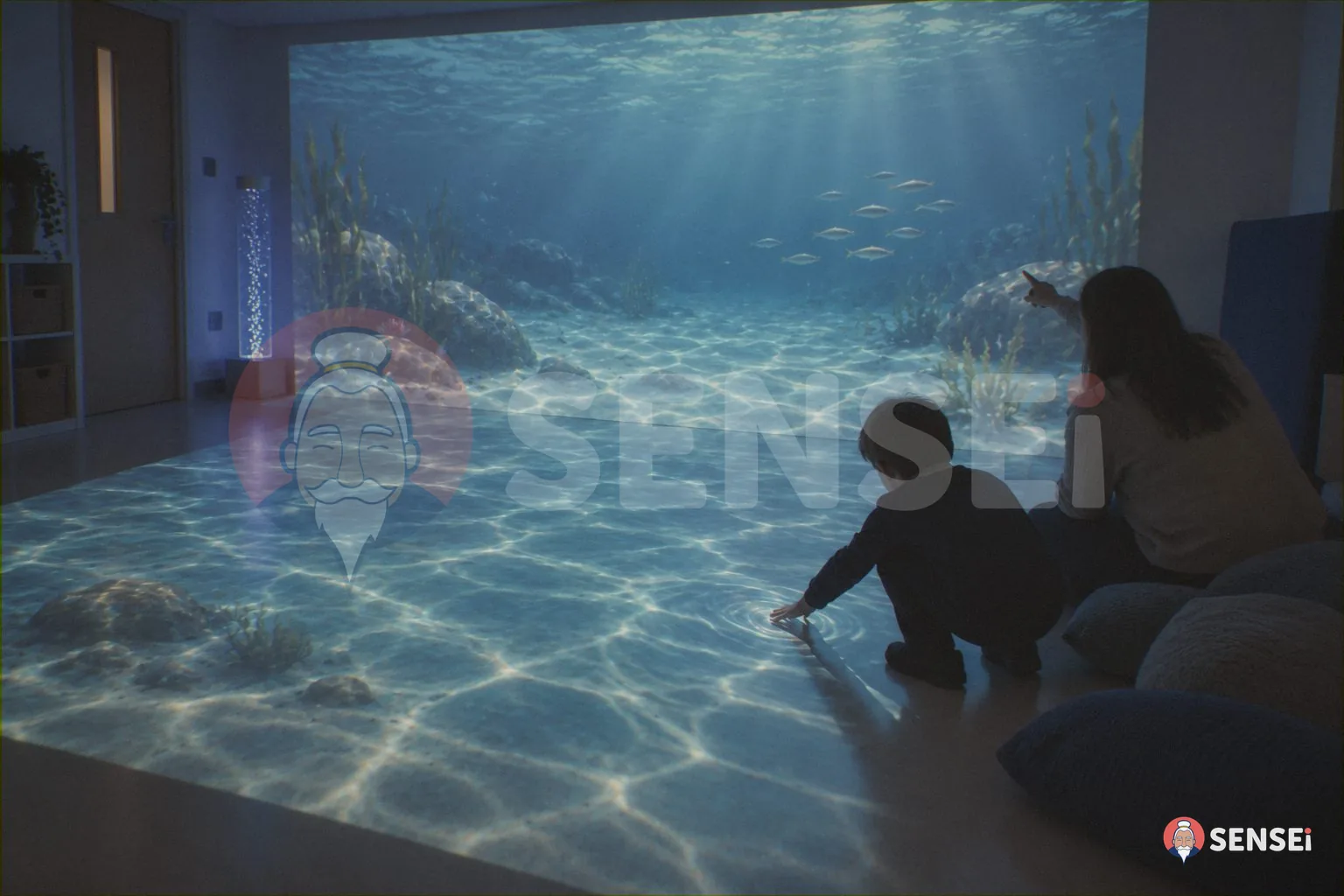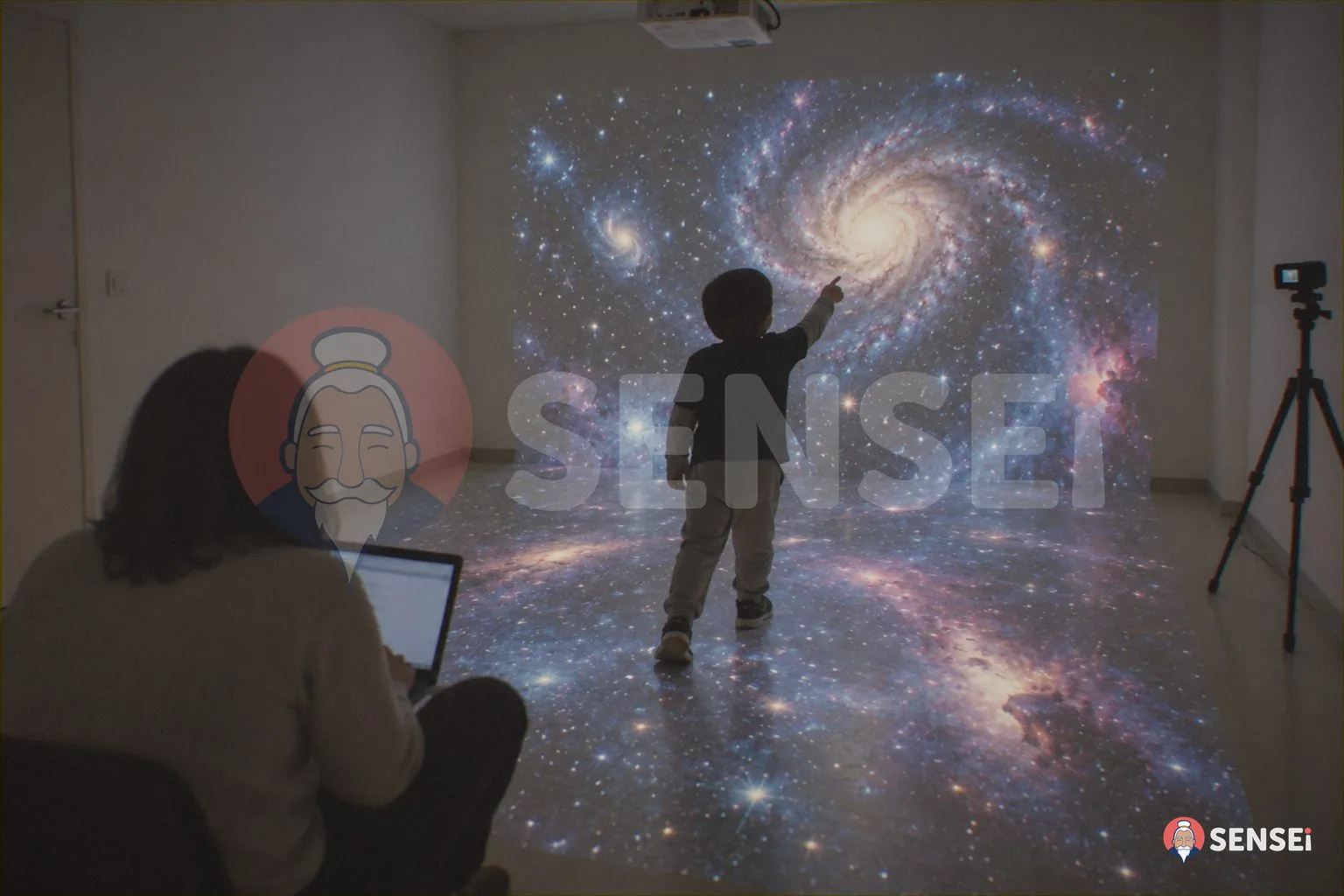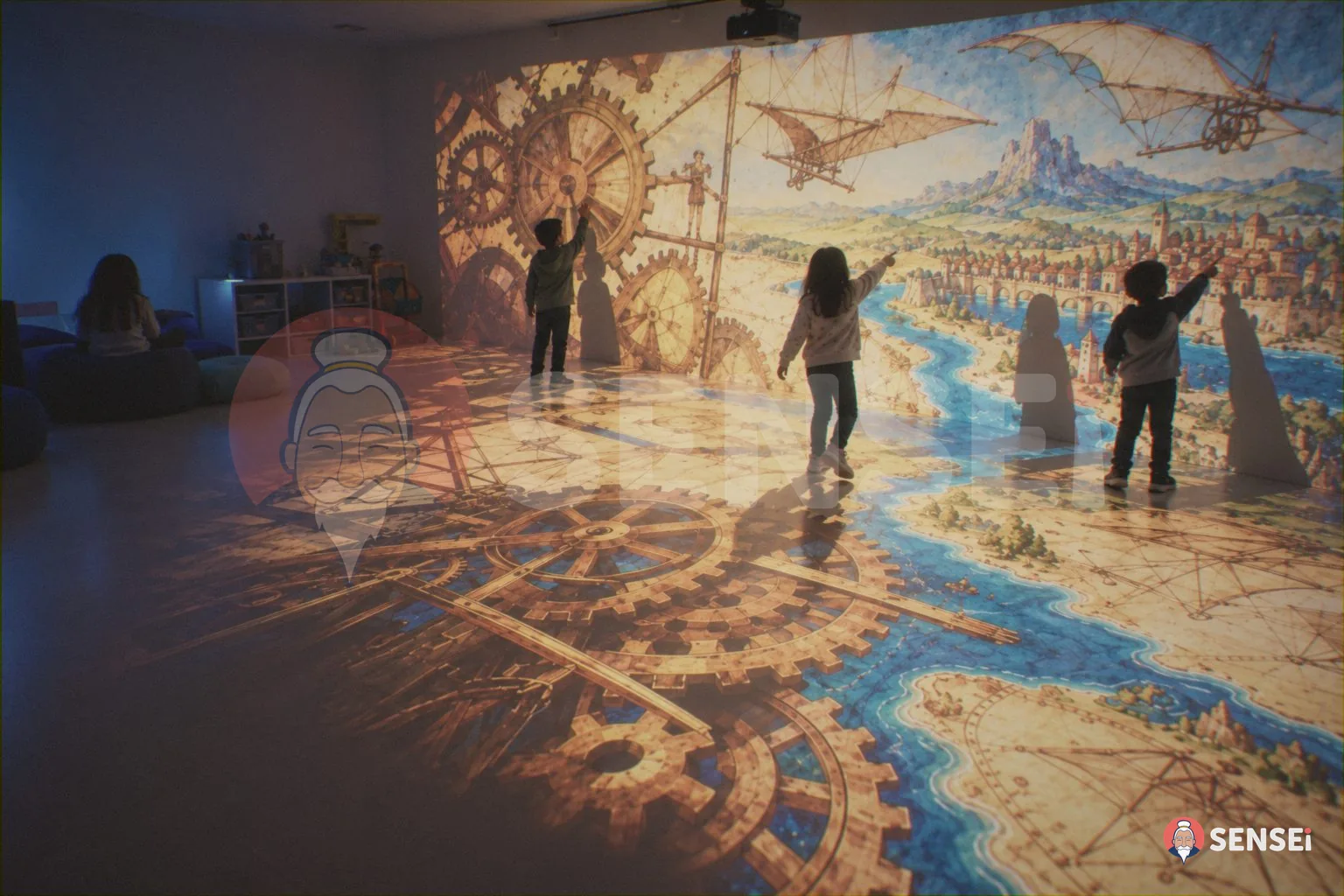

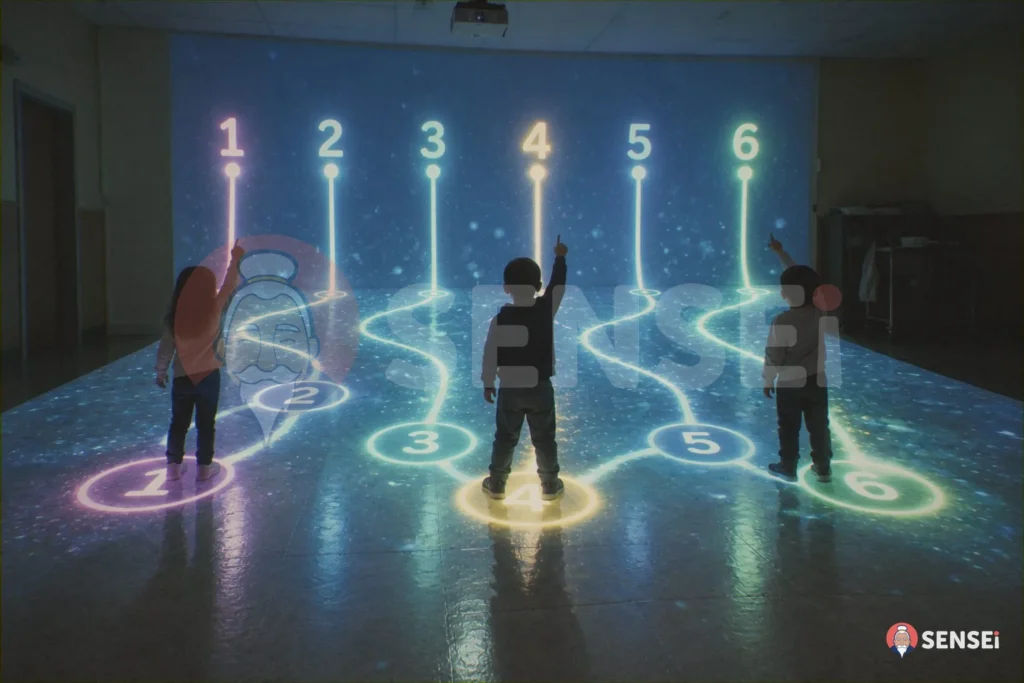
We also learn with the body: walking along a line, drawing a shape with our arms, reaching the right answer. This is the idea of embodied learning.
A controlled study by the SENSEi research group in a primary school, presented at the ACM CHI conference, explores its potential in an immersive space called IMAGINE. Here is what it shows and what it means for teachers.
What is the research question?
Movement becomes part of reasoning: this is one of SENSEi’s pedagogical references, together with Universal Design for Learning. We discuss it in the guide to multisensory teaching.
The group’s question is concrete: does a smart, interactive and immersive space, in which children learn with their body, have educational value, including when compared with traditional teaching methods?
The study in brief
In IMAGINE, children use body movements and gestures to interact with educational content that comes to life on the wall and the floor. Synchronised lights make the experience even more immersive. The group handles both its design and its evaluation.
The group conducts a controlled study in a primary school with 48 children aged 6 to 8, also comparing the immersive solution with traditional teaching methods. The experimental design and measures are described in the full paper.
What emerges?
The results highlight the educational potential of an immersive, embodied solution, including when compared with traditional methods. From the results, the group also draws implications for adopting smart spaces in schools: technology must be conceived together with those who will use it, not imposed from above.
It is not about choosing between technology and traditional teaching. It is about understanding when movement and immersion add value to a topic, and when a traditional lesson is enough.
The scope of the study should be kept in mind: one school, one age group, a group of 48 children. It is a useful basis for design, to be confirmed with other classes and other content.
How to bring embodied learning into the classroom?
Some ideas for teachers, in keeping with the spirit of IMAGINE:
| Goal | Example of a body-based activity |
|---|---|
| Counting and ordering | moving along a number line projected on the floor |
| Recognising shapes | reproducing with the arms the shape that appears on the wall |
| Sorting | reaching the area of the floor that matches the right category |
| Listening and responding | moving at the agreed sound or light signal |
These are illustrative examples, not activities tested in the study. They show how a teaching goal can be translated into movement.
Why does it matter today?
In the SENSEi magic room, embodied learning is everyday practice. Walls and floor react to how children walk, point and stop, all together and with nothing to wear; the teacher guides the activity from a tablet and adapts it to the class.
This research strand continues. A study with 175 children compares five interaction modes: we describe it in Touching, moving, speaking. Another, with UC Berkeley and NTNU, concerns mathematics with the body: read Hybrid teaching intelligence in embodied mathematics learning. These are milestones in the same strand on the body that learns, which the SENSEi research group has followed from IMAGINE onwards.
For primary school, you will find examples on the page SENSEi for primary school. The original paper is in the Research section: Embodied Learning in Immersive Smart Spaces.
Frequently asked questions
What is embodied learning?
It is an approach according to which the body takes part in learning: movements and gestures become part of the way a concept is understood.
Who takes part in the study?
48 children aged 6 to 8, in a controlled study in a primary school.
Does the immersive space replace the traditional lesson?
No. The study highlights its educational potential, including in comparison with traditional methods, but the environment remains a tool in the teacher’s hands.
How much does an environment like this cost?
It depends on the configuration: space, experiences, training and services. Contact us for an assessment.
Do you work in a school, a centre or a museum and want an environment like this? Tell us about your project: we start from the needs of the people who will use it.