
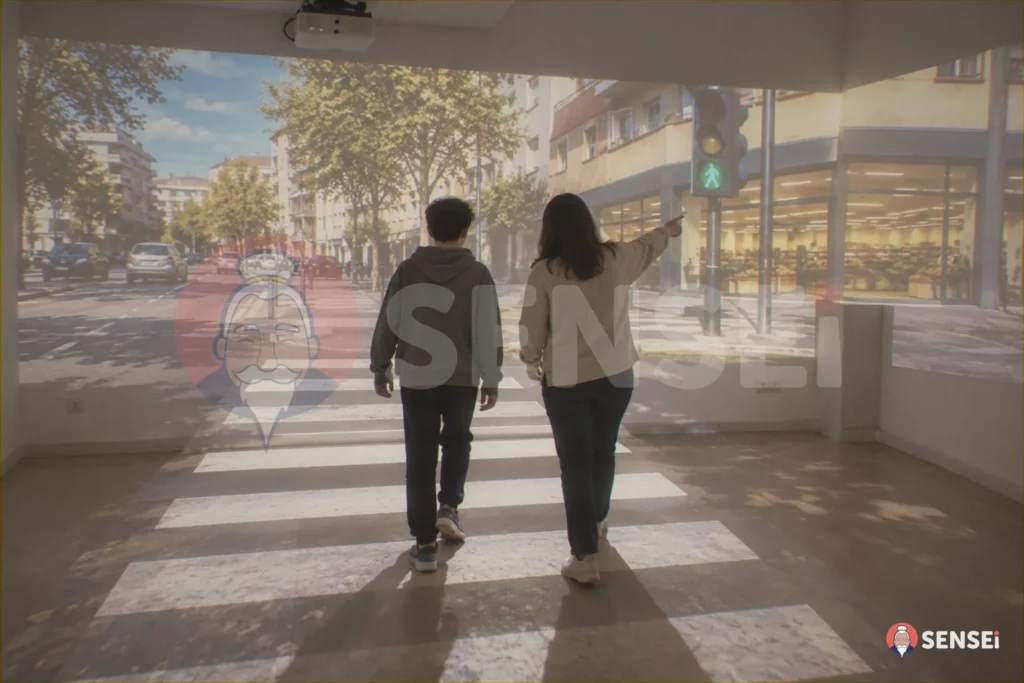
In Cernusco sul Naviglio, together with the association I Gigli del Campo, SENSEi creates an immersive room for teenagers and young adults with autism, aged between 13 and 25. The idea is simple and ambitious: a safe place to relax, learn and practise facing situations that can be difficult in the outside world, such as the underground or a crowded supermarket.
The context: growing towards independence
I Gigli del Campo is a centre for people with disabilities in the province of Milan. The project is aimed at around twenty young people, with up to ten present at the same time.
Working with teenagers and young adults requires a delicate balance between play, regulation and independence. Inclusion is also among the goals: creating opportunities to meet peers.
How do we design together?
In the first meeting the team defines three directions: relaxation and play; learning, meaning the management of sensory stimulation, generalisation to real contexts and social skills; raising awareness of autism and the senses. The organisation’s minutes sum it up like this: “We fully embrace what has been presented to us”.
The method has two stages: first a few basic activities, selected and adapted, then specific goals built with the team, with regular meetings over several months.
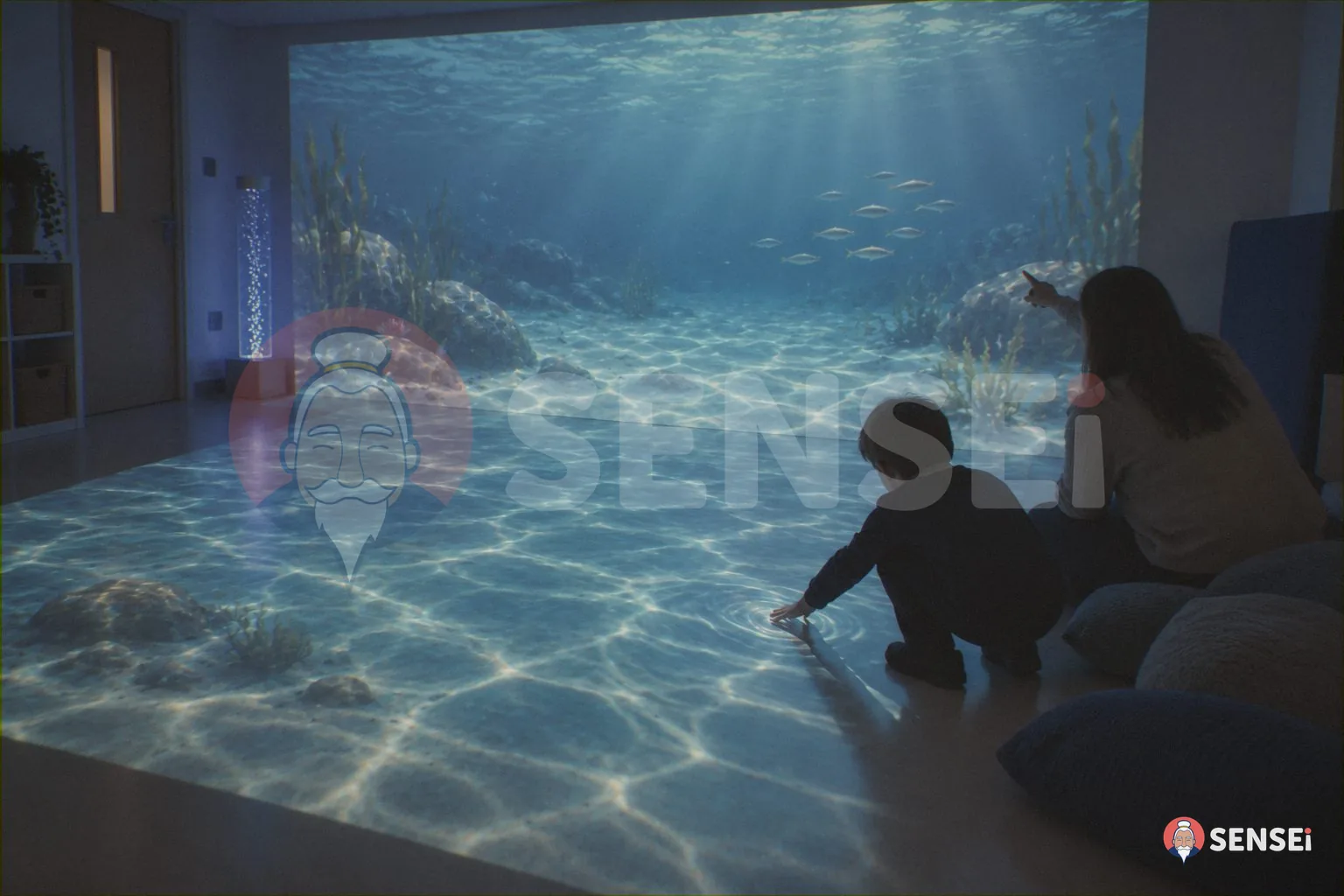
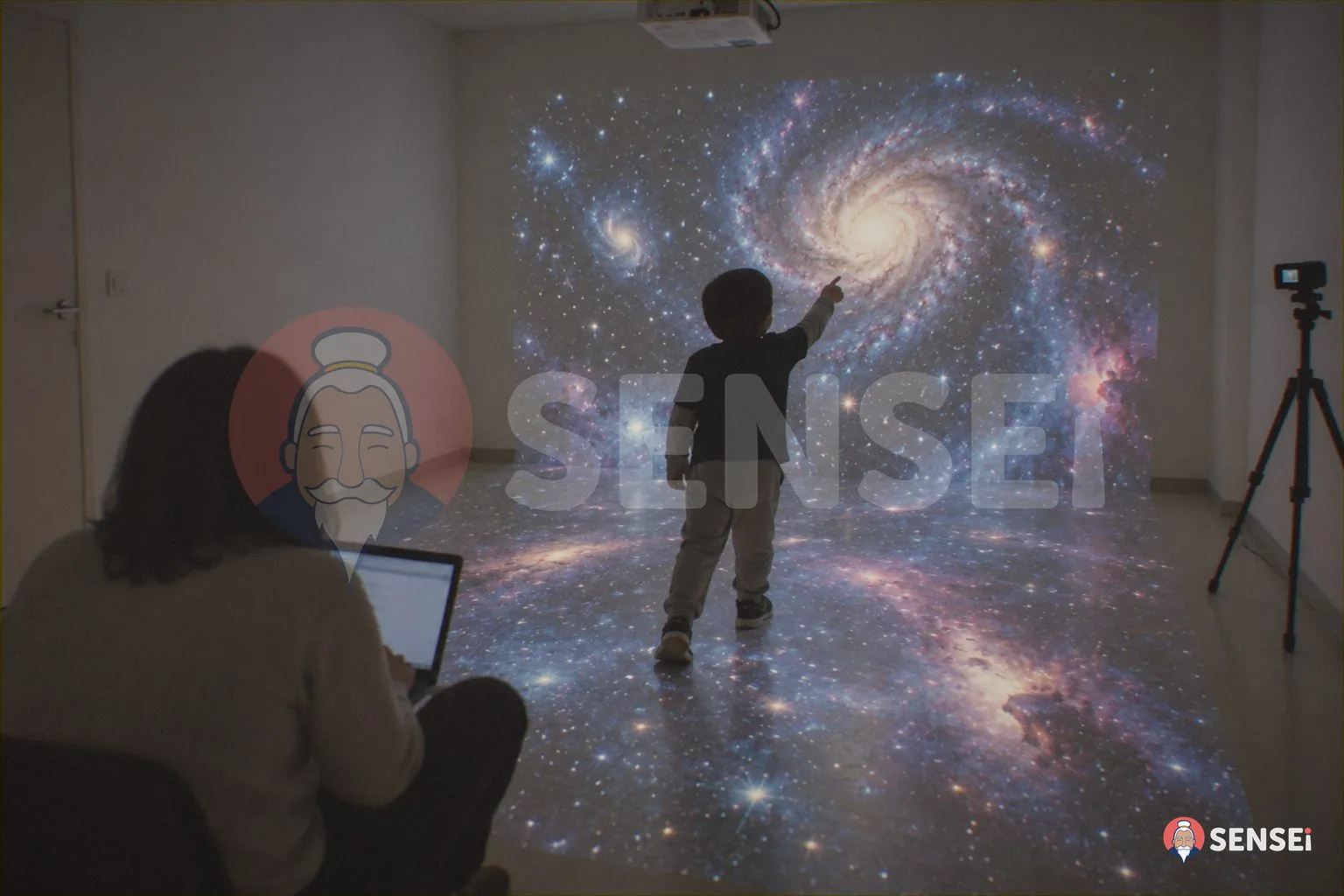
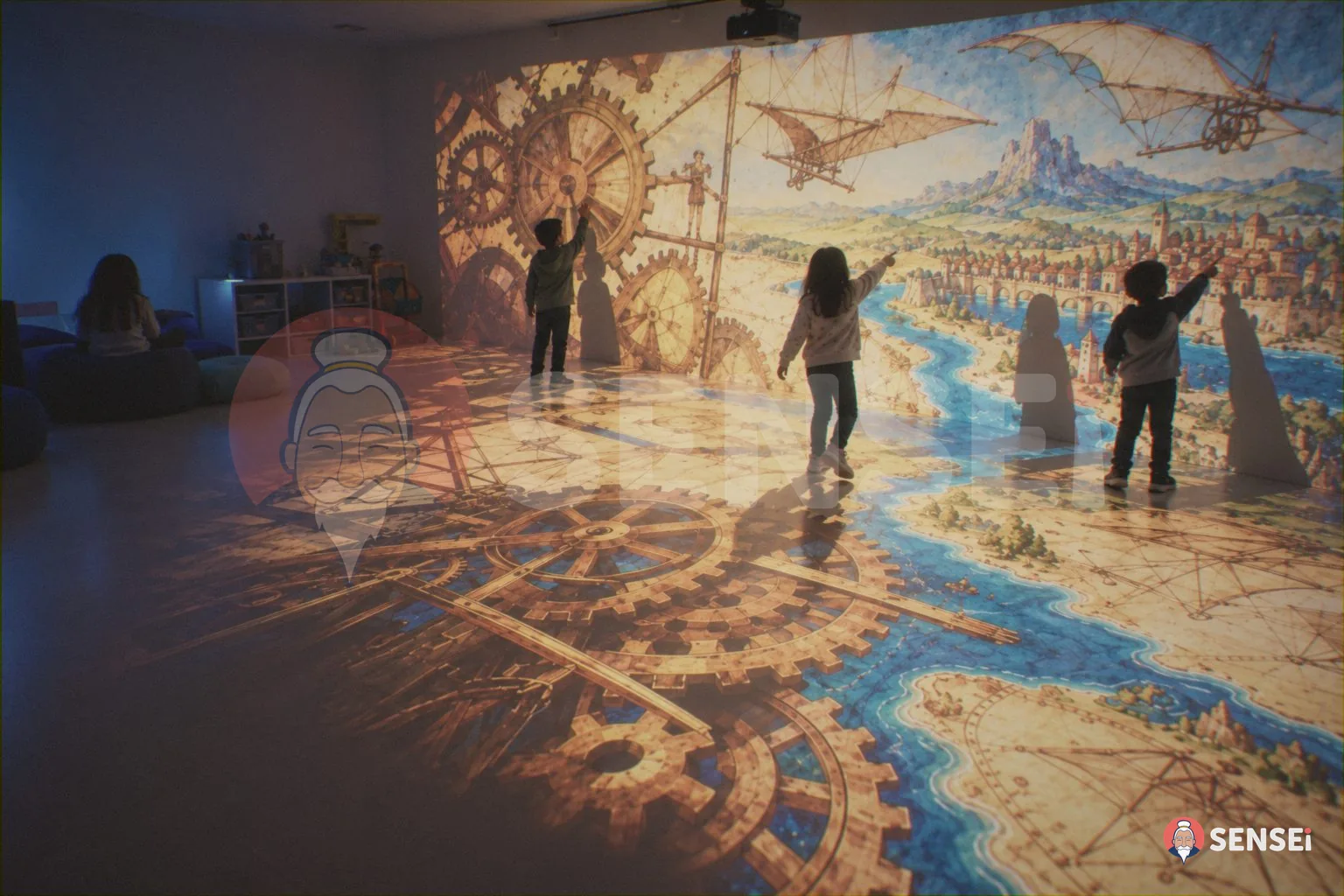
The room surrounds the young people: walls and floor come alive all around, lights and bubbles respond to their actions. They interact with their body, their voice or simple objects, while the educator leads from a tablet.
What experiences emerge?
19 activities are co-designed with the team. Among them:
- 360-degree videos to step into immersive worlds;
- Water effects on the floor, moved with feet and hands;
- Motor paths, such as crossing a river by jumping on stepping stones;
- Digital Twister and Seek and find, with the wand used as a torch;
- Everything under control, with which the educator controls lights, screens and bubbles from the tablet;
- Magic mirror, with an avatar for learning by imitation, and Personal wardrobe, for choosing what to wear according to the season.
Discussions with the team bring out valuable guidance: depict the whole person in a figurative way, reward the right answer with confetti and a little round of applause, let the young person choose how a story continues.
The link with research
The project builds on work that the SENSEi research group has been carrying out for years, between Politecnico di Milano and SUPSI, and which counts more than forty publications.
Two themes from that research come together at I Gigli del Campo. The first is learning through the body and movement, described in Embodied Learning in Immersive Smart Spaces. The second is the idea of safely rehearsing real social situations, explored in the immersive social stories for people with neurodevelopmental disorders. The magic mirror, which invites learning by imitation, comes from here.
What changes
- 19 activities co-designed with the team, approved one by one;
- about 20 young people involved, in small groups;
- a shared method, from general goals to tailor-made activities;
- choices left to the young people: stories in which they decide how to continue, clear and positive reinforcement.
Above all, the room becomes a place to practise independence without the risks of the outside world, with the educator always by their side.
Why is this a significant case?
I Gigli del Campo shows a two-stage method that can be replicated: first a few adapted basic activities, then specific goals built with the team. An approach that is useful to anyone working with teenagers and young adults with autism. Discover SENSEi CARE and read the guide to sensory rooms and autism.
Frequently asked questions
Is SENSEi suitable for teenagers with autism?
Yes, if the activities are selected and adapted with the team according to age and goals.
Can real places be simulated?
Yes. At I Gigli del Campo one of the goals is to practise safely for situations such as the underground or a crowded supermarket.
How many young people use the room together?
The project involves around twenty young people, with up to ten present at the same time, organised in small groups.
How much does an environment like this cost?
It depends on the configuration: space, experiences, training and services. Contact us for an assessment.
Do you work in a school, a centre or a museum and want an environment like this? Tell us about your project: we start from the needs of the people who will use it.
Sources
In the press
- La Stanza Multisensoriale, I Gigli del Campo