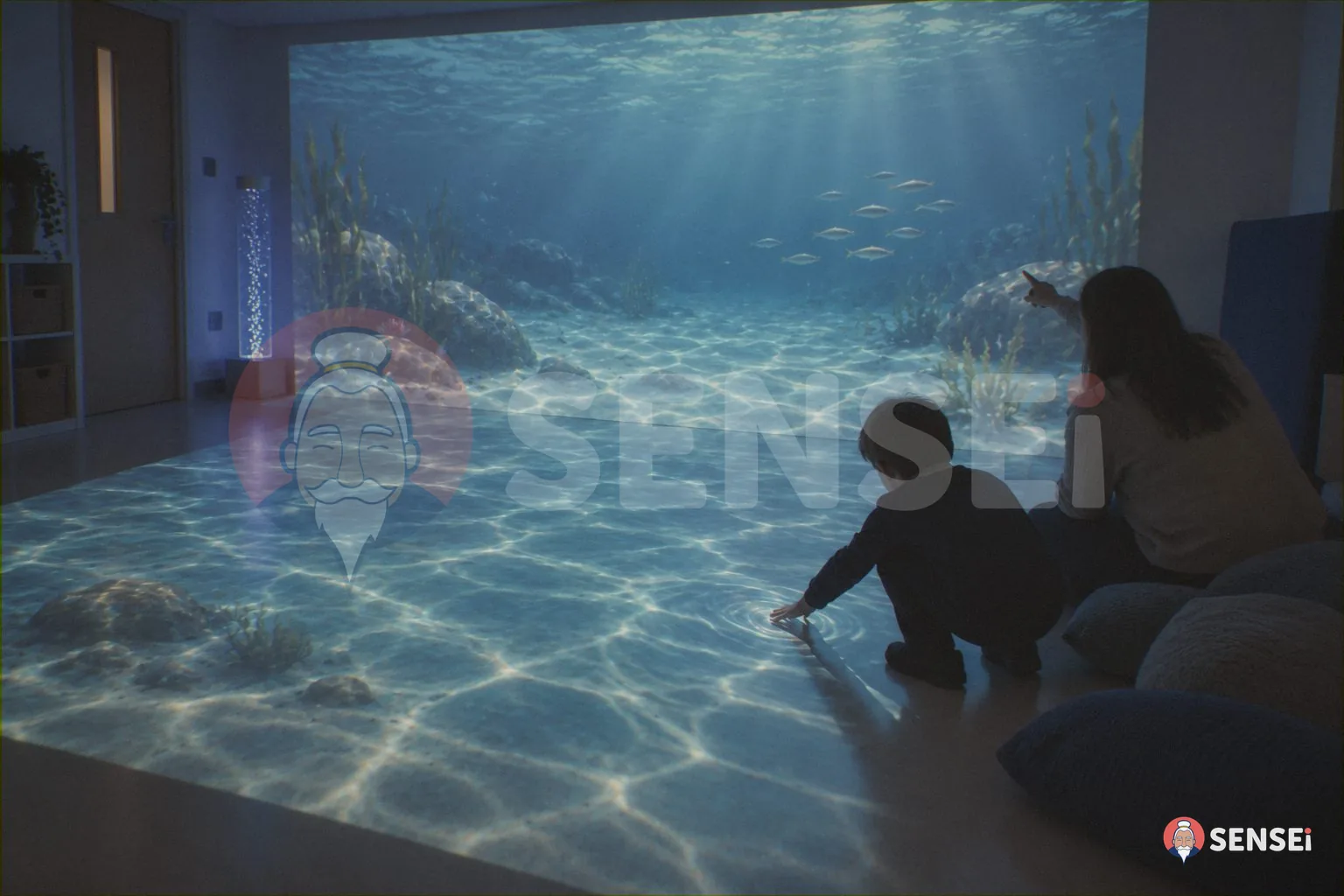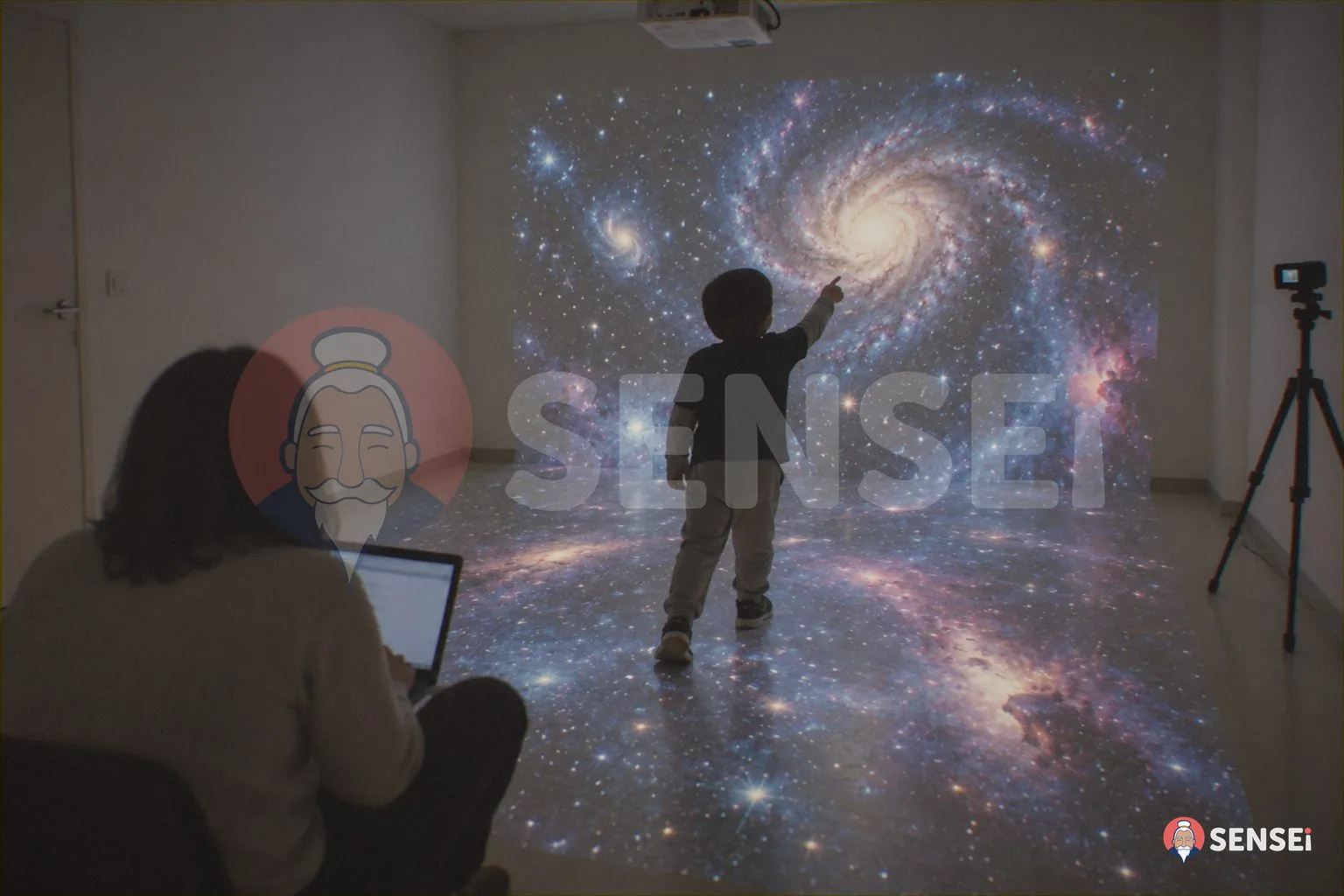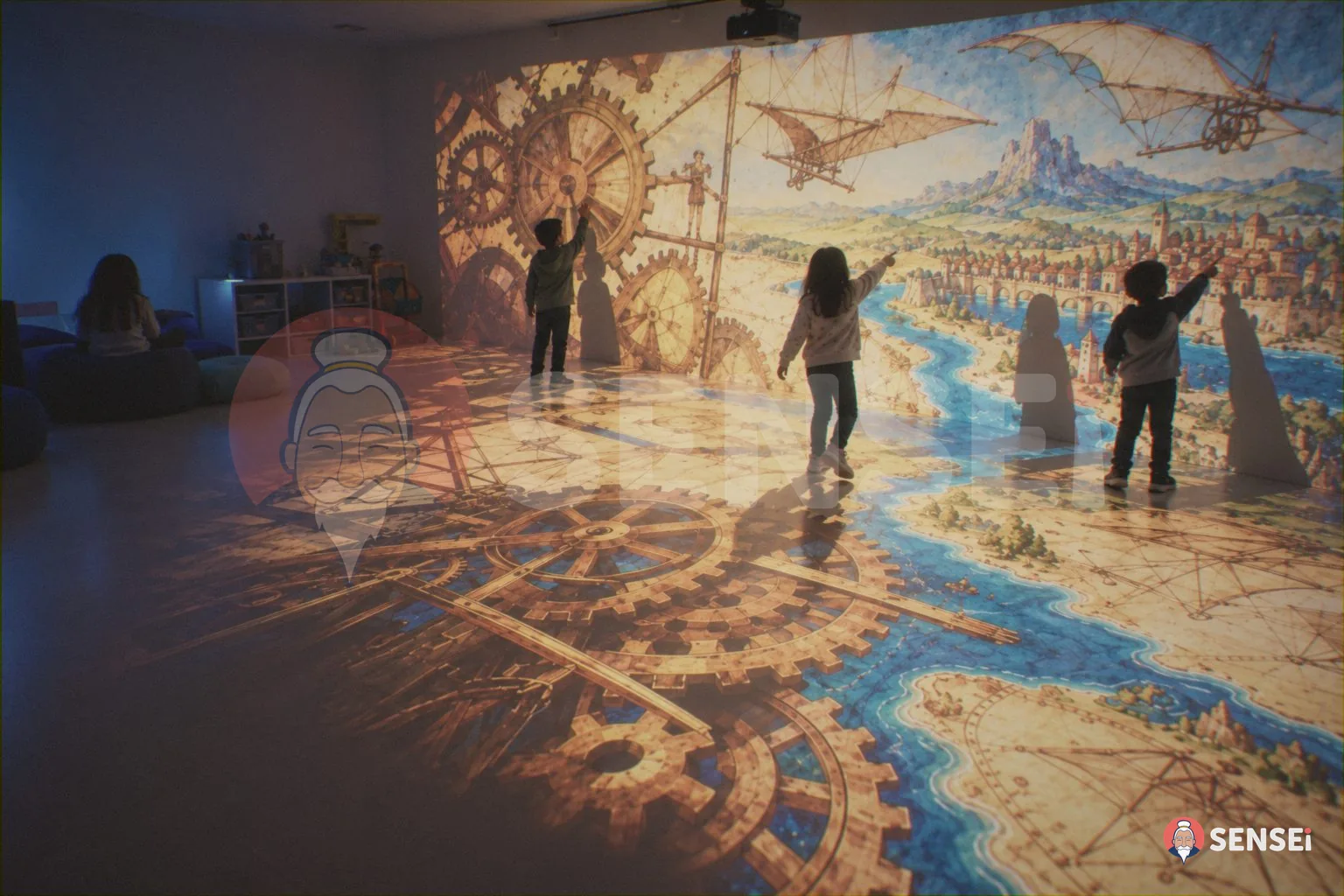

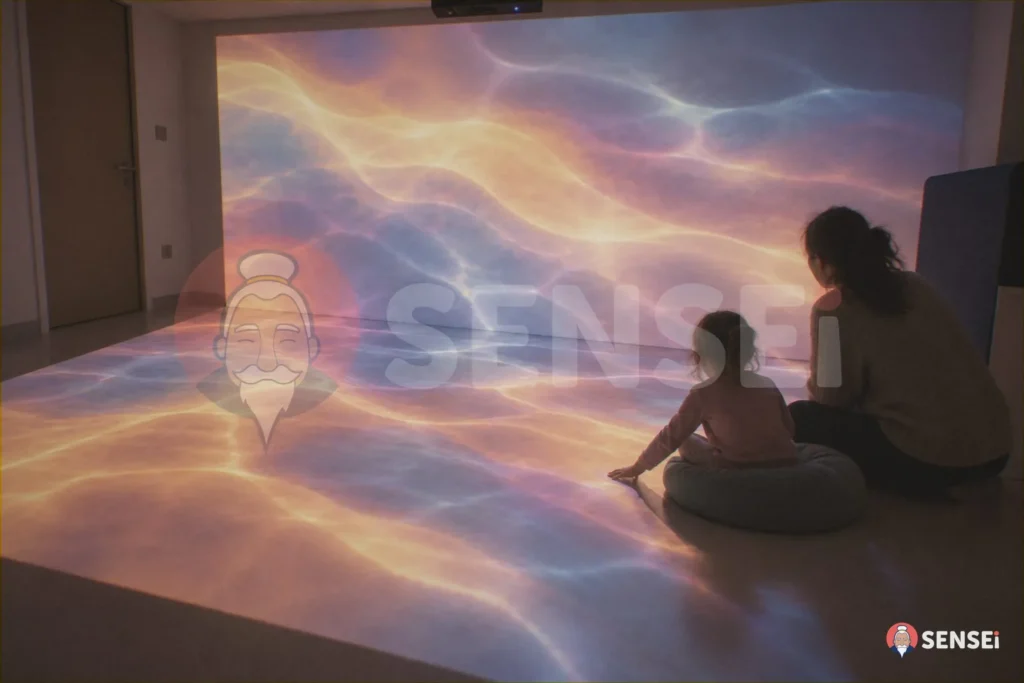
A multisensory room for children offers experiences of light, sound, touch, scent and movement, regulated by an adult, to support exploration, wellbeing, communication and learning. It is useful for all children, and particularly for those with specific sensory needs, such as many children with autism, intellectual disabilities or cerebral palsy.
In this guide we look at what a sensory room is for at each age, how it can be used with children with neurodevelopmental disorders, what the differences are between use at school and in therapy, and what to observe to understand whether the experience is working. We start from one principle: the room is a tool, not a cure.
Sensory room: what is it for, for a child?
Children get to know the world through their senses and movement. A multisensory room makes these channels available in a safe, predictable and adjustable environment. The adult decides which stimuli to offer, at what intensity and for how long.
The most common goals are:
- exploring: discovering cause and effect, trying, repeating;
- self-regulating: finding a suitable level of arousal, calming down or becoming more active;
- communicating: expressing preferences, making requests, sharing attention with an adult or a classmate;
- learning: working on concepts, language and motor skills in a concrete way;
- being together: playing with other children in a context that reduces barriers.
For an overview of experiences and how it works, read the guide to the multisensory room.
Benefits by age group: what changes from 0 to 11
The same environment is used in very different ways depending on age. The table summarises typical goals and points of attention.
| Age group | Typical goals | Points of attention |
|---|---|---|
| 0-3 years (nursery) | Sensory and motor exploration, shared attention, first cause-and-effect relationships | Slow stimuli, few at a time, short sessions, an adult always close by, no passive viewing |
| 3-6 years (preschool) | Language, colours and shapes, coordination, symbolic play, emotions | Simple rules, entry and exit routines, small groups |
| 6-11 years (primary school) | Subject learning, collaboration, autonomy, emotional regulation | Link the activity to classroom work, clear roles within the group |
From 0 to 3 years
At nursery, the room is above all a place of discovery. A young child watches a changing light, touches a fabric, hears a sound that responds to their movement. The educator names what is happening and accompanies the child. The World Health Organization guidelines advise against passive screen time under the age of two and recommend active play: this is why, at this age, projections must always be an opportunity for movement and relationship, never for passive viewing. We discuss this in the guide to the immersive room at nursery.
From 3 to 6 years
In preschool, play becomes more structured. Children follow a story, jump onto a colour, imitate an animal, wait for their turn. The room helps work on language, motor skills and managing emotions. Learn more in the article on immersive environments in preschool.
From 6 to 11 years
In primary school, the room becomes an extra classroom. Mathematics, science, geography and language can be tackled with the body, children can work in groups and practise autonomy. For those who need a break, the same room can offer a space for regulation.
Multisensory room for autistic children
Many autistic children have a particular sensory profile: they may be very sensitive to some stimuli and actively seek out others. A room in which light, sound and rhythm are predictable and adjustable can help them explore safely and reduce overload.
What does research say? A recent systematic review analyses 10 studies on the use of multisensory environments with autistic children and adults. Four studies report fewer stereotyped behaviours and others suggest positive effects on sustained attention and sensory behaviours. However, the authors judge the evidence insufficient, because of the small number of studies and small samples. It is therefore correct to say that the room can support some aspects, not that it guarantees them.
Interactive environments add one element: the child acts and sees the effect of their own actions. In a study in a class with autistic students, followed for nine months, a collaborative movement-based game encourages social initiatives towards classmates, movements never observed outside the game and greater engagement of the whole class. For the teacher this is valuable information: the right game can bring out skills that remain hidden in the classroom. Learn more in the article on the use of multisensory rooms with autism.
Sensory room for children with disabilities
Intellectual disability
For children with intellectual disabilities, the room offers concrete and repeatable experiences. The relationship between action and effect is immediate and visible, and this helps them understand, anticipate and choose. Activities can be simplified or enriched step by step. It should be said that a review on developmental disabilities other than autism found low-quality studies and mixed results: one more reason to observe each child carefully.
Cerebral palsy and motor disabilities
For a child with cerebral palsy, the challenge is often to find a way of acting that is possible and not tiring. In an interactive room, the most accessible mode can be chosen: a small arm movement, body position, the voice, an object. The research on MOVES studies precisely five different modes (feet, hands, cards, wand and voice) to understand which one best suits each child. The choice should always be made with the child’s physiotherapist or therapist.
Children with severe impairments
The Magic Room, from which SENSEi was born, is co-designed with specialists and used in two Italian therapy centres. It is designed for those who communicate little with words: balance, body awareness and touch become the entry point into play, and every small action produces an effect that the child can see, hear and repeat. A four-month exploratory study with 19 children with severe impairments and 8 practitioners gives encouraging results, to be explored further with more research.
Is an interactive room or a calm room better?
It depends on the child and the moment. A calm room, with soft lights and soft materials, is valuable for relaxing and regaining calm. An interactive room adds the possibility of acting: the child moves and the environment responds. This relationship between action and effect can support attention, initiative and collaboration with classmates.
The two souls can coexist in the same space. In SENSEi, the adult can turn a play activity into a moment of calm in a few seconds, lowering lights, sounds and speed. We explore the topic in the article on interactive or passive rooms.
Multisensory room at school or in therapy: what changes?
| Aspect | At school | In therapy |
|---|---|---|
| Who leads | Teacher or educator | Therapist, psychologist, professional educator |
| Group | Class, small group, sometimes one-to-one | Often one-to-one or small group |
| Goals | Learning, inclusion, wellbeing of the class | Individual goals linked to the child’s profile |
| Documentation | Observations consistent with the PEI and PDP (individual education and learning plans) | Clinical record and periodic reviews of the pathway |
In both cases the same thing matters: a clear goal and an adult who observes. At school, SENSEi follows the principle of reverse inclusion: activities are designed starting from the most complex needs, so they work for the whole class and no child is taken to a separate room while the others do something else. SENSEi offers solutions for education and for therapy and wellbeing, with activities co-designed with teachers and therapists.
How to start: the first sessions in the room
- Get to know the child: ask the family and specialists which stimuli the child loves and which ones bother them.
- Start small: one light, one sound, one material. Add more only when the child is at ease.
- Use a ritual: the same way of entering and leaving helps the child anticipate.
- Leave room for choice: where possible, the child decides what to make happen.
- Stop in time: end before tiredness or overload sets in.
To choose the right materials, see the guide on what to put in a multisensory room.
What to observe during activities?
Observation is what turns a pleasant moment into a pathway. Here are some useful indicators to note down each time:
- how long the child stays engaged in the activity;
- how they react to stimuli: they approach, move away, cover their ears, look for more;
- whether they make choices or requests, with words, gestures, looks or pictograms;
- whether they seek out the adult or classmates to share what they see;
- how they enter and leave the room and how they are afterwards, in class or at home.
In interactive rooms, part of this information also comes from the system. SENSEi produces readable reports that help to see progress over time, always to be combined with the perspective of those who know the child.
Safety: what to check in a room for children
- Lights: avoid flashing lights and rapid changes. Flickering lights between 3 and 30 flashes per second are the most common range that can trigger seizures in people with photosensitive epilepsy.
- Sounds: moderate volume, with no sudden peaks; always make it possible to switch the audio off.
- Floor: non-slip surface, with no exposed cables; watch out for a wet floor if bubbles are used.
- Materials: age-appropriate, washable, without small parts for children who still put objects in their mouths.
- Scents: use them sparingly and check with families for any allergies or sensitivities.
- Way out: the child must always be able to leave the room or reach a quiet corner.
The role of the family
The family knows the child better than anyone else. Before starting, it is useful to ask which situations calm them, which ones agitate them, which games they love. Along the way, sharing what is observed in the room helps recognise progress and difficulties at home too. In some cases, a parent can be invited to a session, to see together how the child explores and communicates.
Real examples from research
The research from which SENSEi was born takes place in schools and therapy centres and today counts more than 40 scientific publications. The chapter on the magic room for children with neurodevelopmental disorders describes multimodal activities, designed with experts from a care centre, that stimulate sight, hearing, touch, smell and movement and that therapists can personalise for each child. You can find all the publications in the Research section and some installations on the Projects page.
From research to everyday life is a short step. At the autism centre of the San Paolo Hospital in Milan, the SENSEi room is a tool for the team, with around 50 co-designed activities and a safe refuge in which to regulate. At La Nostra Famiglia in Cava de’ Tirreni, children with disabilities play with their whole body, even from a wheelchair. Two different contexts, one idea: it is the room that adapts to the child, not the other way round.
Frequently asked questions
From what age can a multisensory room be used?
From nursery onwards, with short, movement-based activities, and then throughout childhood and beyond. What changes are the goals and the way stimuli are offered.
Is a multisensory room useful for autistic children?
It can support exploration, regulation and participation, if the stimuli are adjusted to the child’s profile. The scientific evidence is promising but still limited: each child needs to be observed.
Can a sensory room replace therapy?
No. It is a tool that can support the work of teachers and therapists, not replace it.
What should you do if the child becomes agitated in the room?
Reduce the stimuli immediately, lower lights and sounds, offer a quiet corner and end the activity. Next time, start again from a lower level.
How much does a multisensory room for children cost?
It depends on the configuration, the spaces and the services included. Contact us for a tailored proposal.
Want to find out which room suits your children?
We show you how an interactive room works and how it adapts to different ages and needs. Book a demo.
Sources
- Alito A., Quartarone A. et al. The use of multisensory environments in children and adults with autism spectrum disorder: A systematic review, 2025
- Stephenson J., Carter M. The use of multisensory environments with individuals with developmental disabilities: a systematic review. Journal of Developmental and Physical Disabilities
- Garzotto F., Gelsomini M. Magic Room: A Smart Space for Children with Neurodevelopmental Disorder. IEEE Pervasive Computing, 2018
- Garzotto F., Gelsomini M., Gianotti M., Riccardi F. Engaging Children with Neurodevelopmental Disorder Through Multisensory Interactive Experiences in a Smart Space. Social Internet of Things, 2019
- Bhattacharya A., Gelsomini M. et al. Designing motion-based activities to engage students with autism in classroom settings. ACM IDC 2015
- Cosentino G., Gelsomini M., Sharma K., Giannakos M. Interaction Modalities and Children’s Learning in Multisensory Environments. ACM IDC 2023
- Epilepsy Society. Photosensitive epilepsy
- World Health Organization. To grow up healthy, children need to sit less and play more (2019)