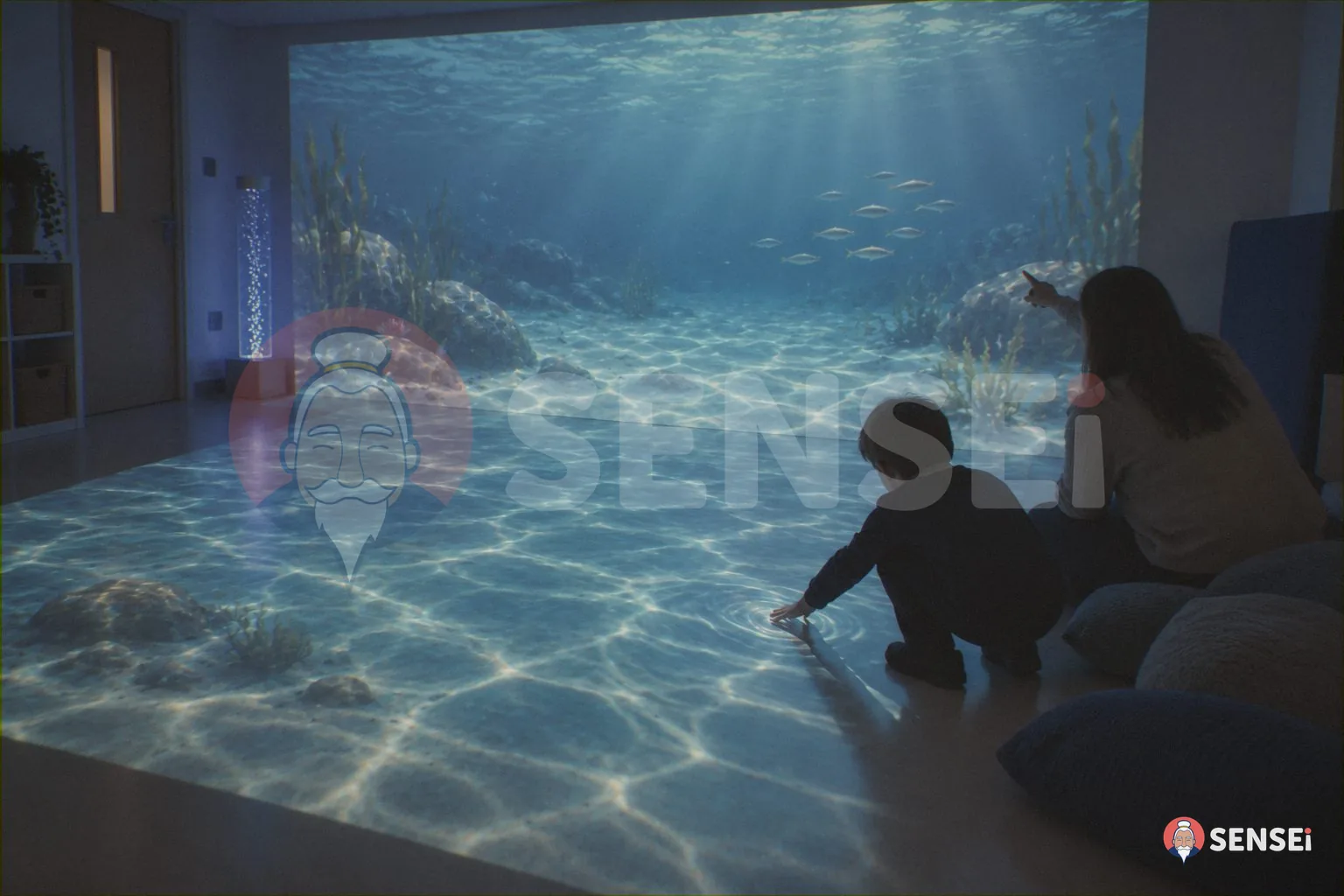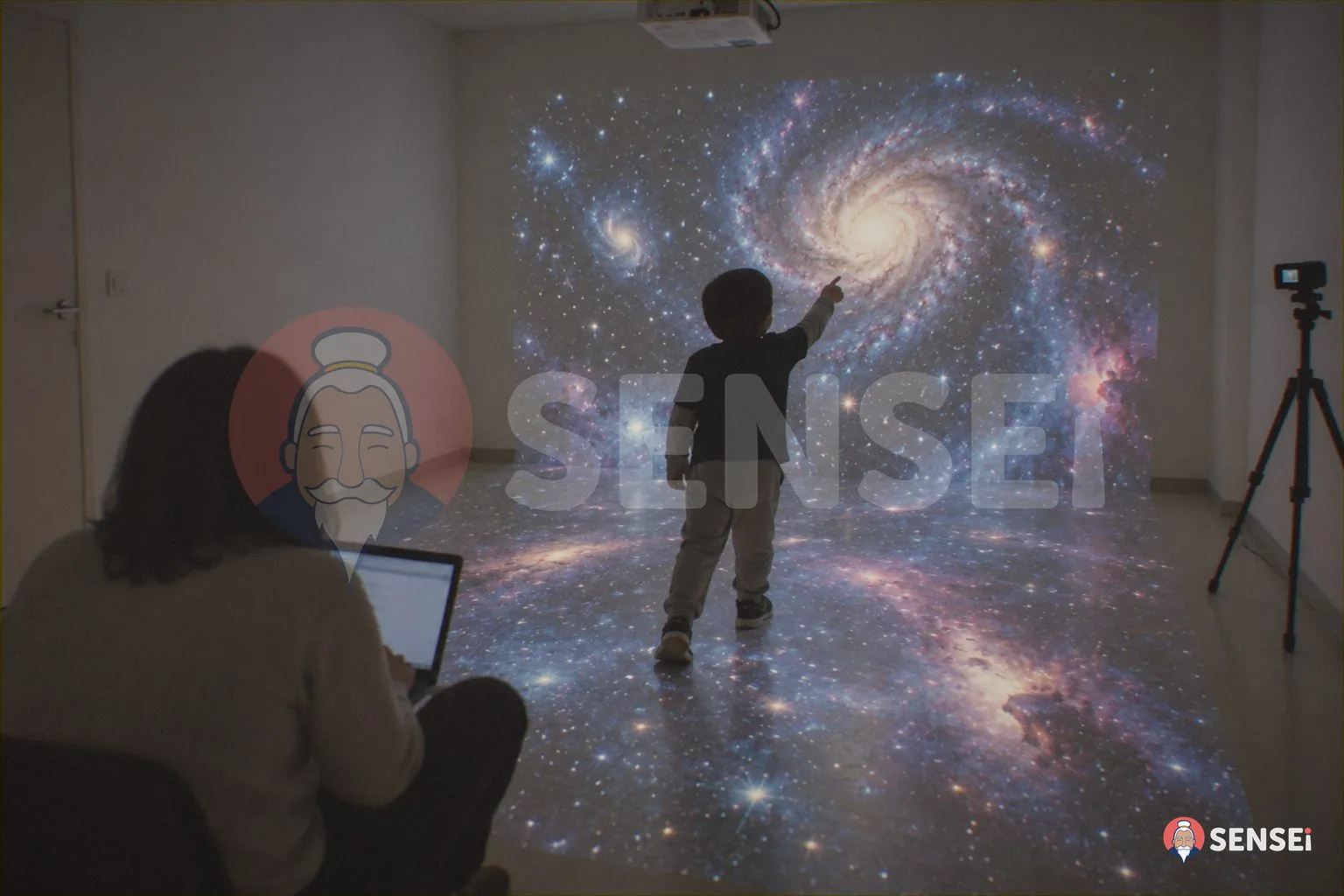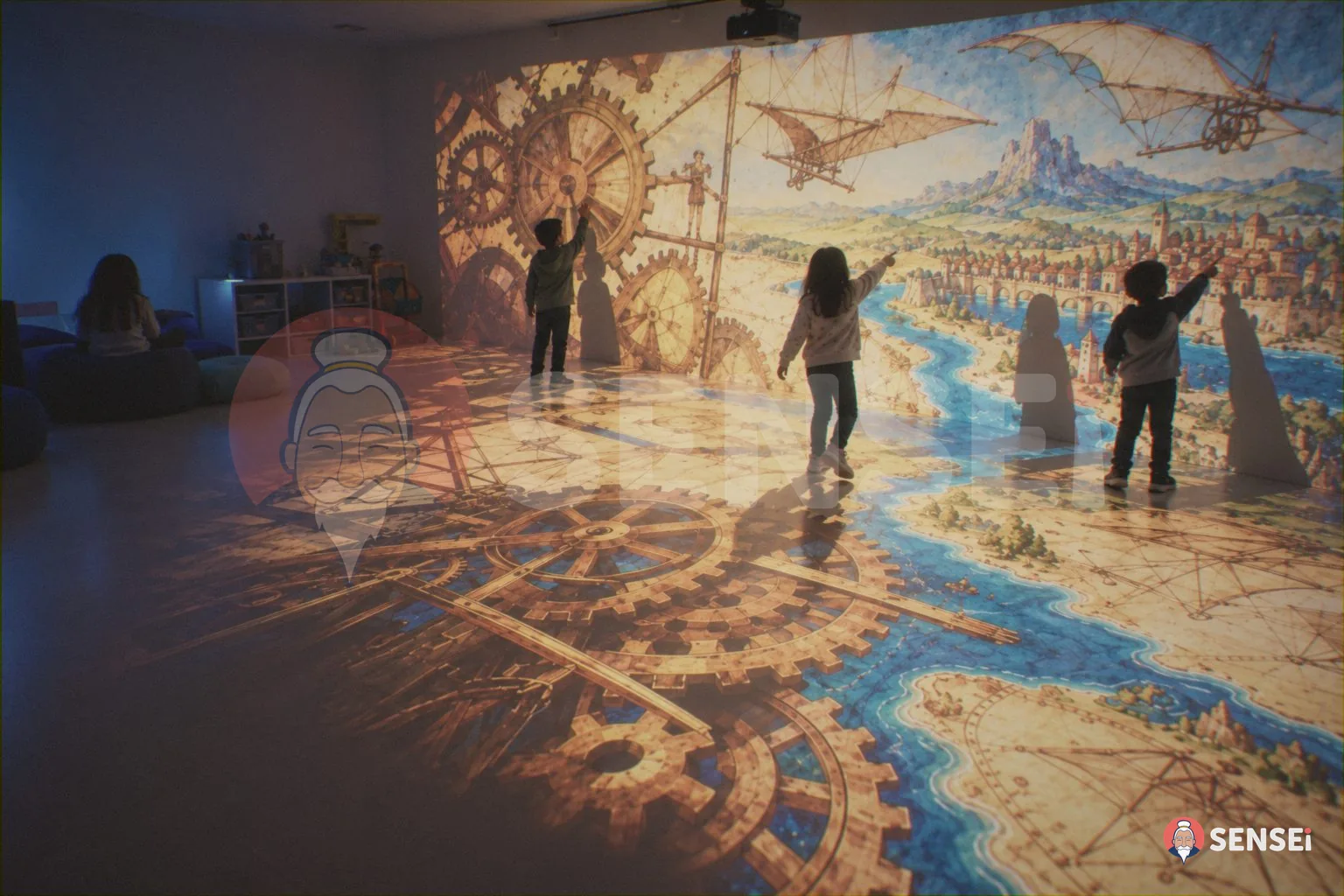

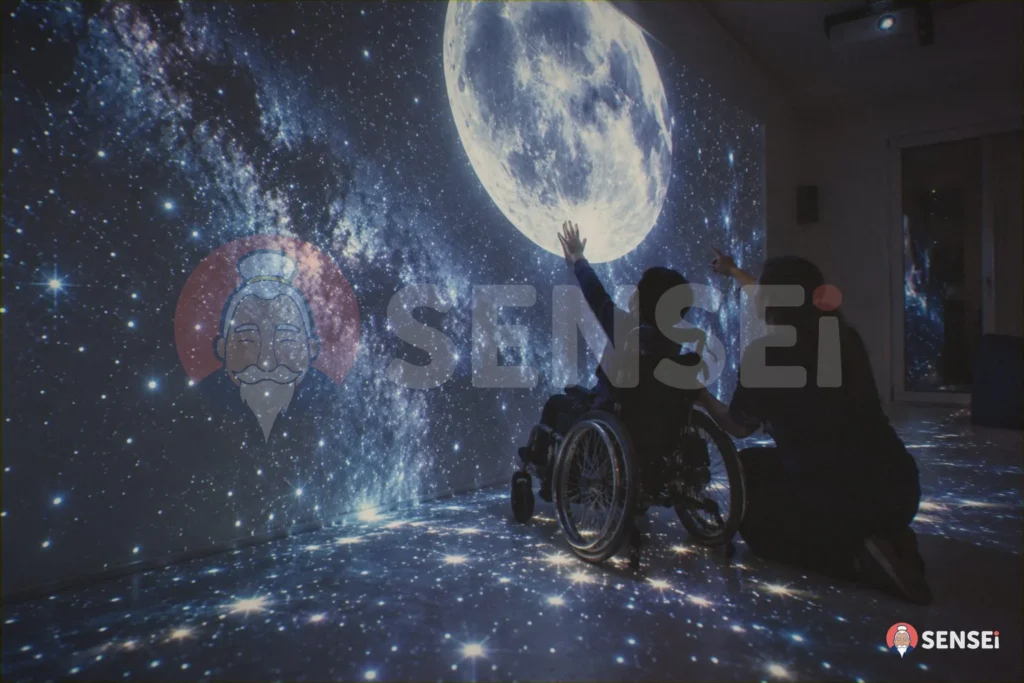
At the Cava de’ Tirreni centre of La Nostra Famiglia, in the province of Salerno, there is a unique multisensory room: light, water, bubbles, scents and vibrations coexist with SENSEi’s interactive projections. Here children with disabilities play with their whole body, even from a wheelchair.
It is a concrete example of a physical-digital environment: the multisensory tradition is not replaced, but made interactive and accessible.
The context: what is La Nostra Famiglia?
La Nostra Famiglia is an association dedicated to the rehabilitation of children and young people with disabilities. In Cava de’ Tirreni the room has been active for several years and is part of the educators’ daily work.
The need is twofold: to enrich a space already full of stimuli and to make it truly accessible to everyone, including children with significant motor limitations.
The project: a room that combines the real and the digital
The walls come to life and respond to the movement of the body, with no sensors to wear; the educator guides the activity from a tablet. All around, real sensory objects complete the experience: bubbles, light haze, water, coloured and ultraviolet lights, materials to touch, a vibrating platform, fragrances.
The work develops together with the team, with training moments and play sessions shared between educators and children. It is the educators themselves who ask to extend the interaction to the floor, to enrich motor activities.
The experiences: accessibility first
The interactive wall responds to the whole body, so even a child in a wheelchair can play and take part together with the others. Some examples of how the room is used:
- exploring with the body: a gesture or a movement brings colours, sounds and images to life on the wall;
- combining real and digital stimuli: ultraviolet light, bubbles or a fragrance accompany the projected scene;
- moments of calm: slow scenes and the vibration of the platform to slow down and regain balance;
- playing together: activities in which every child, with their own way of moving, contributes to the result.
The link with research
The idea of combining physical objects and digital content has clear roots. SENSEi research studies the “phygital” approach, physical and digital together, with people with intellectual disabilities and neurodevelopmental disorders (physical and digital objects in a day centre, Meeting the needs of people with NDD through a phygital approach).
It is a path that the SENSEi research group has followed from the Magic Room and Magika at Politecnico di Milano through to SUPSI, documented by more than forty publications (Research page). In Cava de’ Tirreni that research meets a traditional multisensory room and makes it interactive, without taking anything away from it.
What changes
- Accessibility: children with motor limitations take part in the same activities as the others, from their wheelchair;
- educators’ autonomy: training and shared play make them the protagonists of the room;
- ideas from the field: the request for floor interaction comes from the educators’ daily experience;
- a growing library: activities developed for other SENSEi centres are made available here too.
This last point is a sharing model: every centre that co-designs an activity enriches everyone’s library.
Why is this a significant case?
Cava de’ Tirreni shows that a multisensory room already rich in stimuli can become interactive and accessible without giving up anything that works. To learn more, read from the sensory room to the inclusive educational experience and the SENSEi CARE page.
Frequently asked questions
Does SENSEi integrate with an existing multisensory room?
Yes. It is added to the sensory objects already in place, such as bubbles, lights and platforms, and makes them part of a single experience.
Can a child in a wheelchair use the interactive wall?
Yes, the room recognises body movement even from a wheelchair.
Are activities created for other centres available here too?
Yes. Activities developed for other SENSEi centres join the shared library and also enrich the room in Cava de’ Tirreni.
How much does an environment like this cost?
It depends on the configuration: space, experiences, training and services. Contact us for an assessment.
Do you work in a school, a centre or a museum and want an environment like this? Tell us about your project: we start from the needs of the people who will use it.
Sources
In the press
- La Nostra Famiglia, dalla parte dei bambini, Insieme News