Research on multisensory technologies often talks about children. This study by the research group from which SENSEi originates looks instead at young adults with intellectual disability, in a real service: a social care centre.
With 17 participants and 8 specialists, it indicates that combining physical objects and digital content can support interventions. The research is published in the journal Multimedia Tools and Applications.
What is the research question?
Phygital combines the words physical and digital. For the group it is a form of tangible interaction in which digital and physical content are combined in a particular way: the person moves a real object, and the digital content responds on another medium.
The group points out that the approach is supported by theories linking the development of cognitive skills to bodily interactions with the physical environment, and cites studies showing its potential for people with intellectual disability. The question is: does this potential also hold with young adults, in a real setting?
The study in brief
As its research platform the group uses Reflex, an app for smartphones and tablets that recognises objects placed on the table thanks to a small mirror over the camera. Even earlier, at CHItaly, the group proposed it as a training tool for people with neurodevelopmental disorders, with co-designed features and a first pilot study. Its story is in the case study Learning beyond the screen with simple means.
The study at a glance:
- participants: 17 people with intellectual disability;
- specialists involved: 8;
- comparison: Reflex (phygital) versus purely digital approaches and paper-based materials;
- after the study: interviews with the specialists.
What emerges?
The results highlight the potential of phygital approaches in interventions with people with intellectual disability. The group observes an improvement in their performance, with an interaction method that participants enjoyed.
In the interviews after the study, the specialists express support for adopting phygital technologies in a social care setting.
It remains an exploratory study, in a single centre and with a small group. Its interest also lies in its audience: young adults, in a real service, and not only children.
What does it mean for a day centre or social care centre?
Some useful pointers for those who work with adults emerge from the study:
- start from objects: handling something concrete makes the task more accessible;
- compare tools: the study compares phygital, purely digital and paper, which is good practice in services too;
- listen to the staff: the specialists’ views weigh on adoption as much as the participants’ results.
Why does it matter today?
For adult services this is an important message: multisensory and interactive experiences are not just “for children”. They can support the daily work of care staff, if they are built together with them.
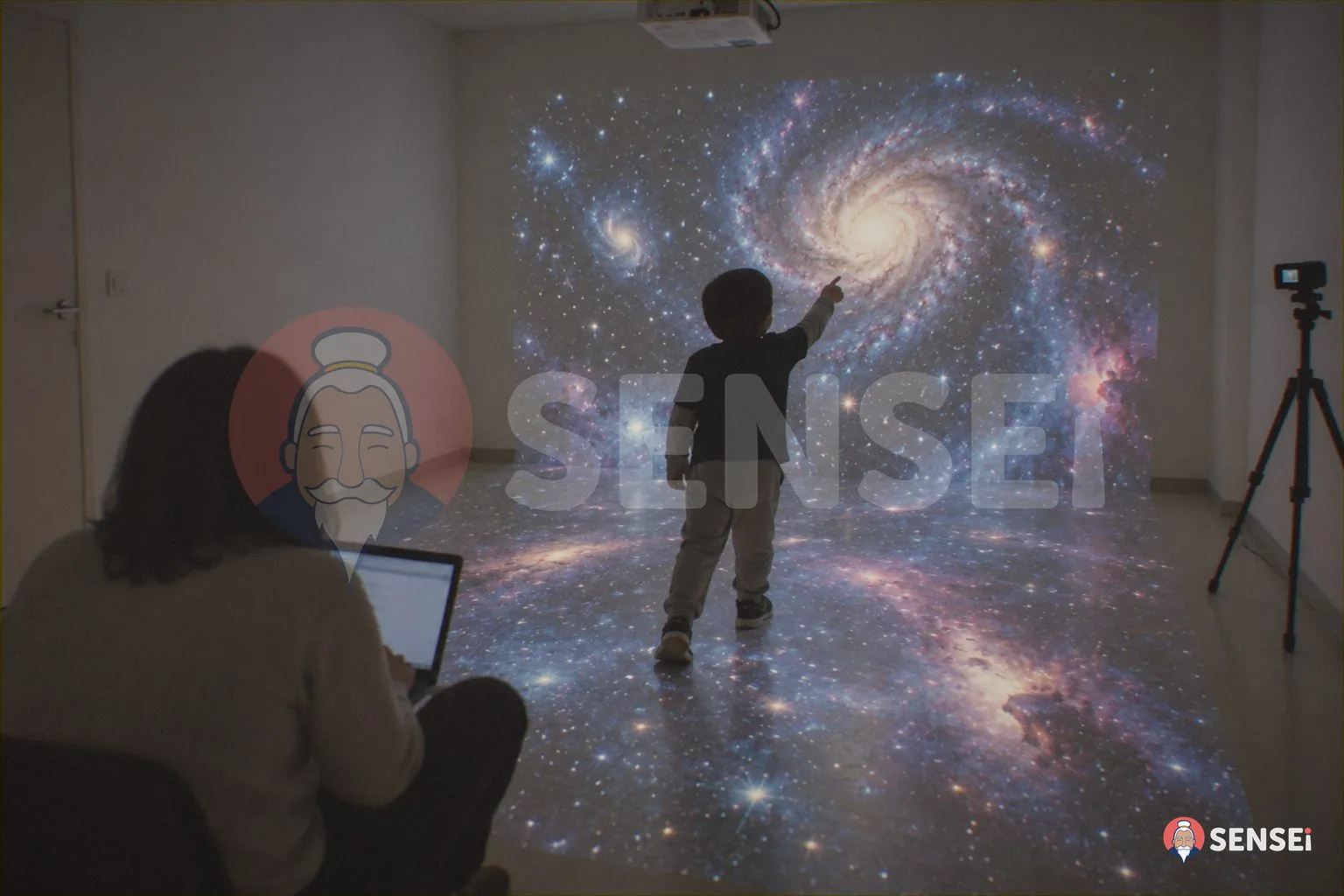
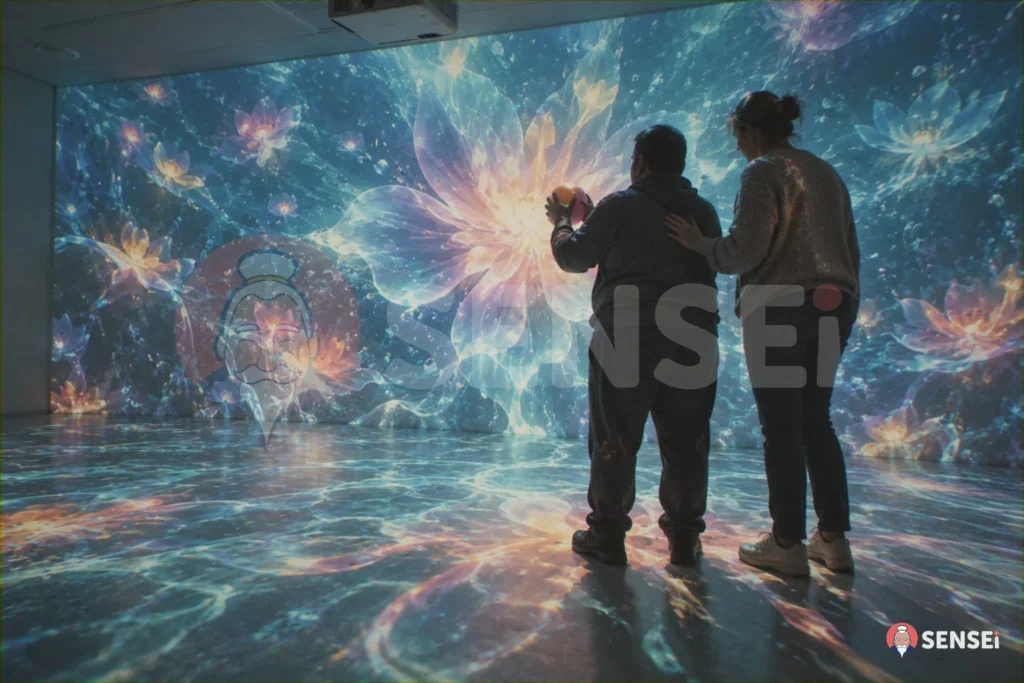
SENSEi brings phygital interaction to room scale: tactile objects and physical materials interact with images, lights and sounds, and activities adapt to each person’s profile and goals. For therapy and well-being, activities are co-designed with the care team. This is the step the study makes possible: from the table of the social care centre to a room in which the object in your hand and the space around you tell the same activity.
Discover the SENSEi magic room and the guide on what a multisensory room is. The publications are in the Research section: Phygital interfaces for people with intellectual disability and Meeting the needs of people with neuro-developmental disorder through a phygital approach.
Frequently asked questions
What does phygital mean?
It refers to an interaction that combines physical and digital: the person handles a real object and the multimedia content responds on another medium.
What do the specialists say?
In the interviews after the study, they express support for adopting phygital technologies in a social care setting.
Are phygital technologies only for children?
No. This study involves young adults with intellectual disability, showing the potential of the approach in adulthood too.
How much does an environment like this cost?
It depends on the configuration: space, experiences, training and services. Contact us for an assessment.
Do you work in a school, a centre or a museum and want an environment like this? Tell us about your project: we start from the needs of the people who will use it.
Sources
- Gelsomini M., Spitale M., Garzotto F. (2021). Phygital interfaces for people with intellectual disability: an exploratory study at a social care center. Multimedia Tools and Applications, Springer
- Spitale M., Gelsomini M., Beccaluva E., Viola L., Garzotto F. (2019). Meeting the needs of people with neuro-developmental disorder through a phygital approach. CHItaly 2019, ACM