An accessible museum is not just a museum without physical barriers. It is a place where every visitor knows what to expect and can enjoy the artworks. Two studies by the group from which SENSEi originates work on this, with immersive social stories and 360° virtual tours.
Today those ideas live on in SENSEi ART, the line for museums and exhibitions: culture told through all the senses, together.
The research question: how do you prepare for a visit?
For a person with a neurodevelopmental disorder, particularly on the autism spectrum, a new place can cause anxiety. Unfamiliar rooms, implicit rules, noise and crowds make it hard to focus on the artworks.
Social stories are a widely used method in these cases: short narratives, with images and text, that prepare a person for an everyday situation: understanding what will happen, moving around more independently, knowing how to behave. Visiting a museum is exactly one of these situations. The question is: what changes if the story becomes an experience to live?
The study in brief
The first study combines immersive virtual reality and the social story method, to help people with neurodevelopmental disorders enjoy artistic and cultural works. From this encounter comes the Wearable Immersive Social Story (WISS), a concept developed with experts in neurodevelopmental disorders. In the story, people move around by pointing with head movements.
The second creates XOOM, a tool that allows people who are not IT experts to build interactive virtual tours from 360° videos. The scene is explored by moving the head, but it can also be shown on a screen or a projection, so that other people can take part and the adult can guide. Visit data are collected automatically, for example as heat maps.
The fields of application mentioned include cultural heritage, tourism, education, therapy and rehabilitation. With XOOM, the group also conducts a case study in a therapeutic setting. The publications do not report quantitative results or the number of participants.
What emerges?
The contribution is above all conceptual and design-oriented, with two strong ideas:
- a social story does not just change medium: by changing medium and interaction, the way the person experiences it also changes;
- creating this content does not require a programmer, but tools within reach of educators, therapists and museum staff.
Why it matters today
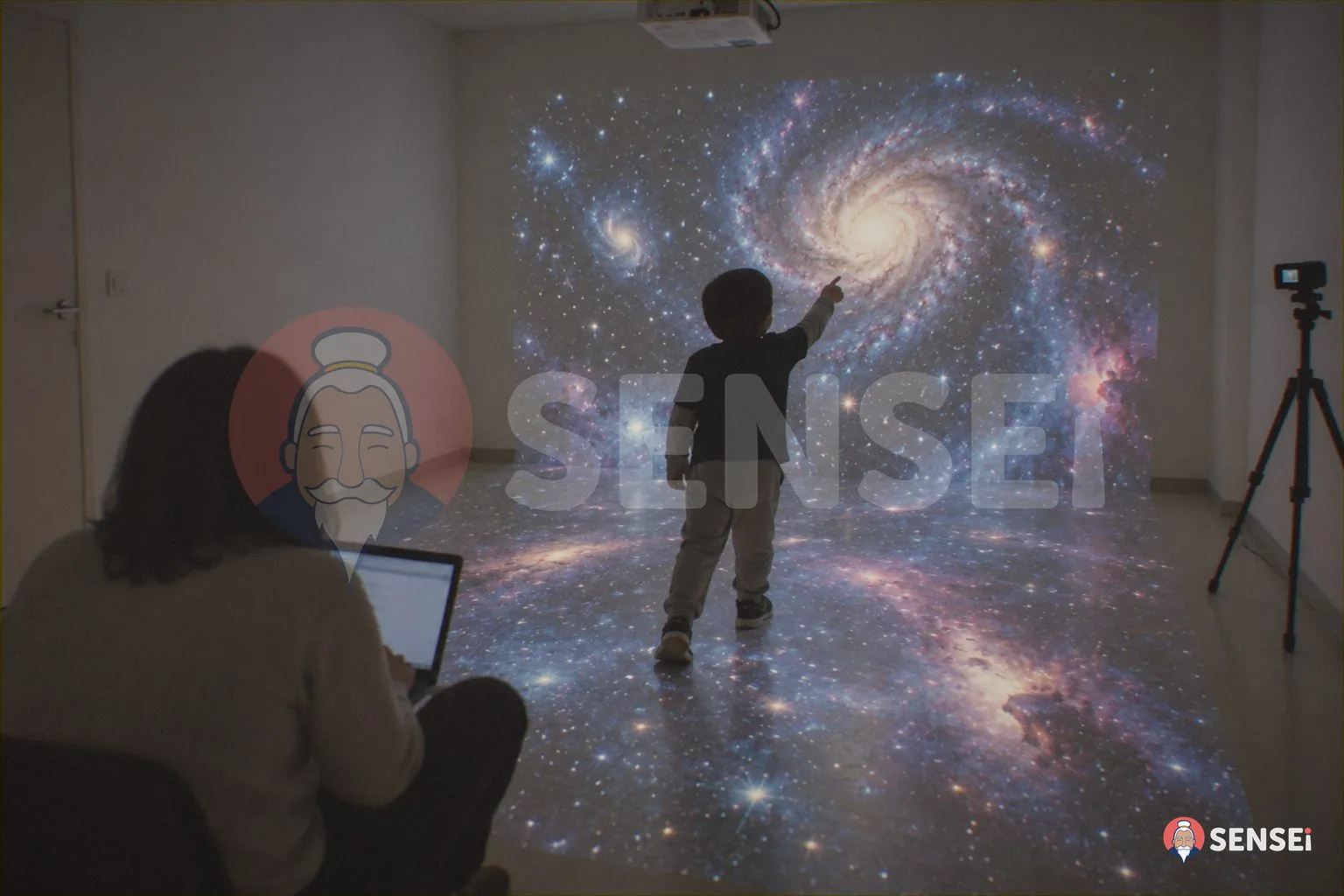
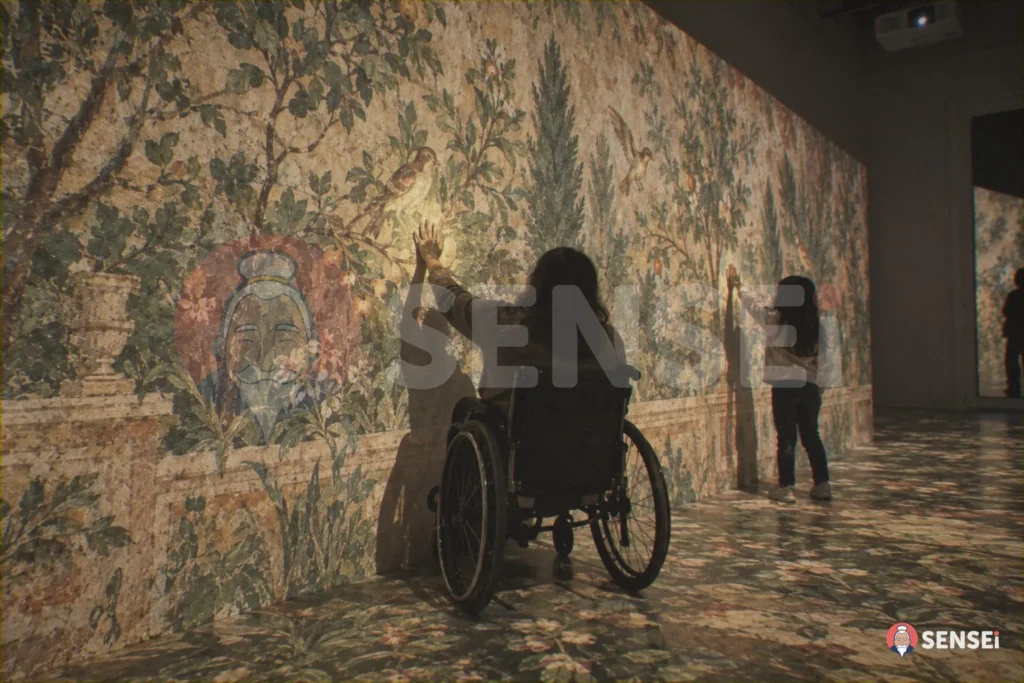
With SENSEi ART, the experience moves from the headset to the room. Walls and floor come to life with images, sounds, lights and scents, and the visit is shared, with nothing to wear. An idea already present in XOOM, where the scene is projected so that other people can take part.
For a museum this opens up concrete possibilities:
- a preparation room in which to preview the visit, with the galleries and the rules told in the form of a story;
- multisensory experiences for those who struggle with long texts;
- activities created by museum staff with Eureka, including with content from Google Arts & Culture.
The common thread is the one from the research: reducing uncertainty before the visit. A room that tells you in advance what will happen is designed for those who experience new places with anxiety, but it also makes the visit calmer for schools and families. The same spirit guides the collaboration described in L’abilità, Museo per tutti and INCLUDE-ID.
The pages Improving Museum Accessibility and XOOM are in the Research section, alongside the group’s other studies on immersive social stories. To find your way among the solutions, read Immersive classroom, sensory room, interactive floor: the differences.
Frequently asked questions
What makes a museum accessible to autistic people?
Reducing uncertainty: knowing in advance what you will see and what will happen. Social stories are a widespread tool for this.
Do you need to know how to code to create immersive content?
No. XOOM is designed for people who are not IT experts. Today, in SENSEi, activities are created with Eureka.
Does SENSEi use headsets in museums?
No. SENSEi ART works at room scale, with shared images and multisensory stimuli, with nothing to wear.
How much does an environment like this cost?
It depends on the configuration: space, experiences, training and services. Contact us for an assessment.
Do you work in a school, a centre or a museum and want an environment like this? Tell us about your project: we start from the needs of the people who will use it.
Sources
- Garzotto F., Matarazzo V., Messina N., Gelsomini M., Riva C. (2018). Improving Museum Accessibility through Storytelling in Wearable Immersive Virtual Reality. DigitalHERITAGE 2018. DOI 10.1109/DIGITALHERITAGE.2018.8810097
- Garzotto F., Gelsomini M. et al. (2017). XOOM: An End-User Development Tool for Web-Based Wearable Immersive Virtual Tours. Web Engineering. DOI 10.1007/978-3-319-60131-1_36
- SENSEi page: Improving Museum Accessibility through Storytelling in Wearable Immersive VR
- SENSEi page: XOOM