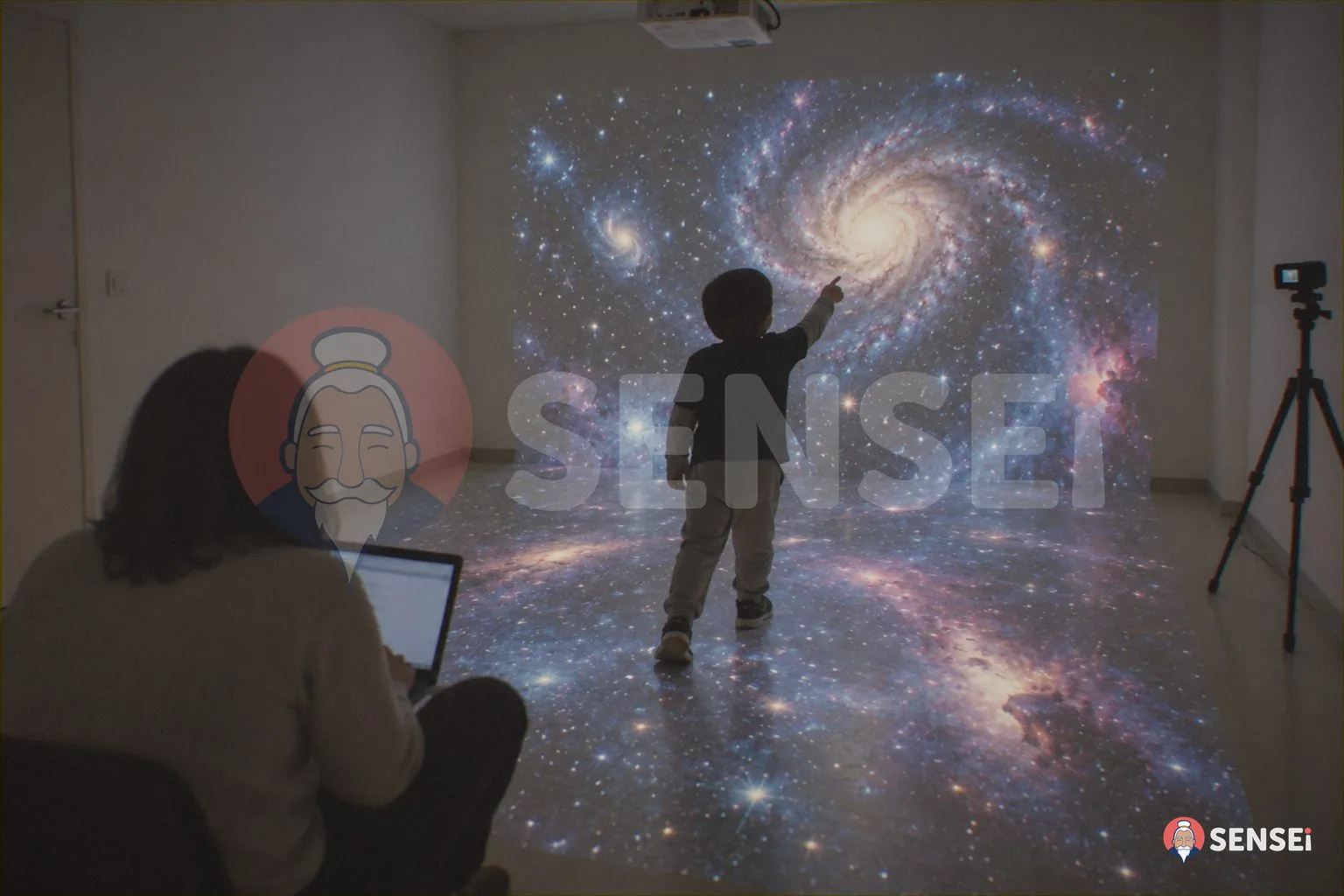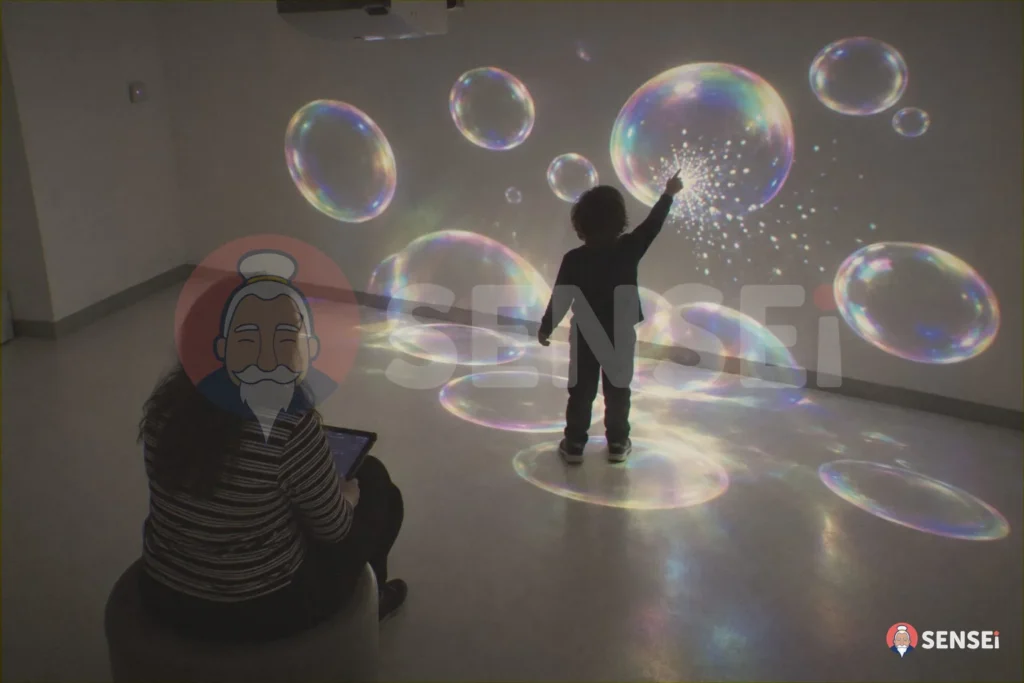
At the Pôle Autisme in Geneva, the collaboration with SENSEi is not about an installation but about a research question: how can artificial intelligence help clinicians observe better, without ever replacing them? Together with SUPSI and the University of Geneva, within the AI4Autism research strand, we study tools that support diagnostic assessment and the evaluation of treatments.
It is a case unlike the others, and that is exactly why it matters: it shows where the innovation that later enters SENSEi rooms comes from.
What is the Pôle Autisme?
According to the Canton of Geneva’s fact sheet, the Pôle Autisme is a foundation that aims to improve the care of autistic people in Geneva and French-speaking Switzerland. It does so through specialist advice, training, support at school and research.
It is an ideal partner for research that starts from clinical practice and aims to return to clinical practice.
The challenge: observing better, not diagnosing in place of clinicians
Assessing a child, or understanding whether a treatment is working, takes many hours of expert observation. Each session produces valuable information that often remains in the professionals’ memory and notes.
Tools that help collect and organise these observations can save clinicians time and make their work more comparable over time. The clinical decision, however, always remains in the hands of the professionals.
How do we work together?
The project is built with the Pôle Autisme team from the very beginning: it is the clinicians who say what is worth observing and in what form a piece of information is truly useful. Technology stays in the background, serving this clinical eye.
Privacy is a design principle, not an add-on: session recordings are processed locally, within the facility, with faces blurred before any analysis.
What are we studying?
- Anonymised video analysis: sessions observed respectfully, with faces blurred;
- behavioural indicators extracted semi-automatically from what happens during sessions;
- support for the assessment of diagnosis and treatments, always under the responsibility of clinicians.
This is ongoing research: we do not report results before they are published. SENSEi is not a diagnostic tool, and clinical decisions always remain with the professionals.
The link with research
The work is part of the AI4Autism project, a multimodal and interdisciplinary approach to the diagnosis and stratification of autism, already presented to the scientific community (The AI4Autism Project).
Compared with the years of the Magic Room and Magika at Politecnico di Milano, the question shifts: not only how to engage, but how to better observe what happens during a session. Geneva is where the SENSEi research group, now at SUPSI and with more than 40 publications, explores this new frontier; the full list is on the Research page.
The expected impact
The value of this collaboration can be measured on several levels:
- for clinicians: the prospect of tools that lighten the work of observation and make it more comparable over time;
- for families: an approach that puts the confidentiality of the people involved first;
- for the scientific community: a model of interdisciplinary research across computer science, psychology and clinical practice, between Italian-speaking and French-speaking Switzerland.
Why is this a significant case?
Because it shows the less visible side of SENSEi: before the activities and the rooms, there is a research method that starts from the needs of professionals and the protection of people. Those who work in therapy and wellbeing know that a good tool is one that helps you see better, not one that decides for you.
Frequently asked questions
Does SENSEi make diagnoses?
No. The research studies tools that support observation; diagnosis remains with clinicians.
How is privacy protected?
Videos are processed locally and anonymised, with faces blurred.
Can a research centre collaborate with SENSEi?
Yes. The collaboration with Geneva is one example, and the platform can be made available to institutions that request it.
How much does an environment like this cost?
It depends on the configuration: space, experiences, training and services. Contact us for an assessment.
Do you work in a school, a centre or a museum and want an environment like this? Tell us about your project: we start from the needs of the people who will use it.