
At ICS Leonardo da Vinci in Cornaredo, the Piano Scuola 4.0 (Italy’s School Plan 4.0) brings SENSEi to the primary schools on via Volta and via Sturzo: an existing immersive classroom is renewed and a second environment is created next to it. A simple idea guides the project: give teachers activity templates that work for every subject, so that the magic room becomes part of everyday teaching.
The context: rethinking spaces starting from teachers
The institute includes preschools, primary schools and a lower secondary school. The Piano Scuola 4.0 is an opportunity to renew learning environments. The question is how to do it starting from what those who teach and those who learn really need.
Designing by listening to each school
Meetings with teachers in the different school buildings lead to different proposals for each school: immersive reading and psychomotor activities, expression and invention workshops, an area for immersive activities in the preschool. Every space grows out of dialogue, not out of a catalogue.
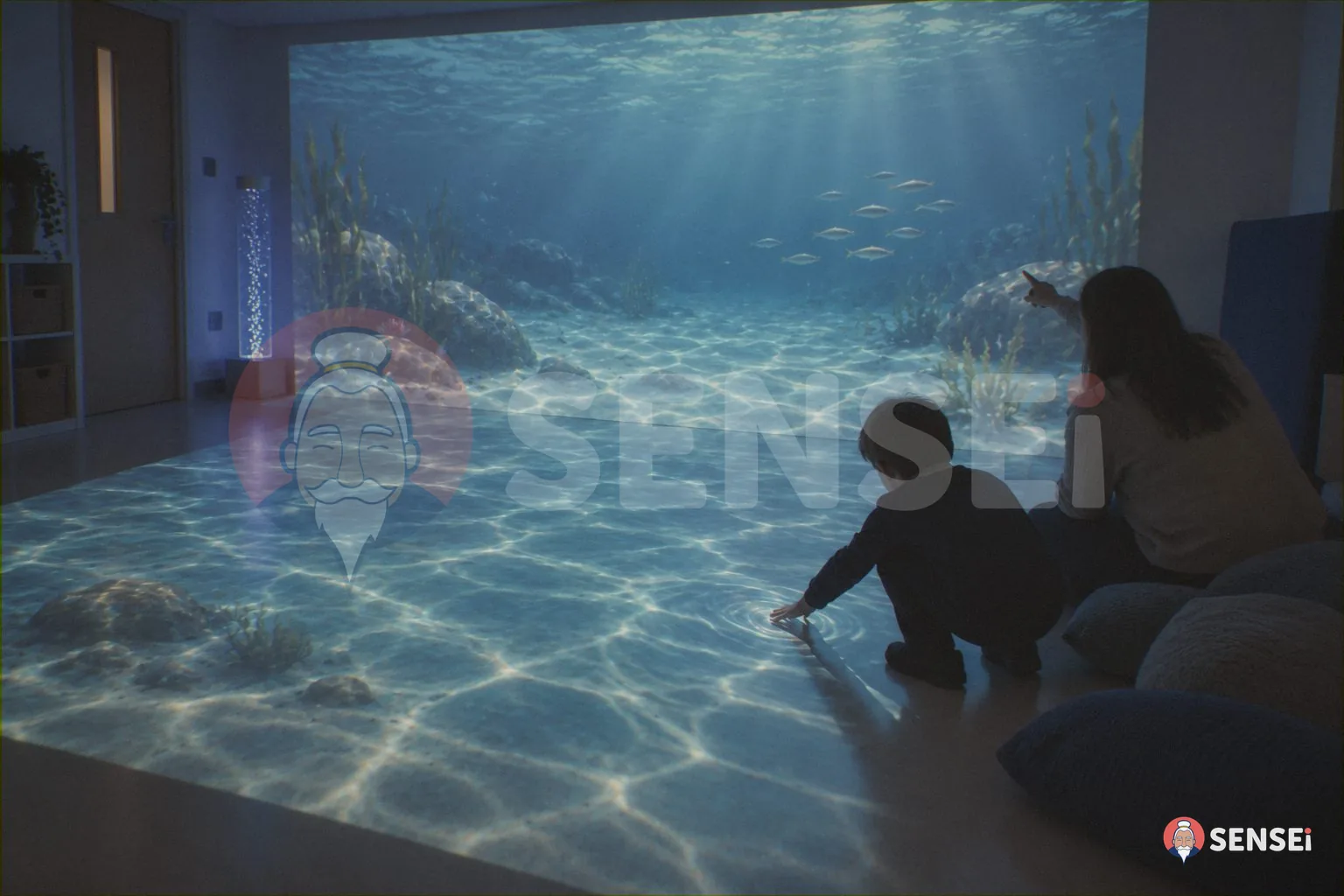
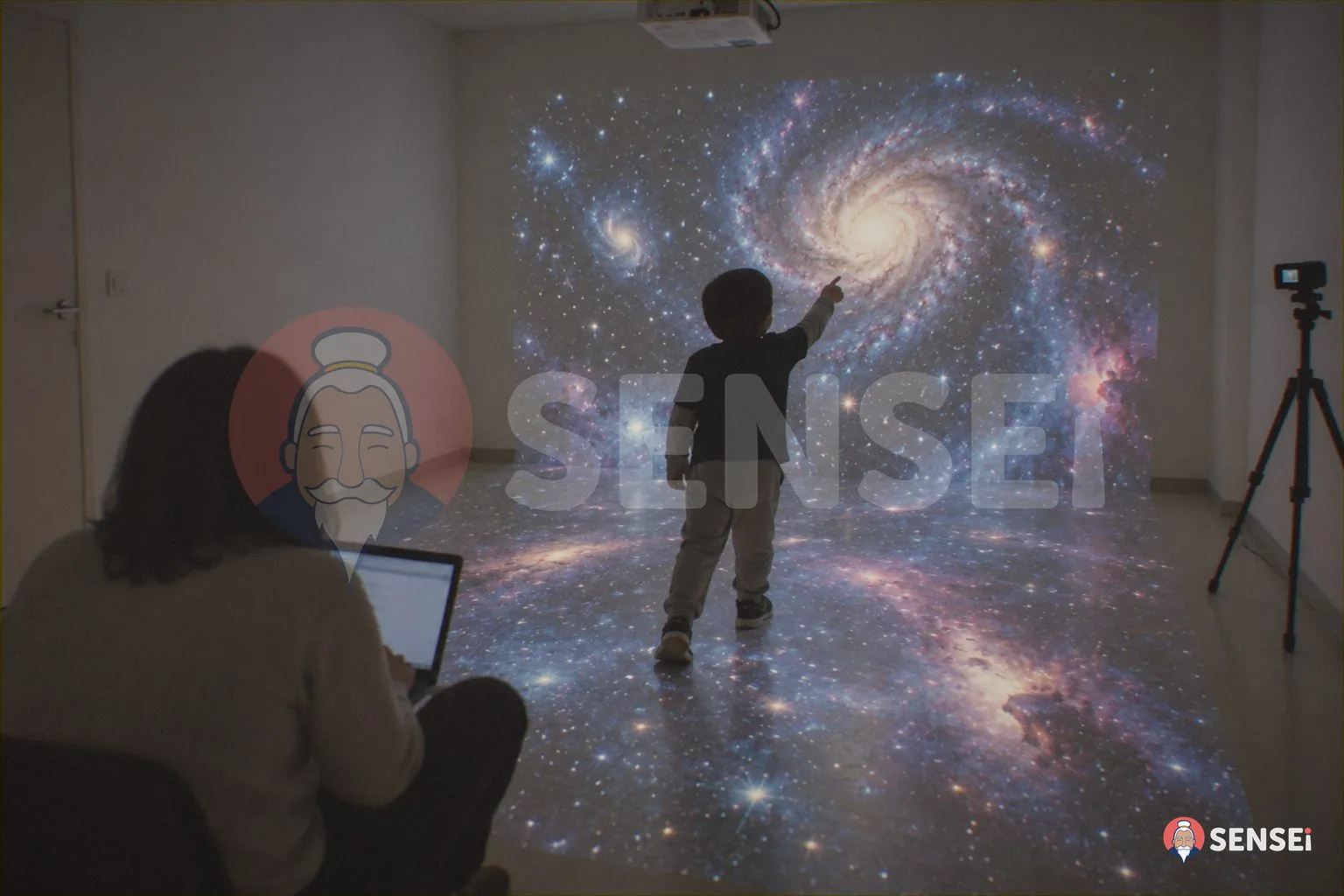
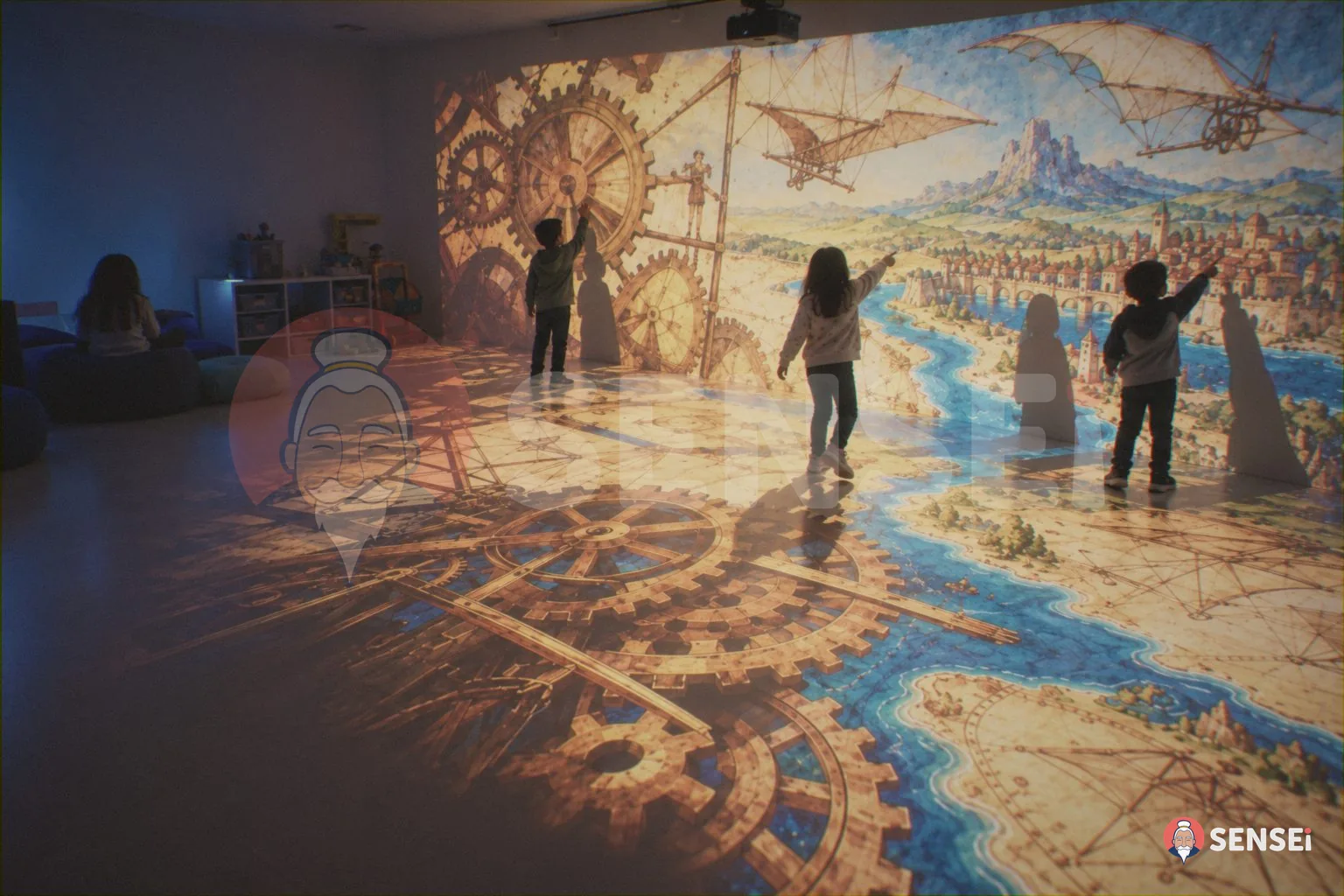
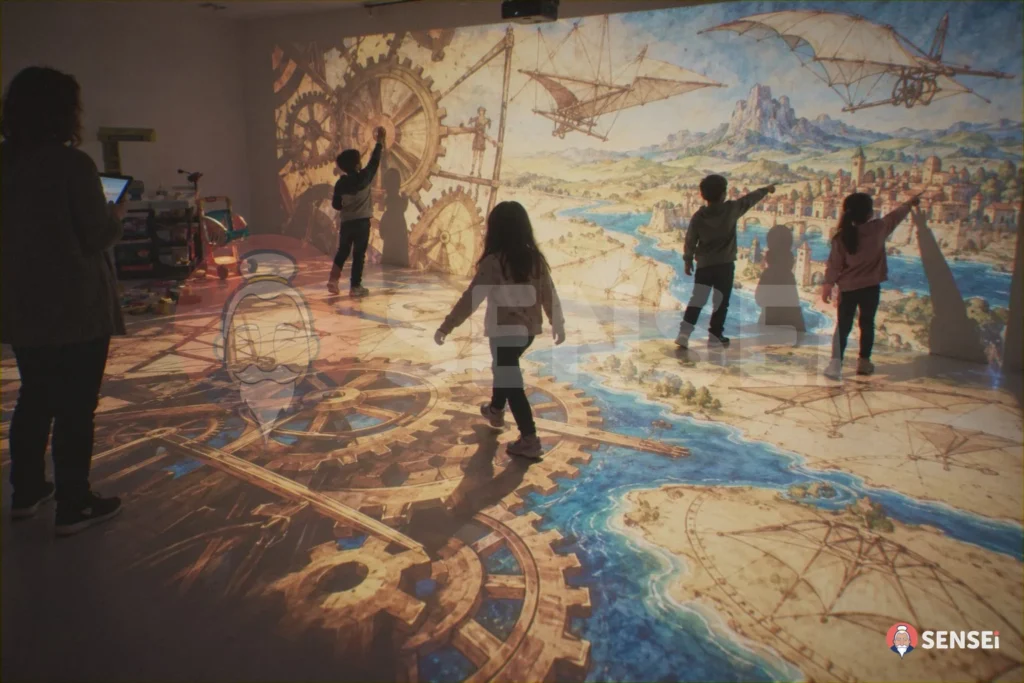
One of the two buildings already has an immersive classroom. Instead of replacing it, the school renews it with SENSEi, making the most of what it already has. In both environments the wall and the floor become interactive and respond to the children’s gestures and movement; the teacher guides the session from a tablet and can create their own activities.
Same format, different content: the activities
Teachers are offered more than 27 activity templates in which the content changes but the format does not. The same template works for Italian, mathematics, science or geography. Some examples:
- Collaborative story: the children’s drawings enter the room and become part of a shared story.
- Teleportation: the class finds itself in real places, to explore together.
- Path: a pond or dinosaur footprints to follow with their feet on the floor.
- Magic desk: a paper book enlarged on the wall, to read all together.
- Quiz, memory, categorise, sequence, puzzle, microscope: familiar formats, experienced with the body.
The link with research
Behind the templates lies an idea born in research: the “phygital” experience, which combines digital content, physical objects to handle and relationships between classmates. It is one of the results of the work that the SENSEi research group carries out from Politecnico di Milano, which today counts more than forty publications.
Which way of interacting best supports learning? The group investigates this in the classroom, comparing different modes with 175 primary school pupils: we describe it in Touching, moving, speaking. On the role of the body in learning, read The body that learns.
What changes
- Two immersive environments in the primary schools on via Volta and via Sturzo, available to classes.
- An investment put to good use: the existing immersive classroom is back at the heart of teaching.
- Teachers ready to start: training combines hours shared across the school buildings and hours dedicated to each school, so they can begin with their classes straight away.
- Teaching autonomy: with the activity templates, every teacher can bring their own subject into the room.
Why is this a significant case?
Renewing an existing immersive classroom instead of replacing it is a sustainable choice that respects the investments the school has already made. And the activity templates show that the magic room is not a classroom for the few: it is a space for every subject and for the whole class.
Learn more in the guide to the multisensory classroom in primary school or discover SENSEi for primary school.
Frequently asked questions
Can an existing immersive classroom be renewed?
Often yes, making the most of what the school already has. It needs to be checked case by case with a site visit.
Can teachers create their own activities?
Yes, starting from the activity templates or with Eureka.
Which subjects is the room used for?
All of them: the same activity template changes its content and works for Italian, mathematics, science or geography.
How much does an environment like this cost?
It depends on the configuration: space, experiences, training and services. Contact us for an assessment.
Do you work in a school, a centre or a museum and want an environment like this? Tell us about your project: we start from the needs of the people who will use it.
Sources
In the press
- Disabilità e inclusione, il progetto LudoMi del Politecnico apre due Stanze Magiche per bambini nelle scuole del milanese, Il Fatto Quotidiano
- LudoMi, rassegna stampa, Politecnico di Milano