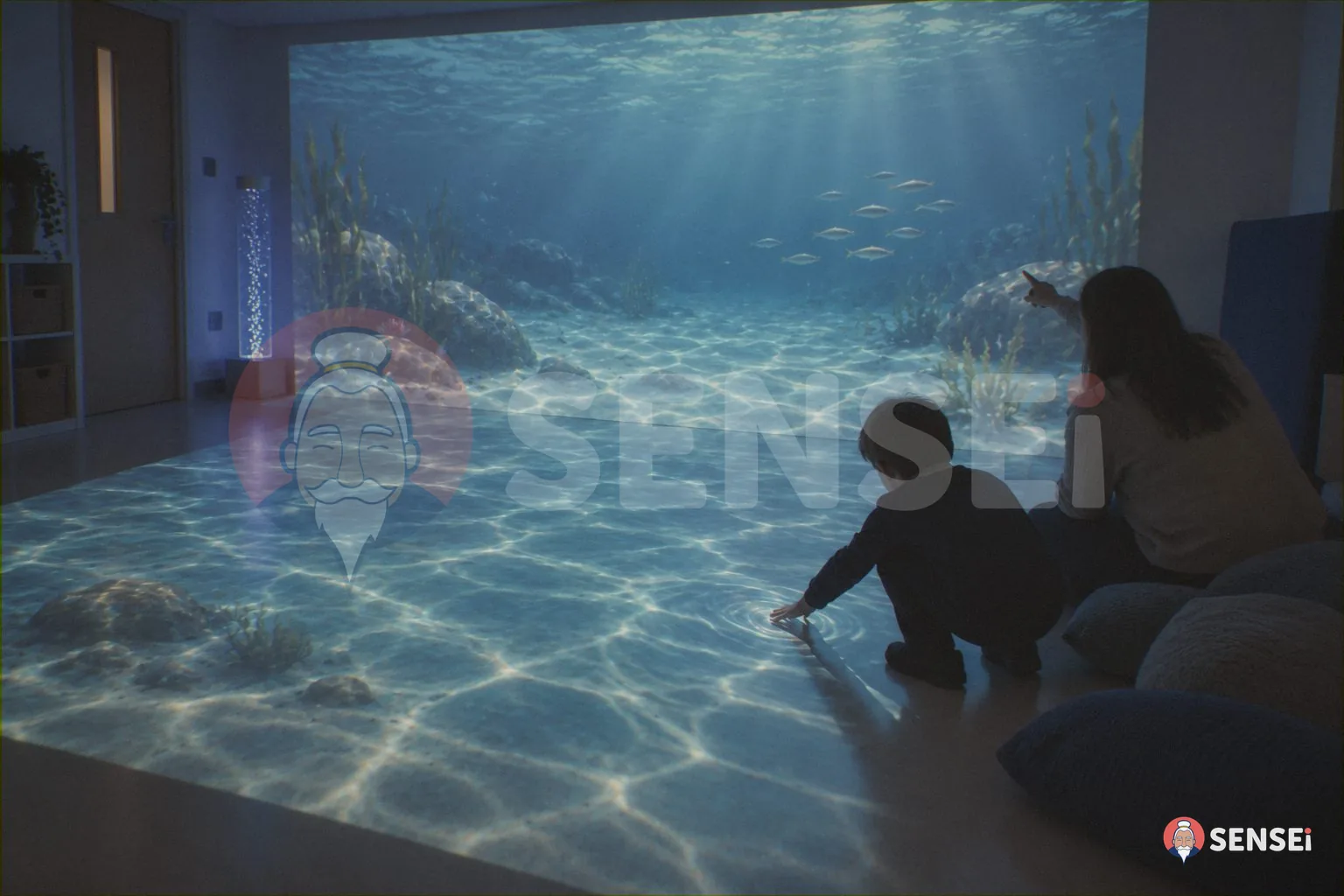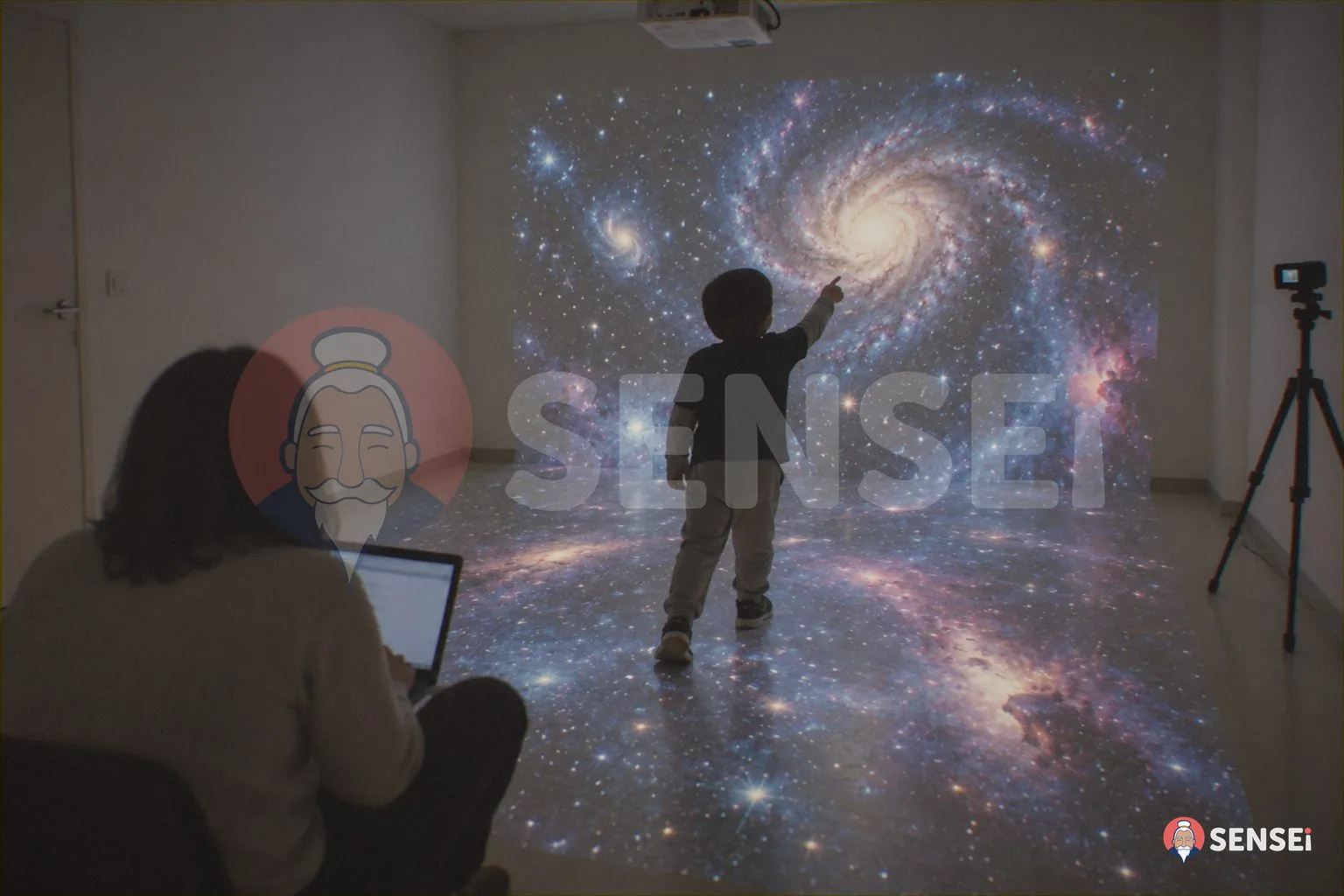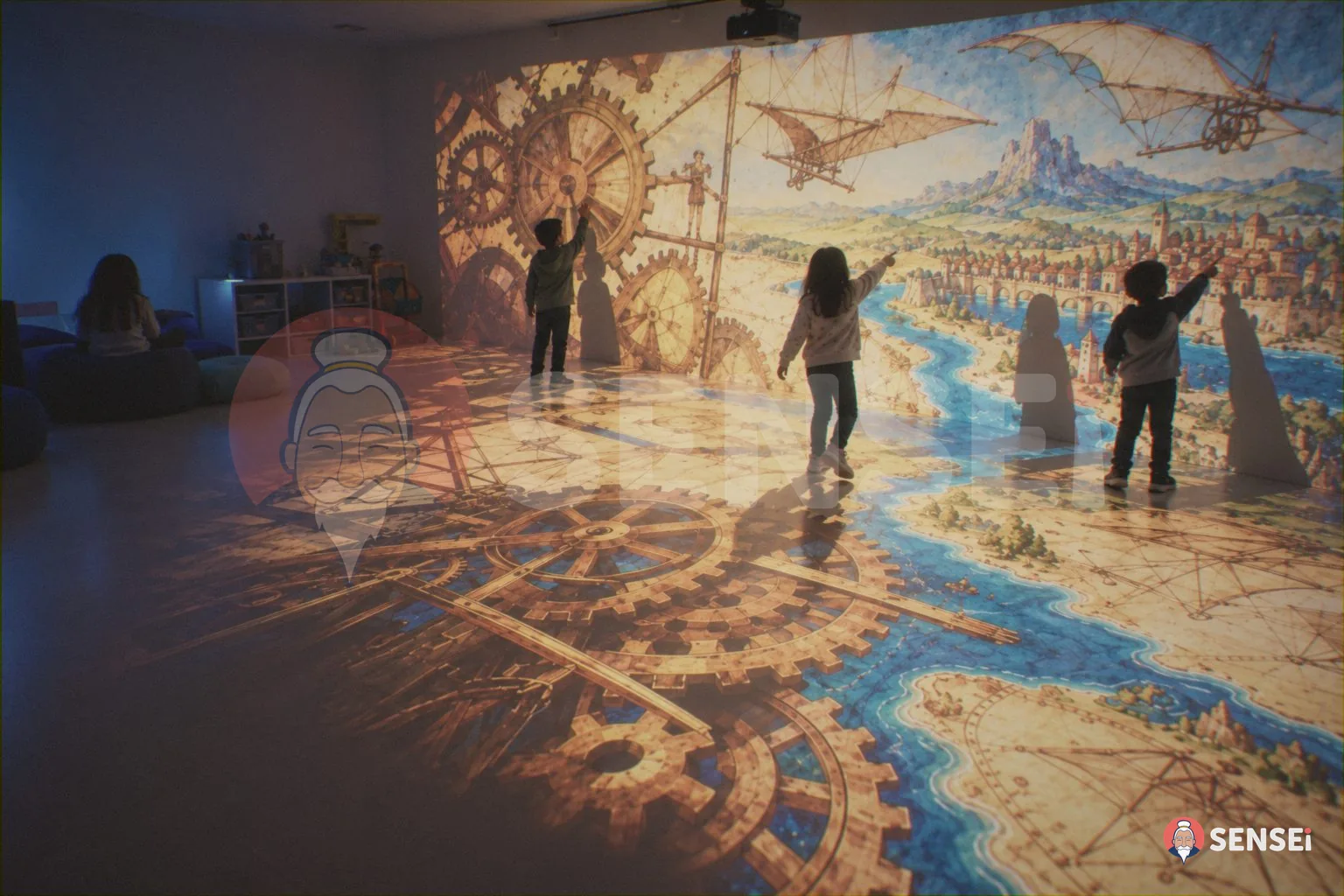

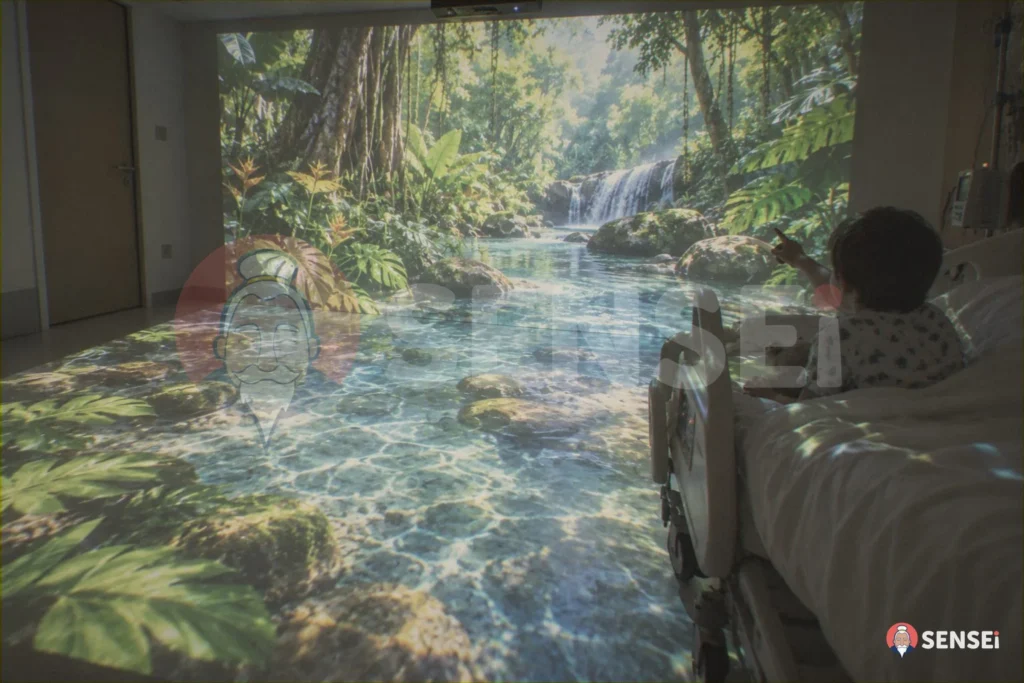
A multisensory room in hospital is a space with adjustable lights, images, sounds and materials to touch where hospitalised children and young people can calm down, play and be distracted from their fear of treatment. Studies on distraction in paediatrics indicate that engaging tools, especially those in which the child is active, can reduce perceived pain and anxiety during procedures.
Let us look at what it is for, what research says, which wards it suits, how to design it and what changes for patients, families and staff.
What is a multisensory room in paediatrics for?
Hospital is a difficult environment for a child: unfamiliar noises, the smell of disinfectant, bright lights, new people, long waits. A multisensory room offers a counterbalance. Its main uses are:
- Reducing anxiety before tests, blood draws, dressings or surgery.
- Distraction during short procedures, when the facility allows it.
- Regulating emotions after a moment of crisis or intense stress.
- Playing during long hospital stays, keeping in touch with normal life.
- Welcoming autistic children or children with particular sensory needs, for whom the hospital environment is often very tiring.
- Supporting rehabilitation, when therapists use movement and play as part of the pathway.
What does research say?
Digital distraction reduces pain and distress
A meta-analysis published in Pediatrics brought together 106 studies (7,820 children) on the use of digital distraction tools, such as virtual reality and video games, during common painful procedures (blood draws, dental care, burn dressings). Compared with usual care, digital distraction produced a modest but clinically relevant reduction in pain and distress. The authors point out that its superiority over non-digital distraction has not been demonstrated and that the context and the child’s preferences should guide the choice (Gates and colleagues, Pediatrics).
Better an active child than a spectator
A meta-analysis of 13 randomised studies (more than 1,100 children) compared active distraction (the child plays, interacts, does something) and passive distraction (the child watches or listens). Pain reported by the children did not change significantly, while anxiety reported by children, parents and staff, and pain assessed by parents and staff, were lower with active distraction. The authors conclude that active distraction may be more effective and call for larger studies (Shen and colleagues, Italian Journal of Pediatrics).
It is the same principle observed in multisensory environments: when the child controls the stimuli, the experience changes. We discuss this in the post on interactive room and passive room.
The whole sensory journey matters, not just the room
A qualitative study in a paediatric oncology unit, with 24 children aged 5 to 12, reconstructed their “sensory journey” through the hospital. The least stressed children described coherent, predictable and emotionally welcoming environments; the most stressed reported fragmented or overstimulating environments, especially in transit spaces. Clinical noises, cold surfaces and antiseptic smells increased distress, while soft materials, play, familiar scents and music helped. The study is small and single-centre, but it offers useful pointers (Rucitra and colleagues, F1000Research).
The lesson for designers is clear: a beautiful room is not enough if the corridor leading to it is chaotic.
Which wards is it suitable for?
| Setting | Typical use | Points of attention |
|---|---|---|
| General paediatrics | Play, waiting, emotional regulation | Access rota, cleaning between one group and the next |
| Paediatric oncology and haematology | Recreation during long stays, relaxation | Strict hygiene, sanitisable materials, patient fatigue |
| Child neuropsychiatry | Assessment and activities with autistic children or children with neurodevelopmental disorders | Measured stimuli, individual profiles |
| Rehabilitation | Movement, motor skills, group activities | Clear space, safe floor |
| Paediatric emergency department | A calm space for very agitated or autistic children | Quick access, simple environment |
| Day hospital | Waiting before therapies or tests | Short activities, easy to interrupt |
How to design a multisensory room in a hospital?
A hospital has needs that a school does not. Some guidance:
- Hygiene first. Few porous materials, washable surfaces, objects that are easy to sanitise. Interactive images on walls and floor help, because children play without touching shared objects.
- A clear floor, to leave room for wheelchairs, beds and drip stands.
- Fine adjustment of stimuli. Children who are tired or in pain need to start from an almost dark environment.
- No rapid flashing lights. Some patients may have photosensitive epilepsy.
- Scents with caution. In some wards, for example with patients undergoing chemotherapy, smells can be unpleasant: it is better to provide them as an option to activate only when needed.
- Simple control. Nurses, educators and therapists must be able to start an activity in a few seconds.
- Content suited to different ages, from infants to teenagers.
- Staff training, so that the tool is actually used and not kept under lock and key.
The contribution of SENSEi research
SENSEi comes from the Magic Room at Politecnico di Milano, a smart space designed with specialists in neurodevelopmental disorders and used in two therapy centres. In an exploratory study, 8 practitioners and 19 children with severe impairments used it for four months, with encouraging results according to the research group (Magic Room, IEEE Pervasive Computing). That work gave rise to a body of more than 40 scientific publications, available on the Research page.
What changes for patients, families and staff?
Today the SENSEi magic room transforms an existing room, such as a playroom, without building work: walls and floor respond to the gestures and movements of several people, with nothing to wear, and the practitioner guides the experience from a tablet. For the child, this means having a predictable place in which to choose and play. For parents, a moment of normality. For the team, a shared tool to welcome, calm and document.
At the Autism Centre of the Ospedale San Paolo in Milan, the room is a tool for the team, with about 50 co-designed activities, and a safe refuge for regulation. At the first autism centre of ASL Salerno, in Bracigliano, children and young people use it to move, play and communicate. Solutions for the healthcare sector are described on the Therapy and well-being page; for the typical elements of a room, read what to put in a multisensory room.
Frequently asked questions
Does the multisensory room reduce pain?
Studies on distraction indicate a modest reduction in perceived pain and distress during procedures. It does not replace the pharmacological pain management decided by doctors.
Who runs it on the ward?
Usually educators, nurses, therapists or child life staff, with a trained lead person. A clear schedule of use is important.
Is it suitable for autistic children?
Yes, if the stimuli are adjustable and the child can control them. A calm, predictable space can help a great deal in a hospital environment.
Do you need a dedicated room?
It is preferable, but not essential. SENSEi can transform an existing room, for example a playroom, without building work.
How much does a multisensory room for a hospital cost?
It depends on the configuration, the size and the services required. Contact us for an assessment.
Would you like to find out how to bring a multisensory room to your ward? Book a demo.
Sources
- Gates M. et al. (2020). Digital Technology Distraction for Acute Pain in Children: A Meta-analysis. Pediatrics
- Shen T. et al. (2023). Active versus passive distraction for reducing procedural pain and anxiety in children: a meta-analysis and systematic review. Italian Journal of Pediatrics
- Rucitra A. A., Setijanti P., Dinapradipta A. (2025). Mapping Multisensory Journeys in Pediatric Oncology Care. F1000Research
- Magic Room: A Smart Space for Children with Neurodevelopmental Disorder. IEEE Pervasive Computing