
Multisensory stimulation in dementia consists of offering the person pleasant, carefully dosed stimuli for sight, hearing, touch and smell, usually in a quiet environment with a care worker alongside. The most recent reviews indicate that it can help reduce agitation and apathy and improve mood, but the evidence is still heterogeneous and the protocols are poorly standardised.
In this article we summarise what the research says, with its limits, and how to translate it into care practices that respect the person, useful for those who work every day in care homes and day centres.
What is multisensory stimulation?
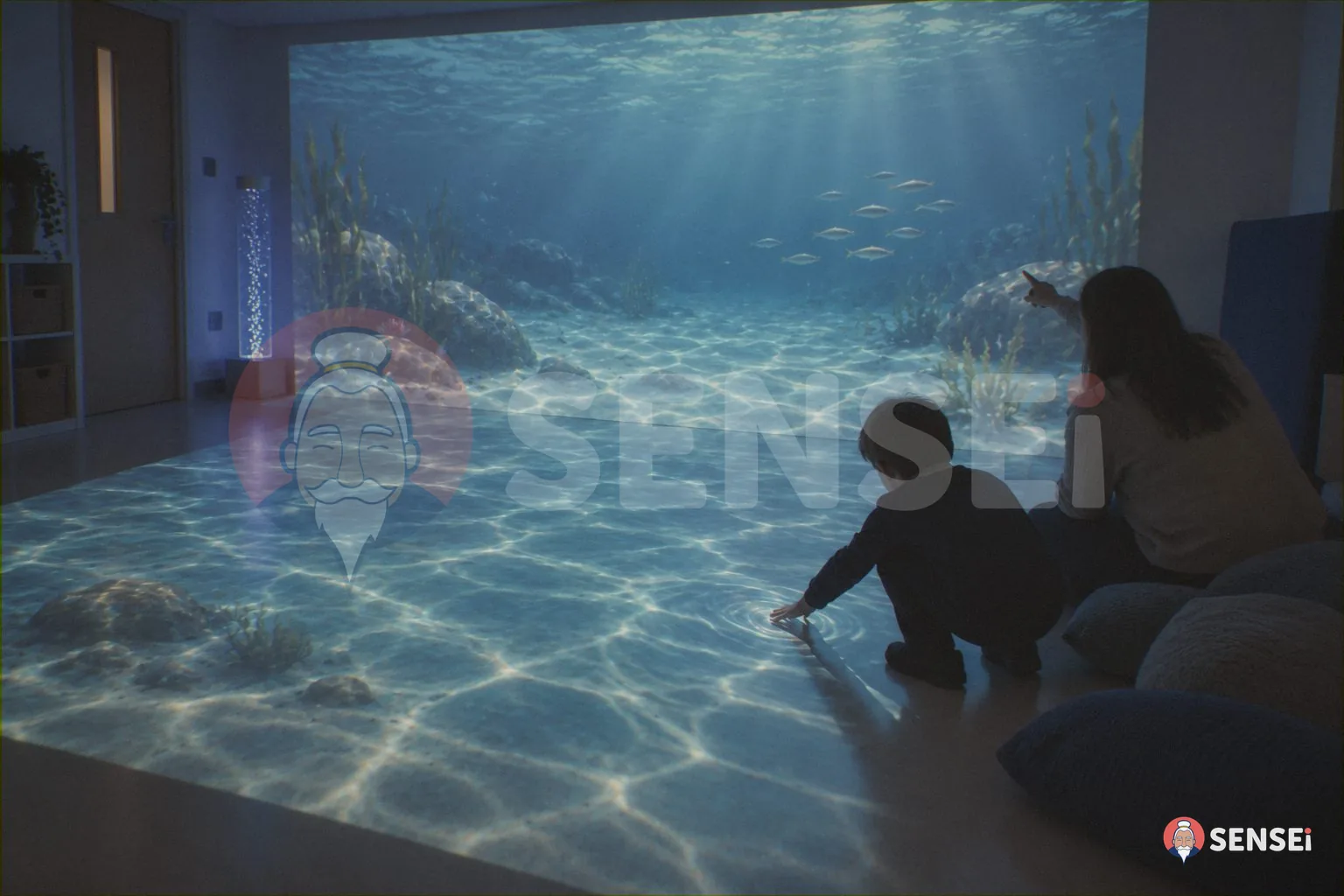
It is a non-pharmacological intervention. The person with dementia is offered a combination of sensory stimuli (soft lighting, music, objects to touch, familiar scents, images) in a dedicated space or an equipped corner. The aim is not to teach anything, but to promote well-being, relaxation, contact and, where possible, participation.
The best-known approach is Snoezelen®, which originated in the Netherlands in the seventies for people with intellectual disability and was later extended to residences for older people. We tell its story in the post on the Snoezelen room. Today there are also different programmes that combine sensory stimuli, cognitive activities and movement.
What does research say about multisensory stimulation in dementia?
The evidence has accumulated over time and the picture has changed. It is best read in order.
The first reviews: insufficient evidence
An early Cochrane review on Snoezelen and dementia concluded that there was no evidence of effectiveness: the two randomised trials included showed no significant effects on behaviour, interaction and mood (Chung and Lai, Cochrane). The main limitation was the small number of studies.
Later reviews: positive but weak signals
A later systematic review of 20 studies observed that Snoezelen and other multisensory environments are the most widely used approaches, with positive results in several studies. The authors note, however, great variability in the frequency, duration and number of sessions, few follow-ups and differing assessment tools. Their conclusion is that the evidence supports sensory stimulation in dementia only weakly (Pinto and colleagues, Expert Review of Neurotherapeutics).
Recent meta-analyses: effects on agitation, apathy and mood
A recent meta-analysis of 16 randomised controlled trials (974 people over 65 with dementia) found that multisensory stimulation significantly reduces agitation, apathy and depression and improves global cognitive function. It found no significant effect on anxiety, however, and the authors point out considerable heterogeneity between the studies (Octary and colleagues, Journal of Prevention of Alzheimer’s Disease).
Another recent systematic review, covering studies from the last decade, reports that stimulation offered in specialised environments such as Snoezelen rooms has positive effects on mood, reduces agitation and promotes relaxation. The authors call for more standardised protocols and the use of new technologies in future research (Calderone and colleagues, Biomedicines).
In short: what can we honestly say?
| Outcome | What the studies indicate | How to read it |
|---|---|---|
| Agitation | Reduction in several studies and in the most recent meta-analysis | Positive signal, highly heterogeneous studies |
| Apathy | Reduction in the most recent meta-analysis | Positive signal, heterogeneous studies |
| Mood and depression | Small but significant effect | Positive signal |
| Global cognitive function | Small improvement | To be confirmed |
| Anxiety | No significant effect | Insufficient evidence |
| Long-term effects | Little follow-up data | Insufficient evidence |
Multisensory stimulation does not cure dementia and does not halt its progression. It can, however, be part of a care plan that places the person’s daily well-being at the centre.
How do you organise a multisensory stimulation session?
Some good practices emerge from the literature and from experience in care services.
- Know the person’s life story: the music of their youth, places, occupations, familiar scents. A personal stimulus is worth more than a generic one.
- Start slowly: little light, a single stimulus, then perhaps another.
- Watch for signals: a smile, relaxed hands, gaze, or restlessness and attempts to get up. If discomfort increases, change or stop.
- Short, regular sessions: short, frequent sessions are better than long, occasional ones.
- Presence of the care worker: the relationship is part of the intervention, not an extra.
- Respect and dignity: avoid childish materials and offer content suited to an adult.
- Document: note the stimuli offered, the reactions and the person’s state after the session to build a profile over time.
Passive or interactive room for older people?
Classic multisensory rooms are designed above all for relaxation: the stimulus is received. For many people with advanced dementia this remains the most suitable approach.
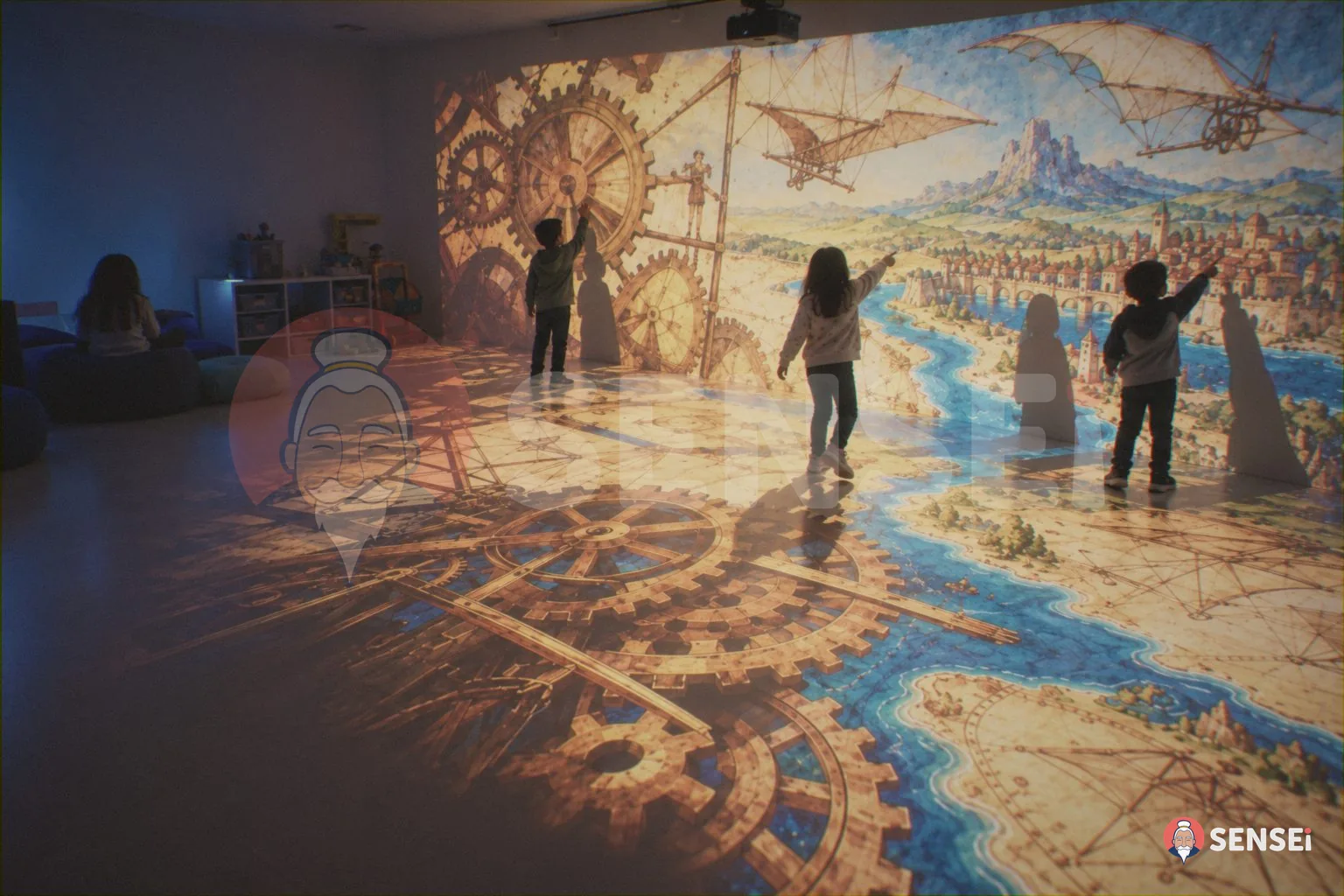
In milder stages, or with people who are still active, an environment in which a gesture, the voice or an object triggers a sound, an image or a memory can be useful. The research group from which SENSEi originates, with more than 40 scientific publications, has worked mainly with children and with young adults with intellectual disability. In a social care centre, a study with 17 participants and 8 specialists explored activities that combine physical objects and digital content, comparing them with purely digital or paper-based materials. The results indicate good potential for interventions and an interaction that participants appreciated (Phygital interfaces, Multimedia Tools and Applications). These are useful pointers for designing activities with older people too, but specific research on dementia is still to be done.
For a comparison of the two approaches, read the post on interactive or passive rooms.
What can a SENSEi room offer in a care home or day centre?
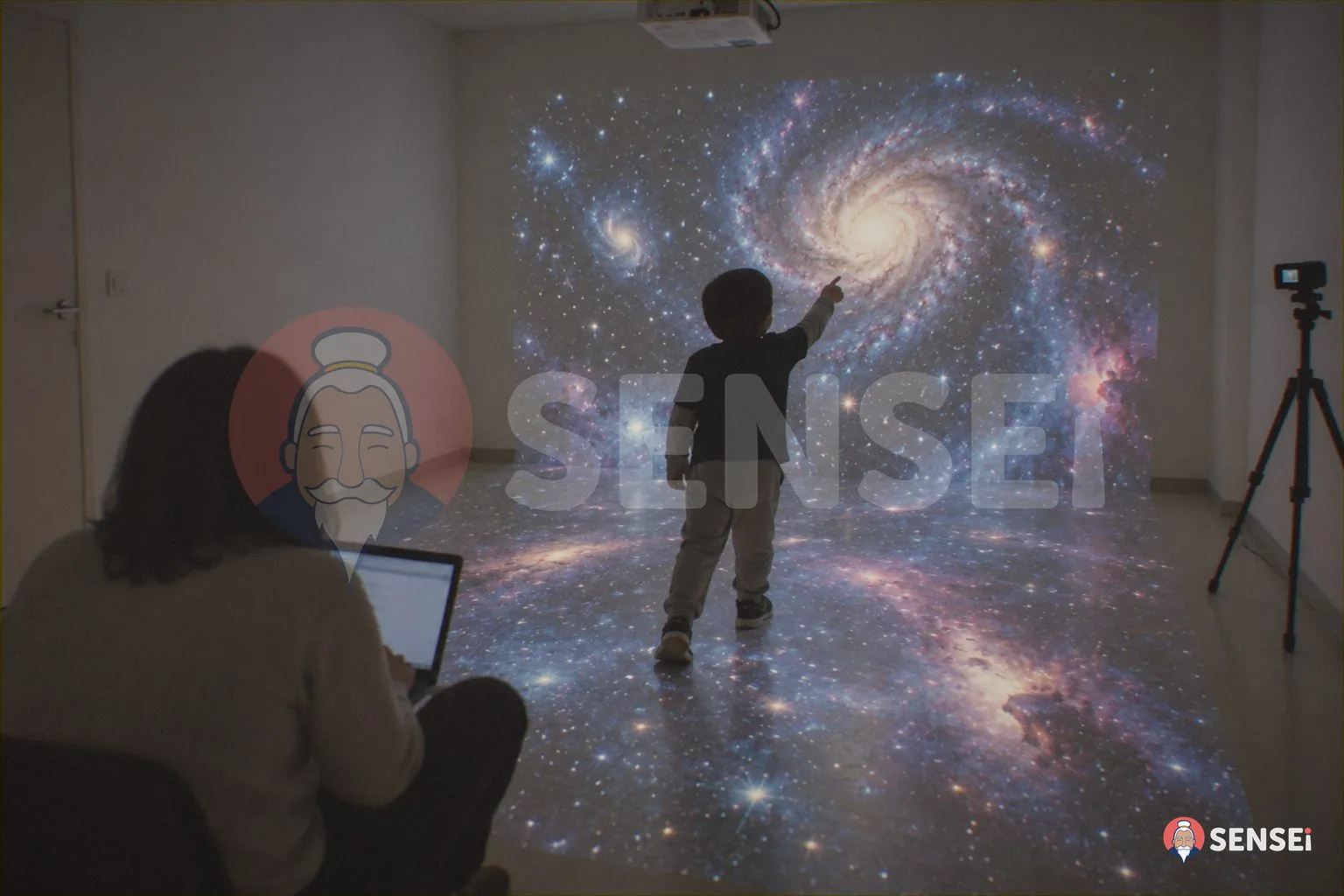
A SENSEi magic room turns an existing room into an environment in which lights, images, sounds and scents are dosed from a tablet, without building work. For older people and those who care for them, this means:
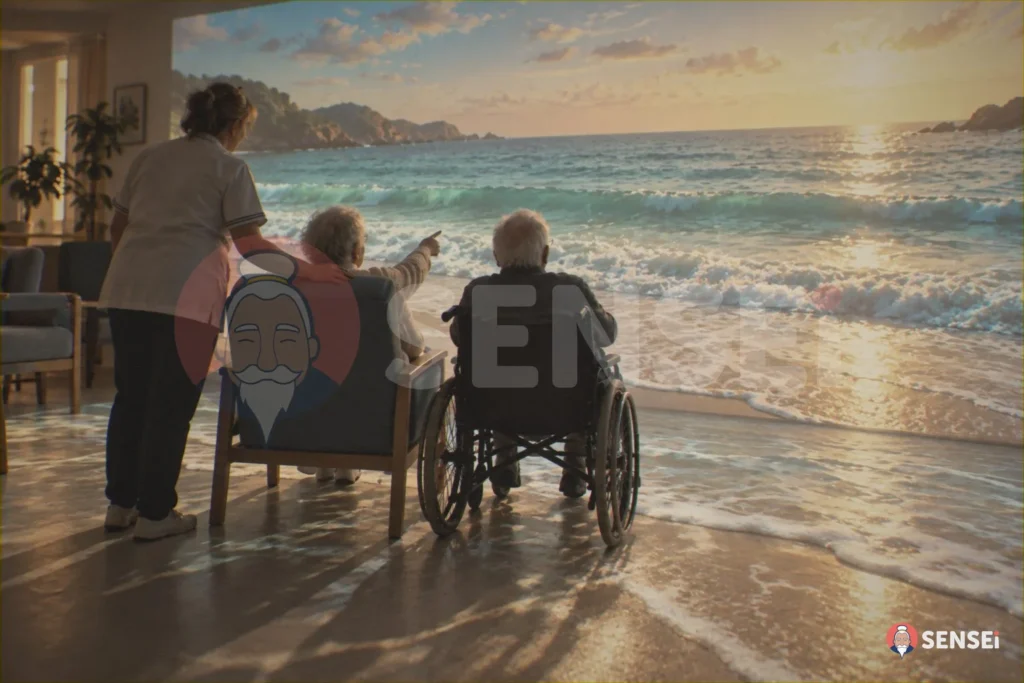
- offering familiar landscapes (the sea, the countryside, the town as it once was) with matching music, which can open up memories and conversations;
- starting from an almost dark environment and adding stimuli gradually, following the person’s reactions;
- using the same room for individual and small-group moments;
- keeping track of the activities carried out, to share observations within the care team.
A concrete example comes from the Fondazione Sacra Famiglia in Inzago: a mobile SENSEi cart brings the multisensory experience directly to adults and older people with disabilities, many of them in wheelchairs, with content designed for adults. It is a method that can be replicated in other residences.
Practical guidance for spaces dedicated to older people is collected in the post on the multisensory room for older people and Alzheimer’s; services for care facilities are described on the Therapy and well-being page.
Frequently asked questions
Does multisensory stimulation improve memory?
A recent meta-analysis observed a small improvement in global cognitive function, but this cannot be described as memory recovery. The main goal remains well-being.
How long should a session last?
Studies use very different durations. In practice, short and regular sessions are preferred, adapted to the person’s tolerance.
Is it suitable for all stages of dementia?
It can be adapted to every stage. In advanced stages relaxation prevails; in mild stages more active and group activities can be offered.
Can it replace medication for agitation?
No. It is a non-pharmacological intervention that can complement the care plan decided by the care team and the doctor.
Are trained care workers needed?
Yes. The quality of the relationship and the ability to read the person’s signals matter as much as the environment. This is why SENSEi provides training programmes for staff.
Want to understand how an adjustable room can fit into your facility’s care plan? Book a demo.
Sources
- Chung J. C. C., Lai C. K. Y. (2002). Snoezelen for dementia. Cochrane Database of Systematic Reviews, CD003152
- Pinto J. O. et al. (2020). Sensory stimulation programs in dementia: a systematic review of methods and effectiveness. Expert Review of Neurotherapeutics
- Octary T. et al. (2025). Multisensory stimulation reduces neuropsychiatric symptoms and enhances cognitive function in older adults with dementia: a meta-analysis of randomized controlled trials. Journal of Prevention of Alzheimer’s Disease
- Calderone A. et al. (2025). Multisensory Stimulation in Rehabilitation of Dementia: A Systematic Review. Biomedicines
- Gelsomini M., Spitale M., Garzotto F. Phygital interfaces for people with intellectual disability: an exploratory study at a social care center. Multimedia Tools and Applications
Snoezelen® is a registered trademark of its respective owners.