
3 December is the International Day of Persons with Disabilities, established by the United Nations to promote the rights and wellbeing of persons with disabilities in every area of society. At school, it is an opportunity to offer inclusive activities in which everyone truly takes part: not lessons “about” disability, but experiences lived together.
In this article you will find the meaning of the Day, some principles for avoiding pity and 8 activities for preschool, primary and secondary school, in the classroom and in the immersive room. These ideas come from SENSEi’s experience in schools and centres, and from years of research on inclusion.
What is the International Day of Persons with Disabilities?
The United Nations General Assembly proclaims 3 December with resolution 47/3 of 14 October 1992. At the time it was called the “International Day of Disabled Persons”; today the name puts the person first: persons with disabilities.
According to World Health Organization data reported by the United Nations, around 1.3 billion people with disabilities live in the world, about 16% of the population, one person in six. Every year the UN proposes a theme: in 2025 it was “Fostering disability inclusive societies for advancing social progress”.
What does school have to do with it?
A lot. The UN Convention on the Rights of Persons with Disabilities, ratified by Italy with Law no. 18 of 3 March 2009, calls in Article 24 for an inclusive education system at all levels, with reasonable accommodation and individualised support in environments that maximise academic and social development.
Article 30 adds a point that is often forgotten: children with disabilities must have equal access to play, recreation, sport and leisure activities, including within the school system. Playing together is not an extra: it is a right.
How to offer truly inclusive activities?
Before the activities, a few principles:
- Do things together, do not talk about. The Day is not a moment when the class “studies” a classmate. It is a moment when everyone lives the same experience.
- Start from the most complex needs. This is the principle of reverse inclusion that guides SENSEi: if an activity works for those who face the most difficulties, it usually works better for everyone.
- Offer several ways to take part. Universal Design for Learning invites us to offer multiple means of engagement, of representation and of action and expression.
- Value, do not pity. Avoid a pitying tone and “hero” stories. Talk about skills, interests, rights.
- Involve people. If possible, invite associations, families and adults with disabilities to share their experience, with their consent and in their own words.
- Respect privacy. Do not put a single pupil at the centre without their agreement and that of their family.
8 inclusive activities for 3 December
1. The sun that rises for everyone (preschool and primary, immersive room)
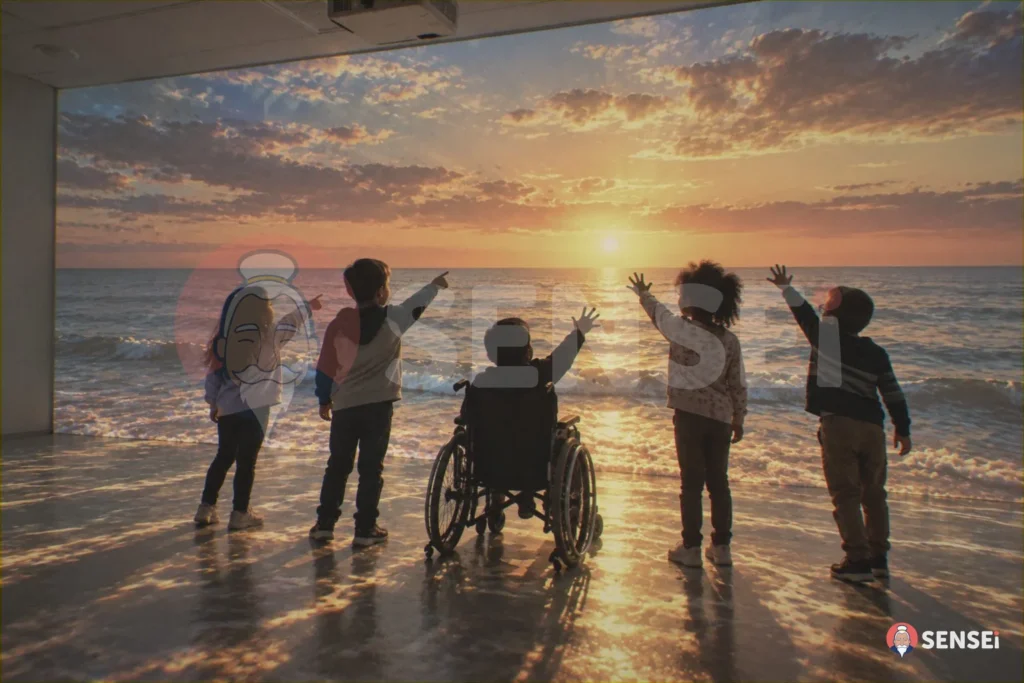
A sunrise appears on the wall. The sun rises only when every child makes their contribution, in the way they prefer: raising their arms, stamping their feet, using their voice, touching an object. Nobody can do it alone, everyone is needed. At the end, the class talks about how each person took part.
2. The story with symbols (preschool and primary)
A short story is told with pictograms from Augmentative and Alternative Communication. In the SENSEi room, ARASAAC symbols appear on the wall as the story unfolds. The children discover that you can “read” in many ways and choose the symbols to continue the story.
3. The orchestra of modes (primary, immersive room)
Each child chooses how to play: with their feet, with their hands in the air, with a card, with a wand, with their voice. The SENSEi research group’s study on how people interact in multisensory environments, with 175 children aged 6 to 10, shows that each mode has different characteristics: having several ways to take part allows everyone to find their own. The result is a piece of music built together.
4. Cooperative games on the floor (preschool and primary)
Paths, fish to rescue, islands to reach together. The game is won only if the whole team reaches the finish. The rules adapt: those who move in a wheelchair, those who need more time, those who prefer to watch before joining in always have a role.
5. What helps me learn (primary and secondary)
Each pupil writes or draws on a card one thing that helps them learn: a map, music, moving, working in pairs, having more time. A large poster takes shape. The message is simple: we all have different needs, and an inclusive class takes them into account.
6. The accessibility map (secondary)
In small groups, students explore the school with a worksheet: entrances, stairs, lifts, toilets, signage, noise, lights. They note what works and what can be improved, then present their proposals to the head teacher. It is civic education in practice.
7. A greeting in LIS (all school levels)
With the help of an expert or an association, the class learns a few signs of Italian Sign Language (Lingua dei Segni Italiana, LIS): the greeting, their own name, “thank you”. It is a way of discovering that communication takes many forms.
8. The museum for everyone (secondary)
Students choose a work of art or an artefact and design how to present it to everyone: with an audio description, an object to touch, an easy-to-read text, a projected image. This is the theme of cultural accessibility, on which SENSEi works with SENSEi ART and with L’abilità in the Museo per tutti project.
How to use the immersive room for 3 December?
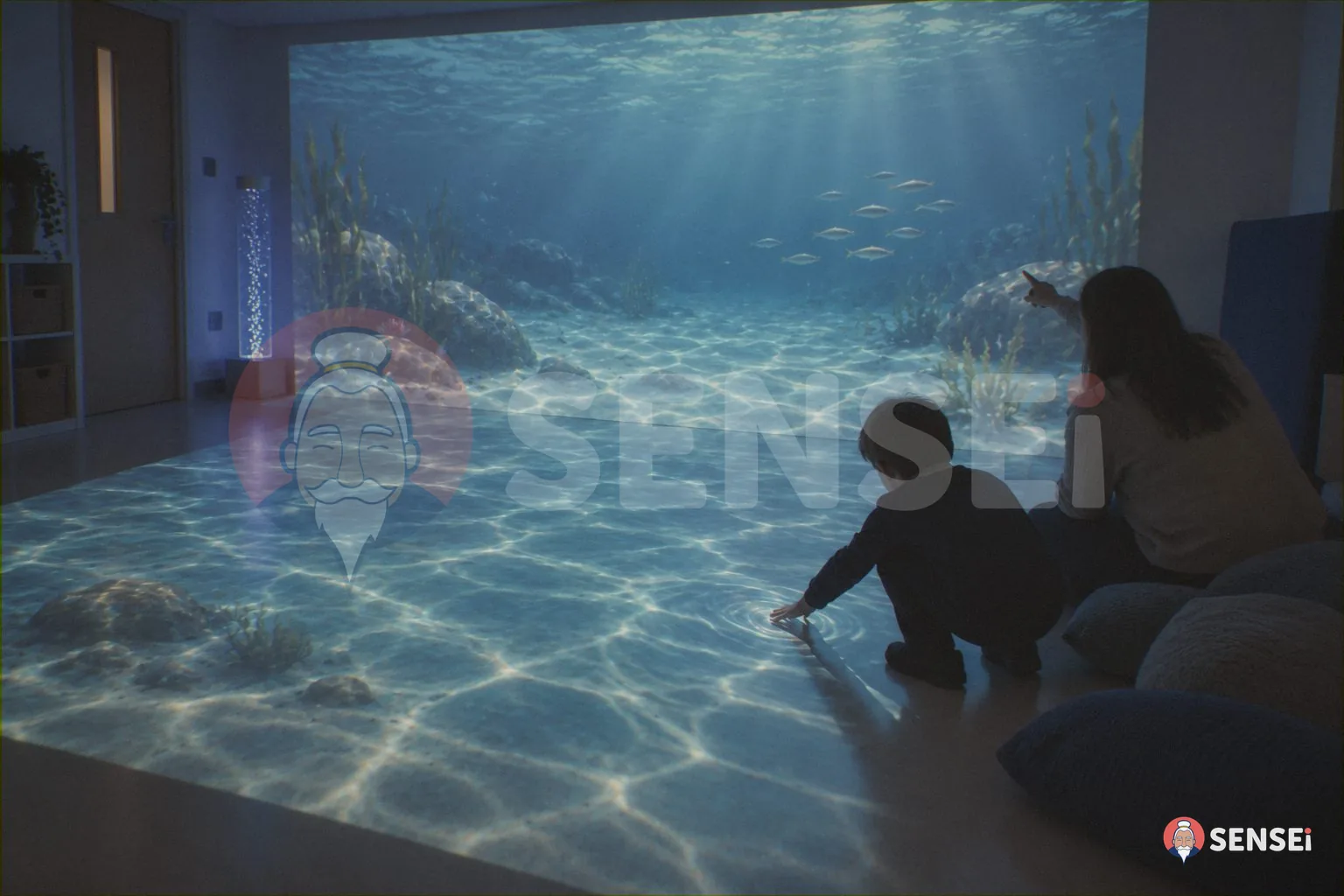
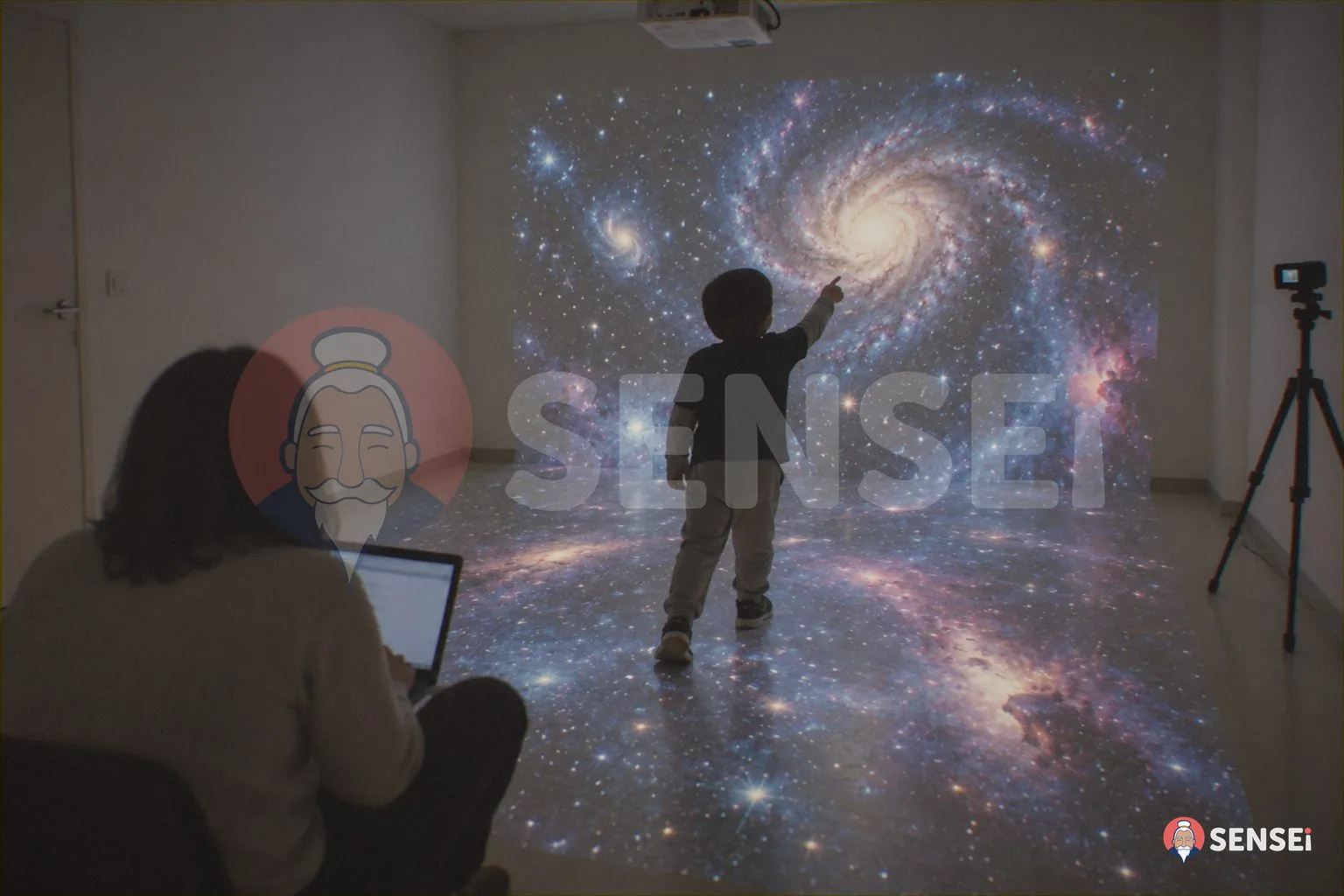
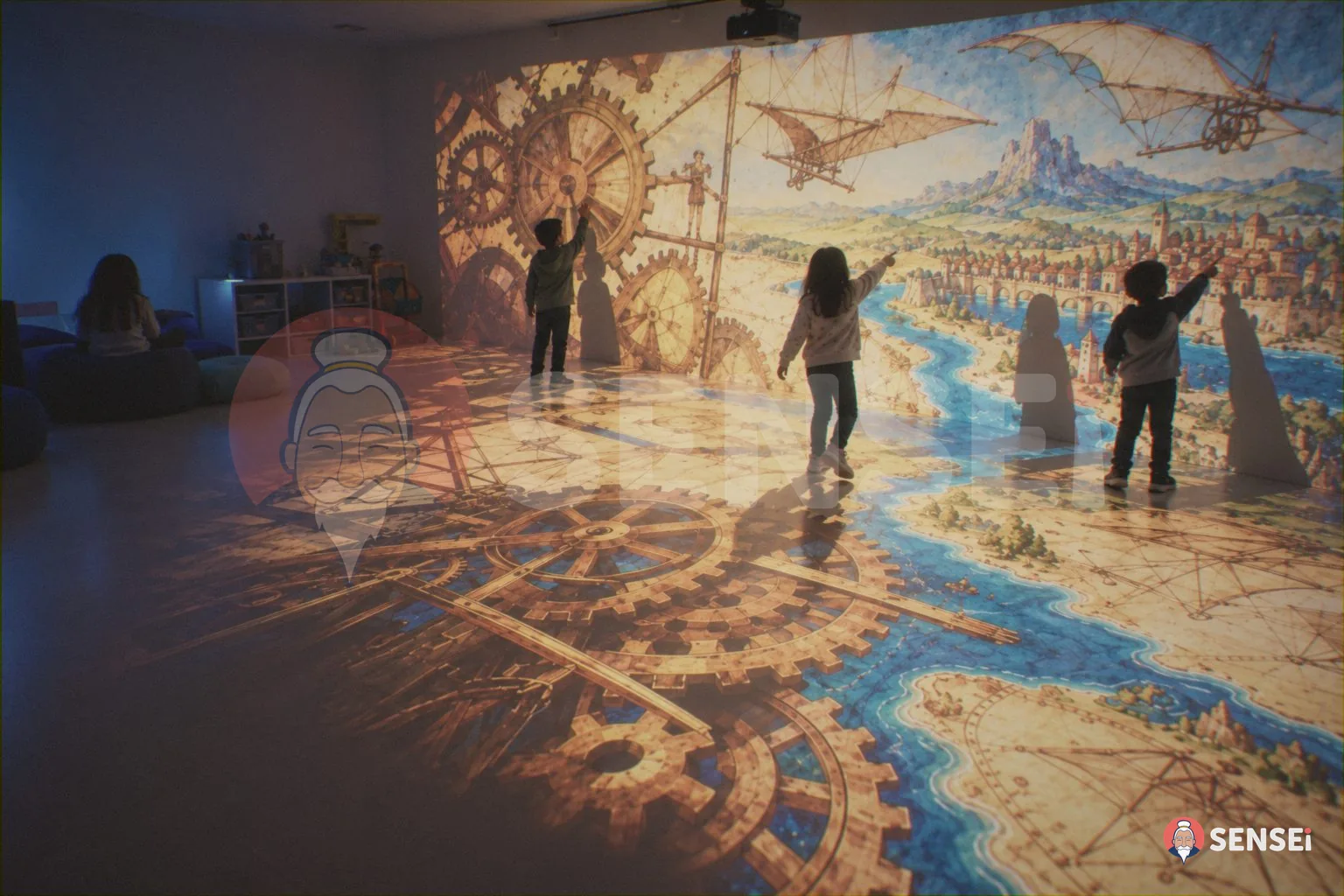
The immersive room is the ideal place for these activities because everyone takes part in the same experience, each through their own channel. In the SENSEi magic room, walls and floor respond to the movement, gestures, touch and voice of several people at once, with nothing to wear, and the teacher adjusts lights and sounds in real time.
This is not an abstract promise. In Cava de’ Tirreni, in the room at La Nostra Famiglia, the wall responds to the whole body: even a child in a wheelchair plays together with the others. The educators observe that children with motor limitations take part in the same activities as their peers.
A few practical points:
- provide a calm corner for those who need a break;
- reduce bright lights and loud sounds for those with sensory hypersensitivity;
- announce in advance what will happen, with words and images;
- let everyone choose whether and how to join the activity.
Behind this approach lie more than ten years of research, from Politecnico di Milano to SUPSI, and more than 40 scientific publications on play, learning and inclusion. For more ideas, read the page SENSEi for education and the article on the sensory room and autism at school. In spring you will also find activities for World Autism Awareness Day.
And after 3 December?
One day is not enough. The best activities are the ones that last: the “what helps me learn” poster hanging all year, the LIS greeting used every morning, the accessibility map that becomes a project with the local council. The goal is for inclusion to become the normal way of doing school, not an event. For teachers it means having ready-made activities to come back to; for children, feeling part of the group every day.
Frequently asked questions
Why is the Day of Persons with Disabilities celebrated on 3 December?
Because this is what the United Nations General Assembly established with resolution 47/3 of 1992.
What is the 2026 theme?
The theme is announced every year by the United Nations. In 2025 it was “Fostering disability inclusive societies for advancing social progress”. Check the current theme on the UN website.
Should we say “the disabled” or “persons with disabilities”?
“Persons with disabilities” is preferable: it is the expression used by the UN Convention, and it puts the person first.
Which activities suit preschool?
Short, physical and cooperative activities, such as the sun that rises for everyone or the floor games, with several ways to take part.
Do the activities work without an immersive room?
Yes. Many take place in the classroom or in the gym; the immersive room adds engagement and more channels for participation.
Discover Eureka
Want to create your own activity for 3 December, with images, symbols, sounds and interactions designed for your class? Discover Eureka, the platform for creating and sharing multisensory activities.
Sources
- United Nations, International Day of Persons with Disabilities
- UN General Assembly, resolution 47/3 of 14 October 1992
- Law no. 18 of 3 March 2009, ratification of the UN Convention on the Rights of Persons with Disabilities
- CAST, Universal Design for Learning Guidelines 3.0
- Cosentino G, Gelsomini M, Sharma K, Giannakos M (2023). Interaction Modalities and Children’s Learning in Multisensory Environments. IDC 2023. doi:10.1145/3585088.3589385