Children’s sensory needs can be recognised by observing how they react to sounds, lights, touch and movement in everyday life: some seek strong stimuli, some avoid them and some seem not to notice them. When these reactions are intense, frequent and get in the way of play, learning or family life, it is worth observing them carefully and talking to a specialist.
This guide helps parents, educators and teachers read the signs. It is not meant for diagnosis: it is meant to help you look more closely and create environments better suited to each child, at home, at school and in therapy centres.
What are sensory needs?
Every person constantly receives information from the senses, and the brain filters it, sorts it and decides what to pay attention to. This process is called sensory processing. Almost all of us have preferences: some people love loud music and some cannot stand clothing labels.
We speak of a sensory need when a child needs more stimuli, fewer stimuli or different stimuli in order to feel comfortable, concentrate and regulate. It is not a whim. It is the way their nervous system works at that moment.
Which senses should be considered?
In addition to the five senses we know, there are three more that are important for everyday behaviour.
- Sight: light, colours, movement, visual clutter.
- Hearing: volume, sudden noises, background noise.
- Touch: fabrics, textures, physical contact, temperature.
- Smell and taste: odours, flavours, food textures.
- Vestibular system: balance and movement of the head in space (swinging, spinning, jumping).
- Proprioception: awareness of the position and force of one’s own body (pushing, pulling, squeezing).
- Interoception: internal signals such as hunger, thirst, needing the toilet, heartbeat.
How common are sensory differences?
More common than you might think. In a US study of children entering kindergarten, questionnaires completed by parents indicated sensory processing differences in 13.7% of the children represented and, with a more cautious estimate, in 5.3% of all children enrolled in the district. The authors themselves call for more rigorous epidemiological studies (Ahn and colleagues, American Journal of Occupational Therapy).
In children on the autism spectrum, sensory differences are very common. A meta-analysis of 14 studies found significant differences compared with peers, above all in reduced responsiveness to stimuli, followed by over-responsiveness and sensory seeking (Ben-Sasson and colleagues, Journal of Autism and Developmental Disorders).
In any class, therefore, it is very likely that there is at least one child for whom noise, light or touch weigh more heavily than for others. Noticing early changes their day.
How can they be recognised? The three main profiles
Research describes three typical ways of responding to stimuli. A child may show more than one, including in different senses or at different times of day.
| Profile | What happens | Signs you can observe |
|---|---|---|
| Hypersensitivity (over-responsiveness) | The stimulus comes across “too strong” | Covers their ears, avoids the canteen or the gym, refuses some clothes, gets irritated when touched, reacts intensely to bright lights |
| Hyposensitivity (under-responsiveness) | The stimulus comes across “too weak” | Seems not to hear when called, does not notice getting hurt, needs more time to react, often appears tired or absent |
| Sensory seeking | The child actively seeks stimuli | Moves constantly, jumps, rocks, touches everything, seeks tight hugs, makes noise, sniffs objects |
What signs should you look for at home and at school?
Some behaviours may suggest a sensory need. On their own they mean nothing: what counts is frequency, intensity and how much they interfere with the day.
- Strong reactions to everyday noises (hairdryer, school bell, children shouting).
- Difficulty with clothes, shoes, haircuts or tooth brushing.
- Selective eating linked to food texture.
- A constant need to move, even when asked to stay seated.
- Fear of the swing or, on the contrary, a need to spin for a long time without getting tired.
- Clumsiness, difficulty grading force (breaks pencils, squeezes too hard).
- Difficulty standing in line or being in a group, frequent pushing.
- Struggling to calm down after an intense moment.
A practical tip: for two weeks, keep a short diary with three columns (situation, reaction, what helped). It is a useful tool to bring to the appointment with the paediatrician or specialist.
When should you see a specialist?
It is worth asking for advice when sensory reactions:
- are intense and frequent, not just linked to tiredness;
- limit play, eating, sleep or participation at school;
- come with delays in language, communication or relationships.
The first point of contact is the paediatrician, who can refer you to a child and adolescent neuropsychiatry service. Assessing sensory processing is the responsibility of professionals such as the child neuropsychiatrist, the developmental psychomotor therapist or the occupational therapist.
What can the school do?
Even without an assessment, the environment can do a lot. Some simple strategies:
- Reduce noise: felt pads under chairs, ear defenders available, a warning before the bell.
- Tidy the visual space: less cluttered walls, natural light, clear areas for each activity.
- Plan movement breaks for those who need to move: carrying an object, doing an exercise, changing seats.
- Create a calm corner with low light and soft materials. We discuss this in the post on the soft play corner and calm corner.
- Prepare children for changes with pictures or visual sequences.
These are adjustments designed for a few that help everyone: a quieter, more predictable classroom is calmer for every pupil and easier for the teacher to manage.
How does an adjustable multisensory environment help?
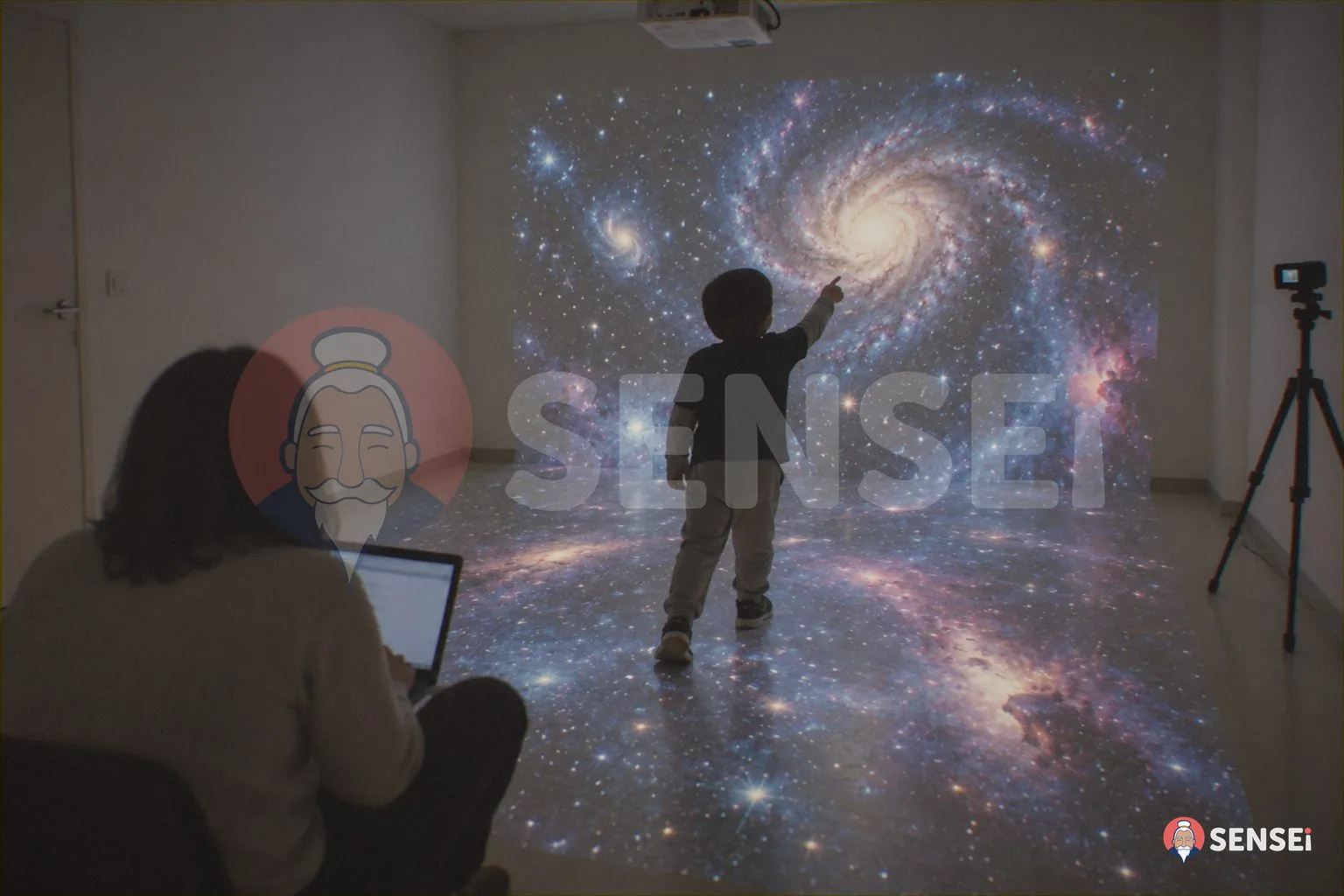
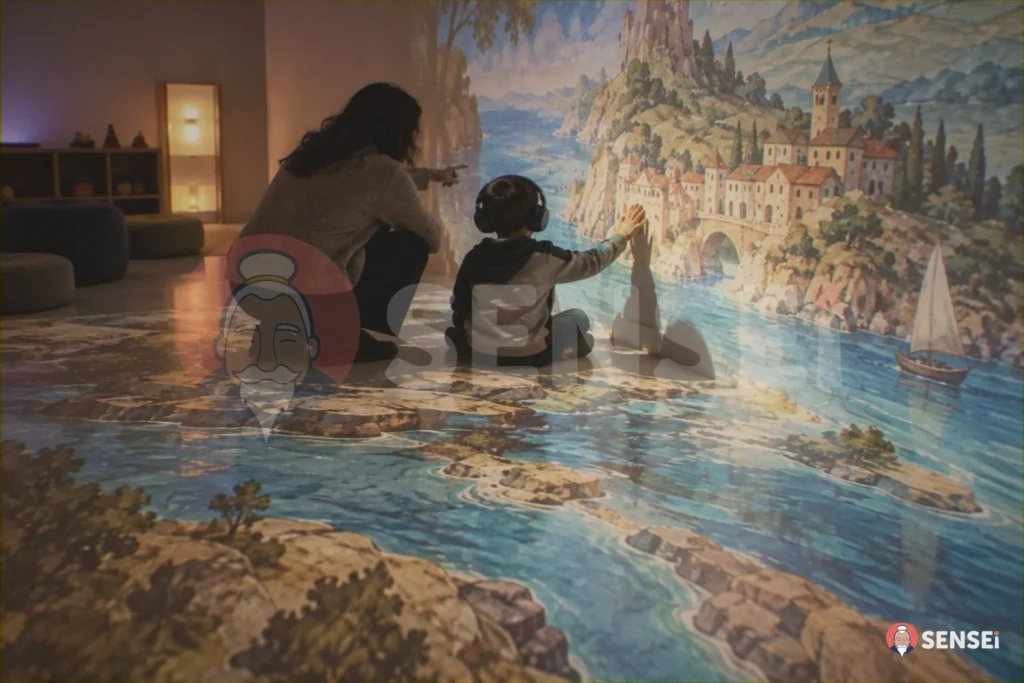
A multisensory environment is not useful because it “gives lots of stimuli”, but because it makes it possible to choose and dose stimuli for each child. This is the idea behind the Magic Room, the Politecnico di Milano project from which SENSEi derives: a space designed with specialists in neurodevelopmental disorders to offer controllable stimuli, including for movement, balance and touch (Magic Room, IEEE Pervasive Computing). From there the SENSEi research group has built a body of more than 40 scientific publications, collected on the Research page.
Who controls the stimuli also matters. In a study with 41 autistic children aged 4 to 12, when the children themselves controlled the changes in the sensory equipment, fewer sensory-seeking behaviours and more attention were observed than with automatic changes (Unwin and colleagues, Autism). We discuss this in the post on interactive room and passive room.
In a SENSEi magic room, the educator or therapist doses lights, sounds and images from a tablet: they can start from an almost dark environment and add one stimulus at a time, following the child’s reactions. At the Autism Centre of the Ospedale San Paolo in Milan, the room has also become a safe refuge for regulation, with about 50 activities co-designed with the team. At the ASL Salerno autism centre in Bracigliano, children and young people use it to move, play and communicate. To find out more, visit the Therapy and well-being page or read the guide to the multisensory room for children.
Frequently asked questions
Do sensory needs mean that the child is autistic?
No. Sensory differences are common in autism, but they are also found in children without any diagnosis. Only a specialist can carry out an assessment.
Do sensory needs change with age?
Often, yes. Some reactions lessen as children grow, others change form. This is why it is useful to observe over time.
Can a child be hypersensitive and seek stimuli at the same time?
Yes. They may avoid loud noises and at the same time seek intense movement. Each sense should be observed separately.
Does the multisensory room replace therapy?
No. A multisensory environment is a tool that educators and therapists use within a plan. It replaces neither assessment nor professional intervention.
What can I do right away in class?
Reduce background noise, plan movement breaks, create a quiet corner and prepare children for changes. These are simple measures that help the whole class.
Would you like to understand how an adjustable room can support children with different sensory needs? Book a demo.
Sources
- Ahn R. R., Miller L. J., Milberger S., McIntosh D. N. (2004). Prevalence of parents’ perceptions of sensory processing disorders among kindergarten children. American Journal of Occupational Therapy
- Ben-Sasson A. et al. (2009). A meta-analysis of sensory modulation symptoms in individuals with autism spectrum disorders. Journal of Autism and Developmental Disorders
- Unwin K. L., Powell G., Jones C. R. G. (2022). The use of Multi-Sensory Environments with autistic children: Exploring the effect of having control of sensory changes. Autism
- Magic Room: A Smart Space for Children with Neurodevelopmental Disorder. IEEE Pervasive Computing