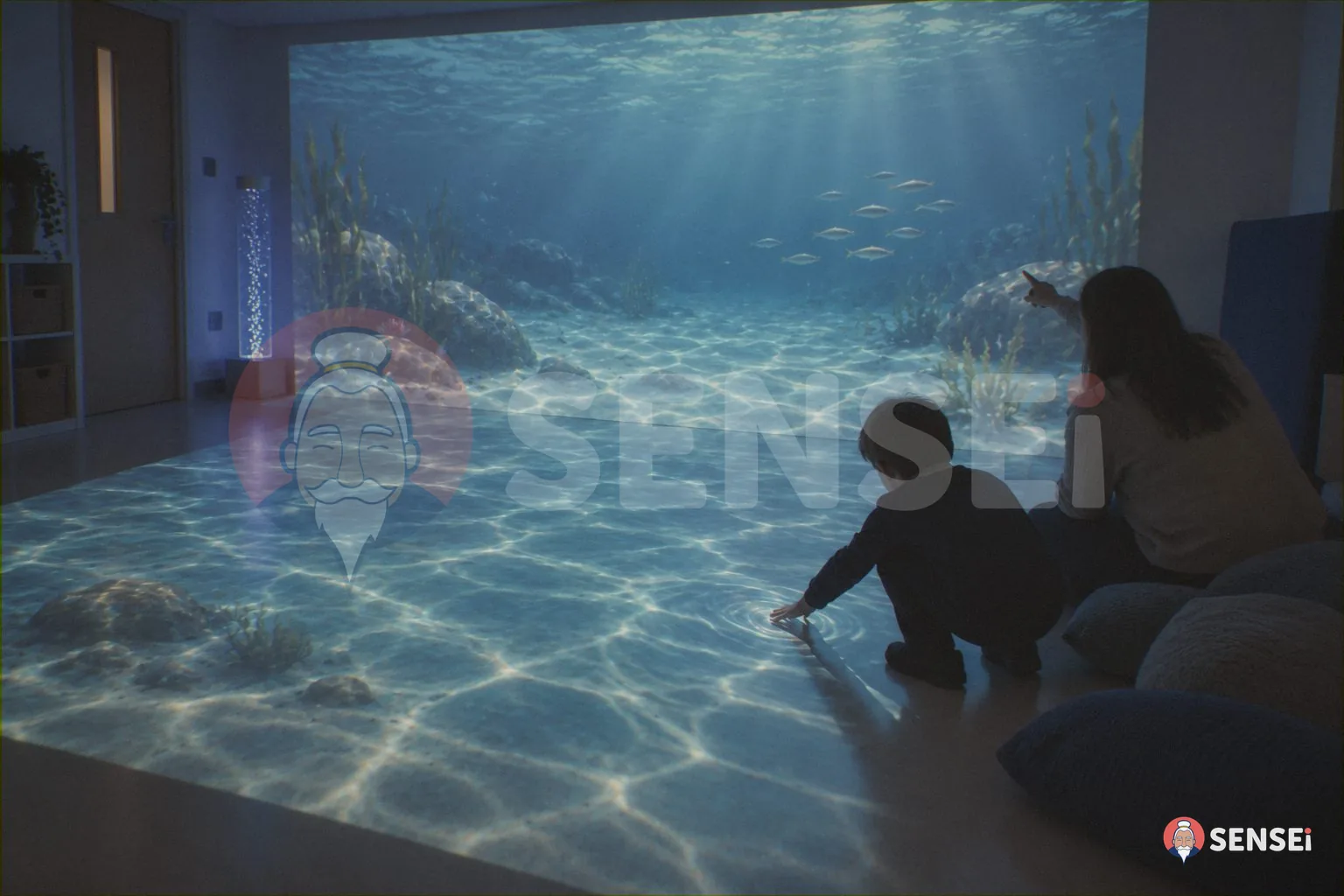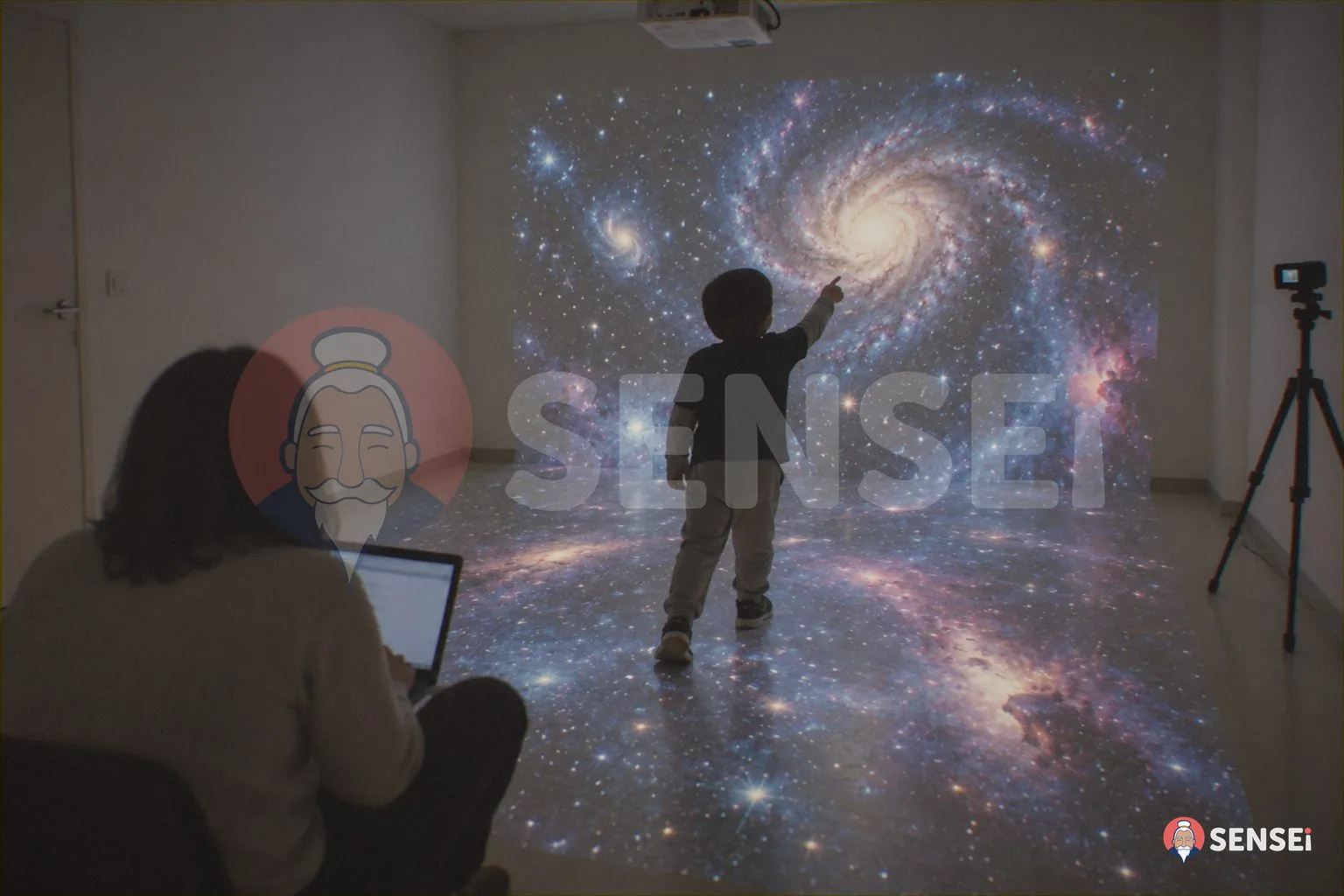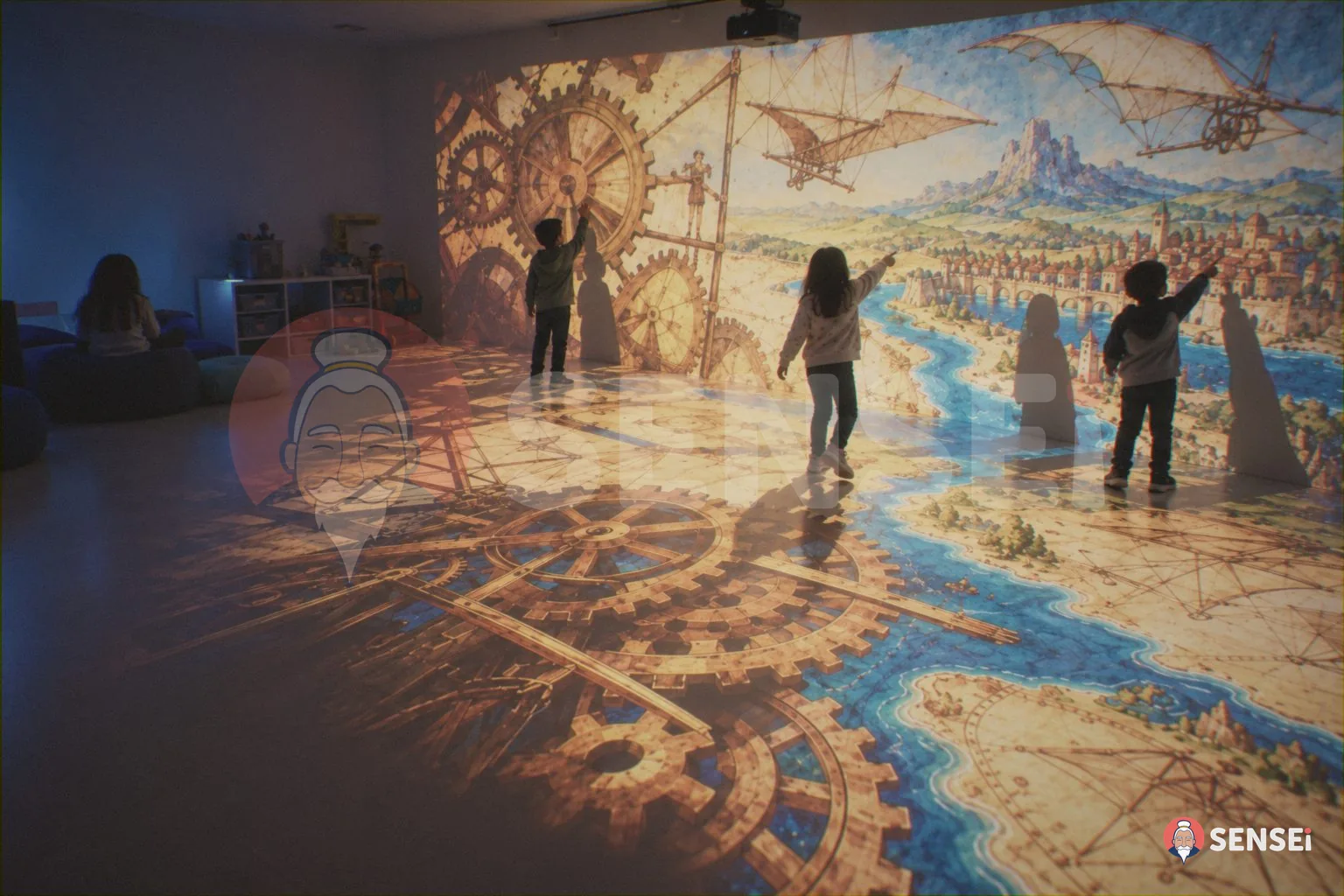

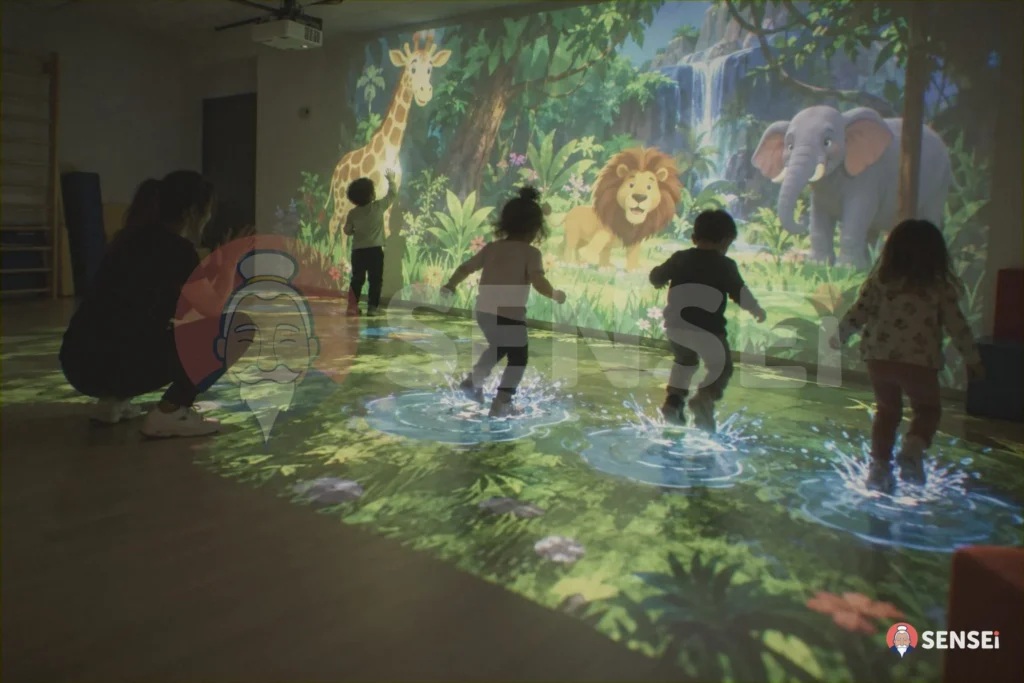
At IC Perlasca in Bareggio, the magic room is not a special classroom at the end of the corridor: it runs through the entire school, from preschool to lower secondary school. The spaces are rethought together with the teachers, using PNRR funds (Italy’s National Recovery and Resilience Plan), and multisensory and immersive environments are created across several school buildings. The first effect, reported by the preschool teachers: more enthusiasm and more participation from the children.
The context: one school, six buildings
The Istituto Comprensivo Perlasca includes the Gallina and Munari preschools, the Collodi and Rodari primary schools and the De Amicis lower secondary schools of Bareggio and San Martino. Whole classes, pupils with special educational needs, teachers from different school levels: a broad user base with very different needs.
The challenge is to transform existing spaces, often full of materials accumulated over the years, into flexible, immersive environments to be used every day.
How do we work with the teachers?
In the preschools the process starts with listening: meetings and two questionnaires for the teachers, then an inventory of the spaces and five successive proposals, discussed and refined together. Before adding anything, space is cleared: at Gallina 20-30% of obsolete materials are removed, freeing up about 40% of the space.
The central hall at Gallina becomes “a forest waiting to be discovered”, with five themed trees: movement, reading, listening, experience and invention. The learning support room is transformed into an immersive and creative space, where images respond to the children’s gestures and movements, with no wearable sensors.
In the primary and lower secondary schools, through the Piano Scuola 4.0 (the national School 4.0 Plan), SENSEi designs the spaces and creates four immersive environments.
Four labs, four ways of learning
- at the Collodi primary school, a multisensory lab replaces the psychomotor room, for learning through movement;
- at the Rodari primary school, a lab of the senses, where images, lights, scents and tactile surfaces build the experience;
- at the De Amicis lower secondary school, an immersive art classroom, for exploring art at the scale of a room;
- also at De Amicis, an immersive lab.
The experiences on offer range from sound to painting, from psychomotor activities to reading, from STEM to relaxation. The same room can host a whole class or a small group with specific needs.
The link with research
Behind the Bareggio environments lies the work of the SENSEi research group on Magika, the environment created at Politecnico di Milano to bring play, education and inclusion together in the same room: the same idea that here runs through three school levels. Anyone who wants to learn more can find all the studies, more than forty, on the Research page.
The school is also a place of research. The institute takes part in a university research project, recognising its scientific value. Work on the use of the immersive classroom is then launched with a lead teacher, and its first part is described on the Training page.
What changes
- More engaged children: in their final report, the preschool teachers note an increase in enthusiasm and active participation.
- Freer, more flexible spaces: about 40% of the space recovered at Gallina.
- Trained teachers: a 10-hour course, tailored to preschool, primary and lower secondary, with a module dedicated to multisensory environments.
- A growing project: an immersive classroom with three walls plus the floor, designed with a teacher, is on its way. Even the cabinet that houses it is co-designed: its back panel becomes the third interactive wall.
Why is this a significant case?
Bareggio shows a school that uses immersive environments vertically, from age 3 to 14, and develops them over time together with its teachers. It is reverse inclusion in practice: spaces designed for the most complex needs become a resource for every class.
For more examples, read the guide to the immersive classroom at school or discover SENSEi for education.
Frequently asked questions
Which school levels use SENSEi in Bareggio?
Preschool, primary and lower secondary school.
How are the environments funded?
With PNRR funds for the preschools and with the Piano Scuola 4.0 for primary and lower secondary.
Are the teachers trained?
Yes, with a 10-hour course for each school level and a module on multisensory environments.
How much does an environment like this cost?
It depends on the configuration: space, experiences, training and services. Contact us for an assessment.
Do you work in a school, a centre or a museum and want an environment like this? Tell us about your project: we start from the needs of the people who will use it.