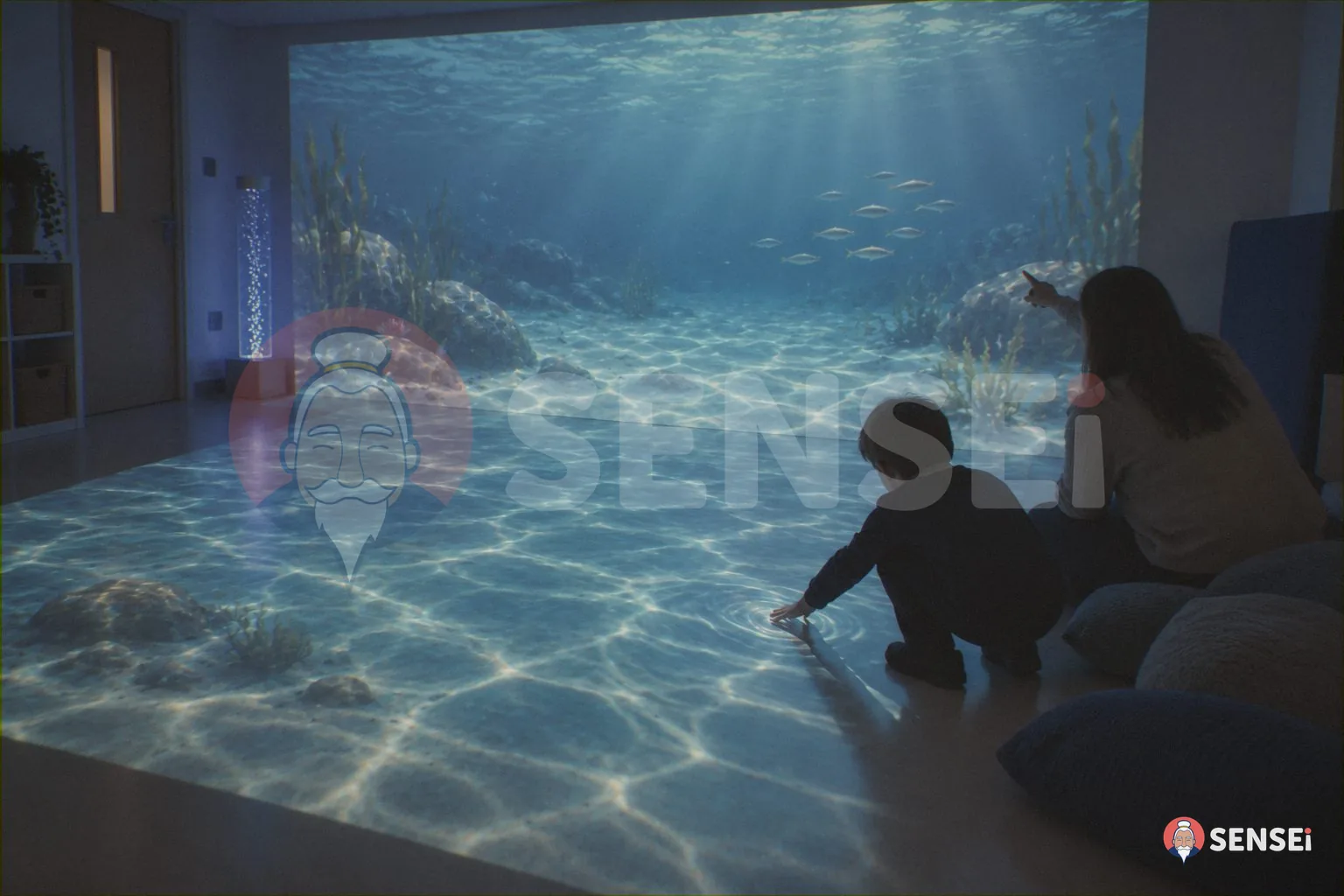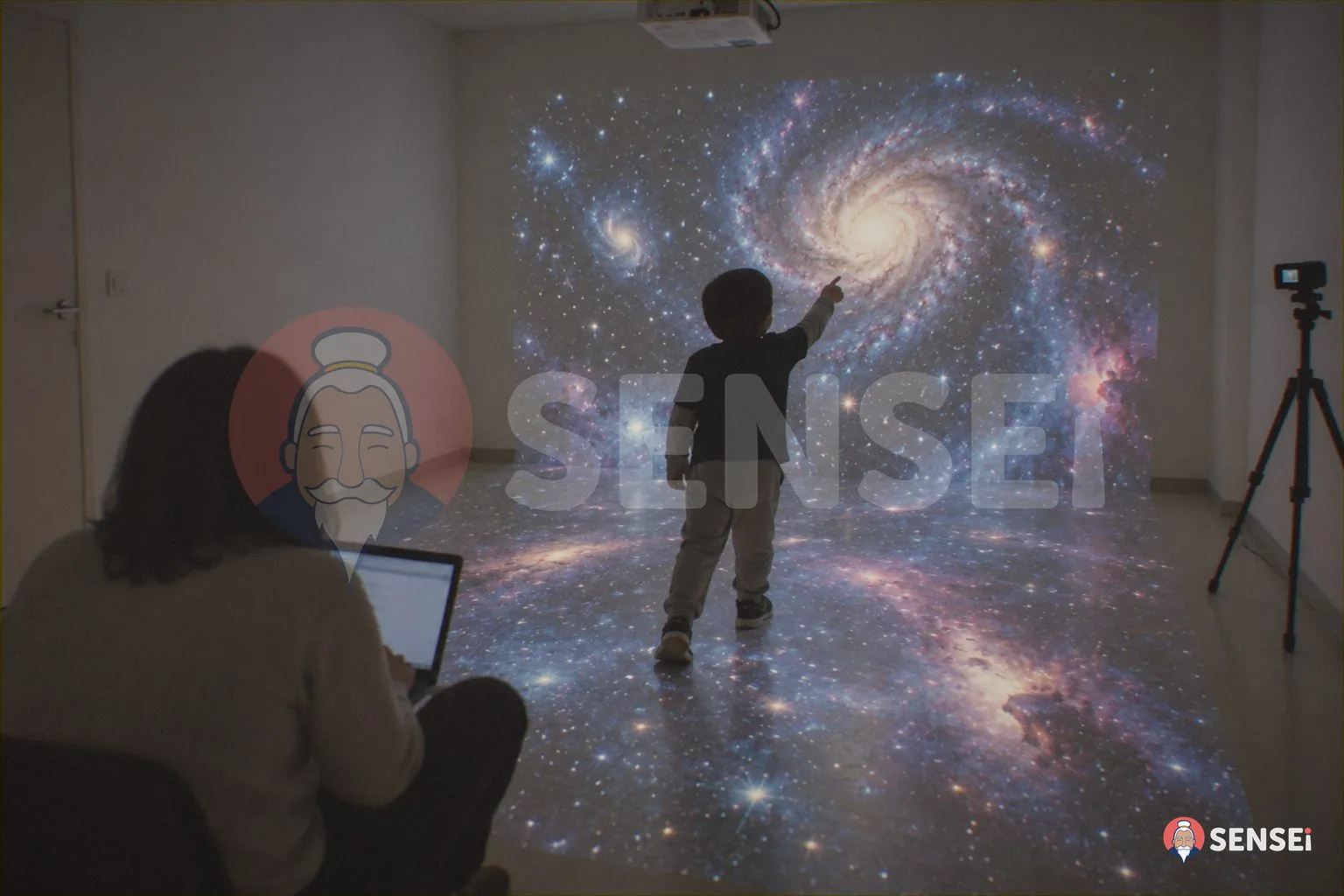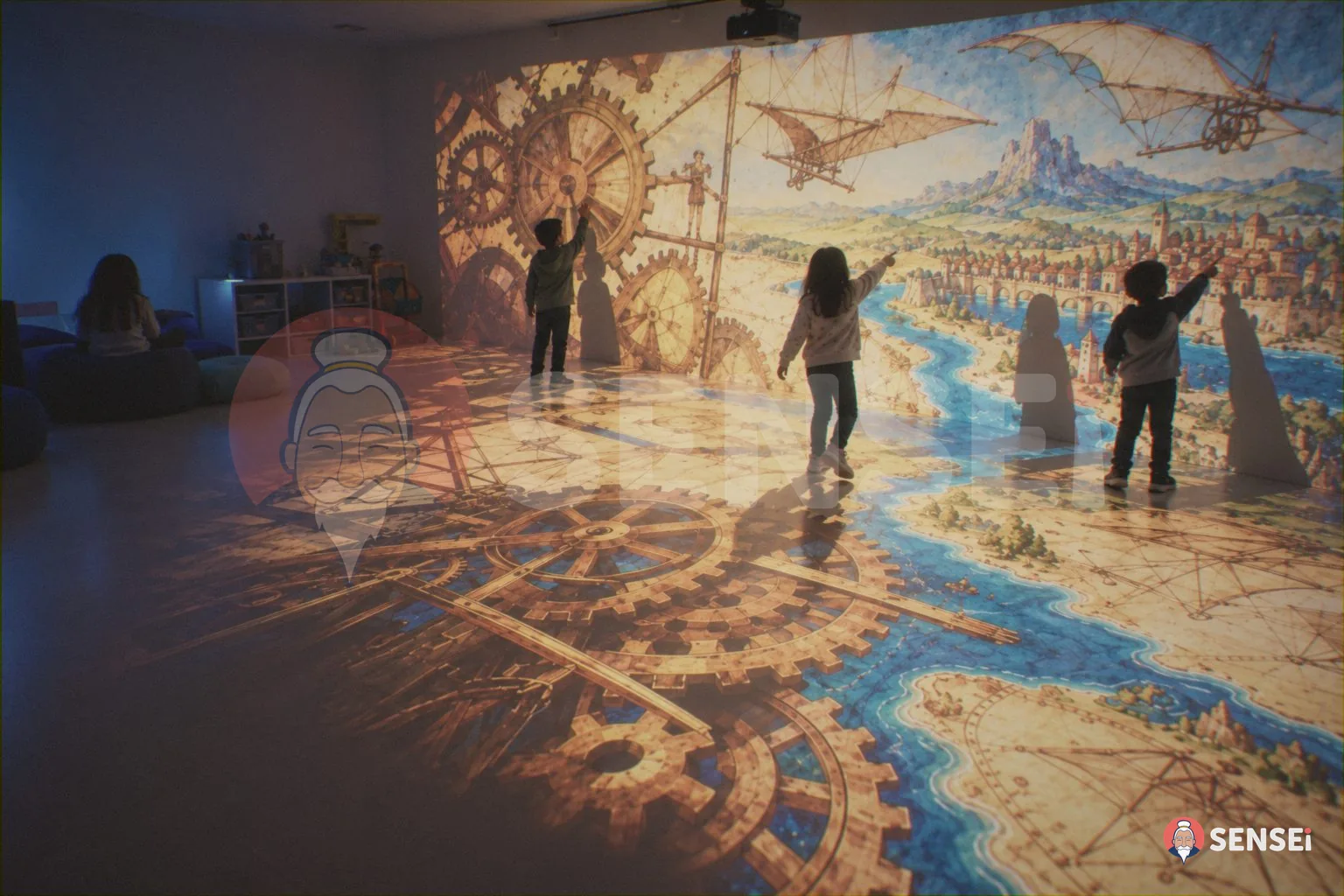

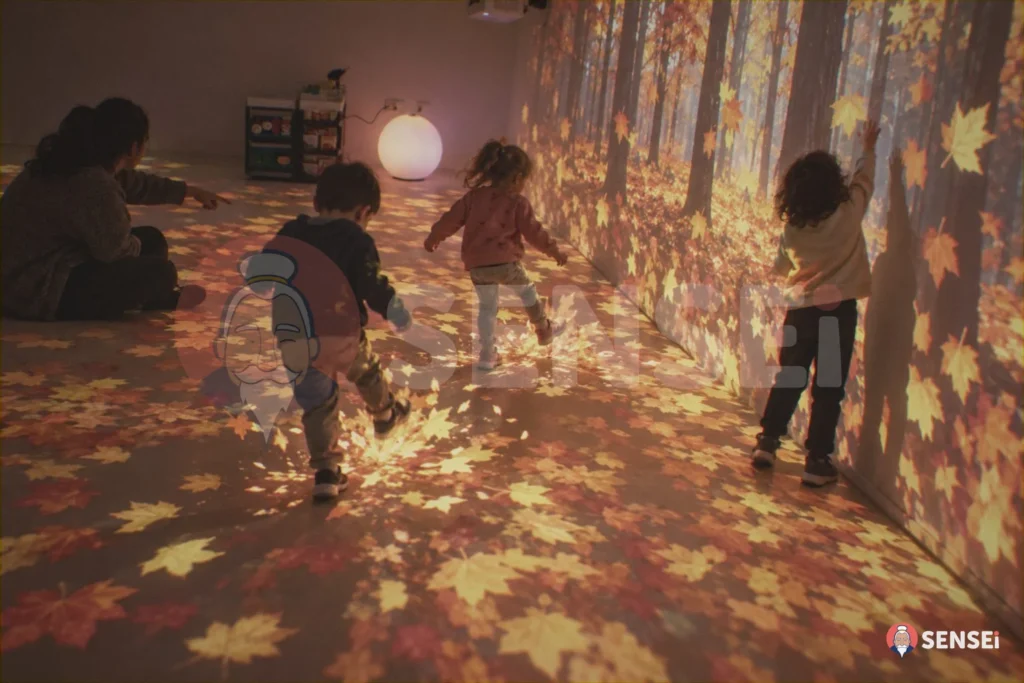
In Cornaredo, the story of SENSEi begins before SENSEi. It all starts with LUDOMI, a community project that wins the Polisocial Award of Politecnico di Milano. Today ICS IV Novembre has a magic room in its preschools on via Sturzo and via Mazzini: almost ten years of research, school and local community working together.
The context: a community around the school
Istituto Comprensivo IV Novembre includes preschools and primary schools in Cornaredo, in the province of Milan. LUDOMI brings together the Municipality, the schools, parents’ associations and a local cooperative.
The project gives rise to an “Aula Magika” (magic classroom) at the Curiel school building. Shortly afterwards, the summer centre on via Sturzo hosts a trial with children in the second and third year of primary school. Here, research enters the school through the front door.
From research to today’s magic room
Magika is the Politecnico di Milano research project from which SENSEi is born. In Cornaredo it becomes everyday practice: the preschools on via Sturzo and via Mazzini now have an environment in which the wall and floor become interactive and the teacher guides the experience from a tablet.
One choice characterises this project: reusing what is already there. The project reuses equipment the school already had, starting with the tablets. The local community plays its part too: on via Sturzo, the Municipality paints the floor for better projection.
Which experiences do the teachers choose?
Before starting, the primary school teachers are asked which activities they prefer. Out of 16 responses, the most chosen are storytelling (11) and immersion (10), followed by collaborative story, quiz, memory, teleportation, microscope and magic desk. Some examples:
- Storytelling: a story that takes shape around the children, scene after scene.
- Immersion: the room becomes an aquarium or another world to explore together.
- 1-2-3 Action: simple commands, in English too, to which the room responds.
- Collaborative story: each child adds their own drawing to the scene.
The link with research
Cornaredo is one of the places where SENSEi research grows in the field. The study on Magika describes an environment designed to bring together play, education and inclusion; we tell its story in the case study Magika: play, education and inclusion.
From that first classroom the work continues between Politecnico di Milano and SUPSI, and today counts more than forty publications, collected on the Research page. In Cornaredo, however, research has always had a clear face: that of children, teachers and parents.
What changes
- An engaged community: the Municipality, parents, schools and associations each contribute in their own way.
- Two preschools with a permanent magic room, used by the classes.
- Trained teachers: shared training hours and hours dedicated to each school; the collaboration continues with training and support.
- Resources put to good use: devices already on site become useful again, instead of staying in a cupboard.
Why is this a significant case?
Cornaredo tells the story of a journey of almost ten years between research, community and school. It shows that an immersive environment does not necessarily require everything to be new, and that it works best when the local community feels it is their own. And it is proof that research, when it enters a school, can become a common good.
For activity ideas with the youngest children, read the guide to the immersive room at nursery or discover SENSEi for preschool.
Frequently asked questions
Can equipment the school already has be reused?
Often yes, if it is suitable and in good condition: this needs to be checked case by case, as happens in Cornaredo.
What is LUDOMI?
A community project that won the Polisocial Award of Politecnico di Milano, from which the Aula Magika experience in Cornaredo is born.
Who uses the magic room today?
The preschools on via Sturzo and via Mazzini of ICS IV Novembre.
How much does an environment like this cost?
It depends on the configuration: space, experiences, training and services. Contact us for an assessment.
Do you work in a school, a centre or a museum and want an environment like this? Tell us about your project: we start from the needs of the people who will use it.