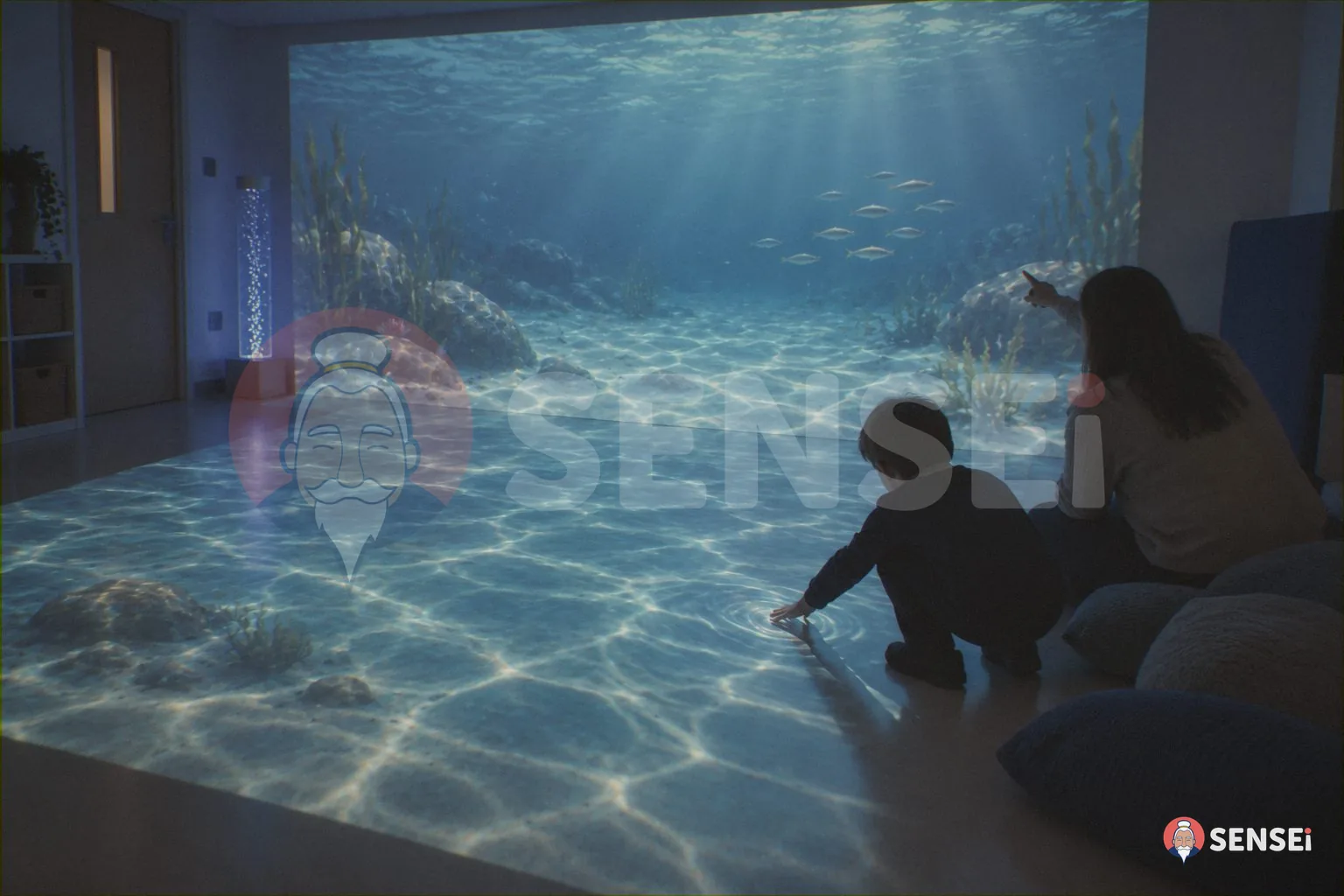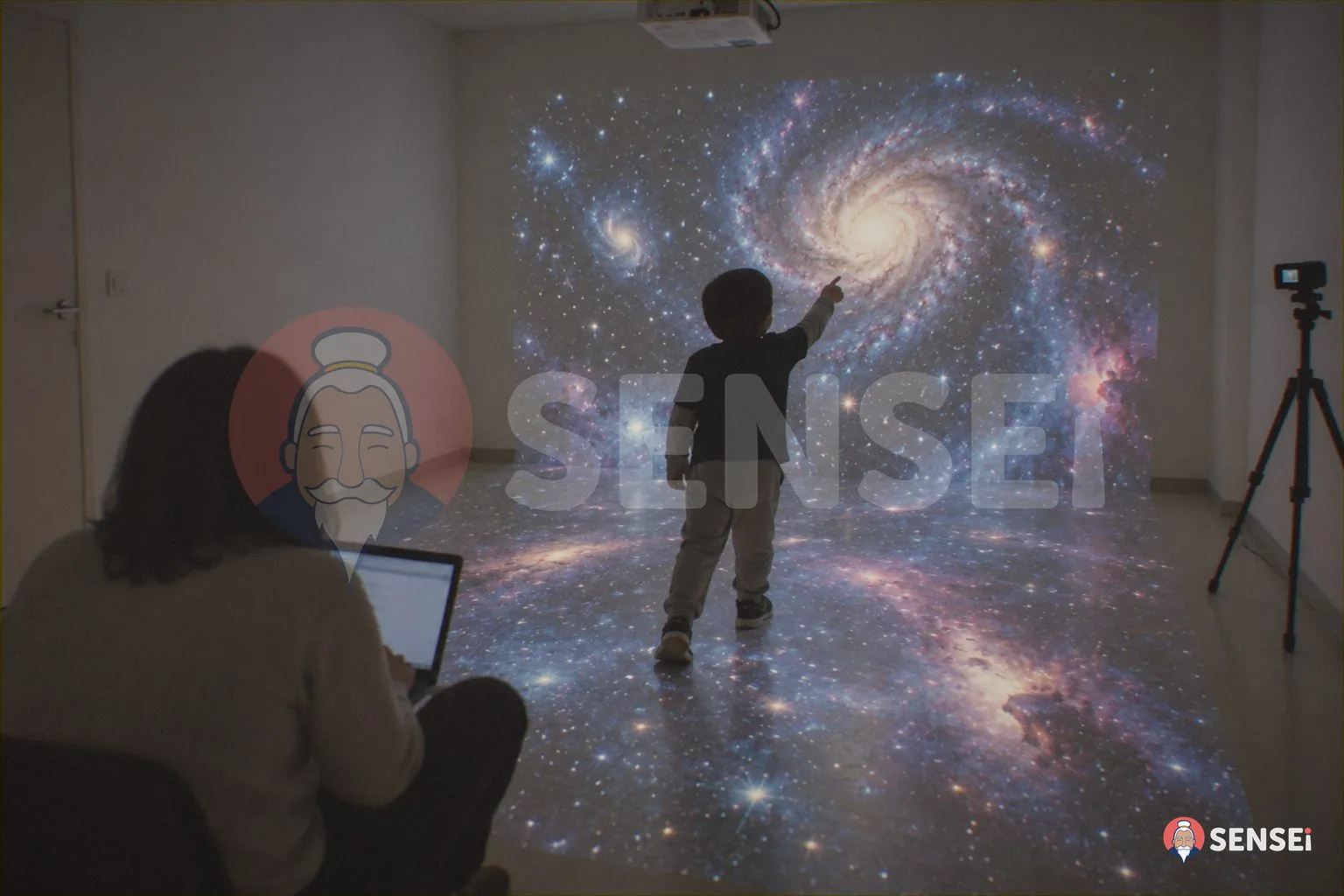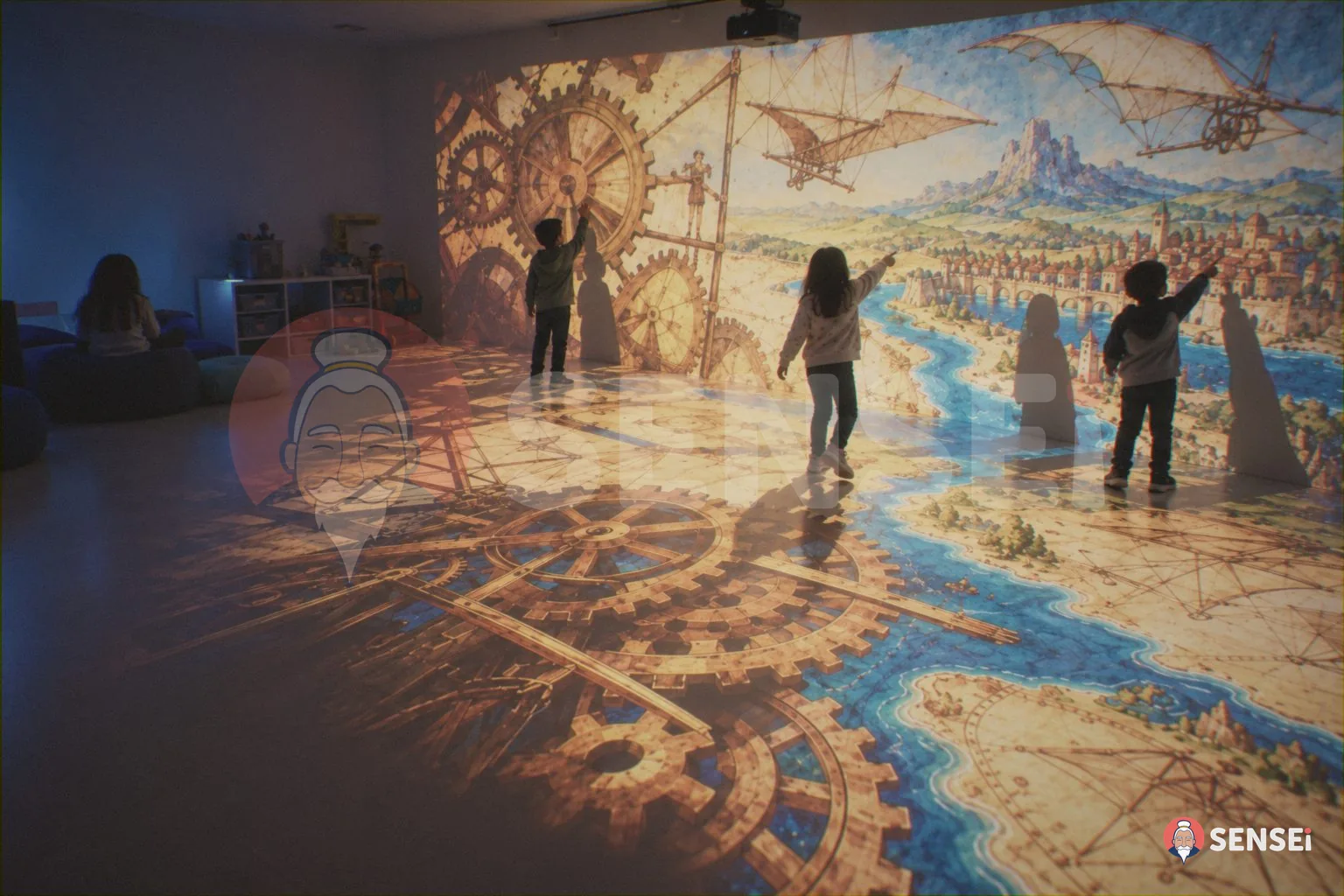

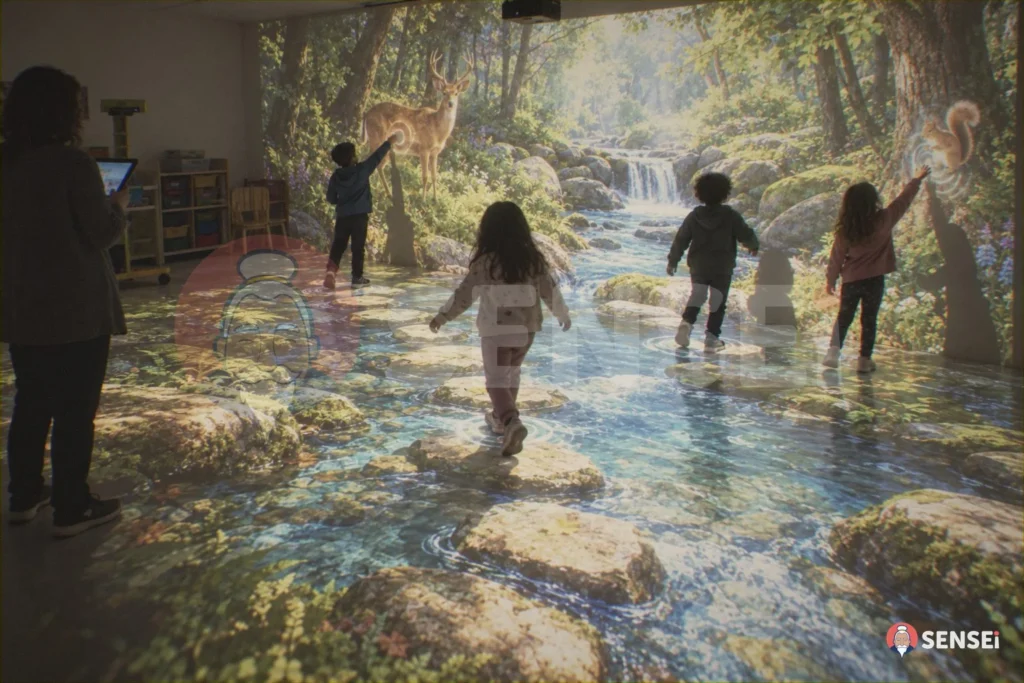
Not every school has a room to dedicate to a multisensory environment. Two projects by the research group from which SENSEi was born, Ahù and MOVES, turn the problem around: instead of bringing children to the room, they bring the experience to where it is needed, without fixed wiring.
It is a simple and powerful idea, which today lives on in the flexibility of the SENSEi magic room.
What is the research question?
Traditional multisensory environments are “embedded” in a specific space: a room or part of one. With MOVES, the group identifies precisely this hardwired nature as a constraint.
In practice, many schools know this constraint well. There is not always a room to dedicate, and the available space will not always stay the same over the years. The question is therefore: can a multisensory experience become mobile, without losing children’s engagement and without taking control away from the teacher?
The study in brief
Ahù, the nomadic totem
Ahù, presented at the ACM ISS conference, is a “nomadic” multisensory solution: it can be moved and used in simple ways. It takes the form of a totem, speaks to children through voice, lights and multimedia content, and turns two areas of the floor into a playing field for cooperative and competitive challenges.
An exploratory study in the classroom investigates its potential to foster engagement, collaboration, socialisation and learning.
MOVES, the environment in a mobile structure
MOVES, discussed at the ACM IDC conference, takes the idea further. It is a wooden structure that contains everything needed and can be taken wherever it is needed. The teacher guides the experience from a tablet.
Children can play and learn with five interaction modalities: feet, hand, card, wand and voice. The group speaks of “discreet immersiveness”, with the teacher always in control.
A second article then uses MOVES to compare interaction modalities with 175 children. We discuss this in the case study Touching, moving, speaking.
What emerges?
The group does not promise miraculous results. The study on Ahù is exploratory and investigates its potential in the classroom. With MOVES, the work focuses on motivations, design and ways of use.
The common message is very concrete. The multisensory experience can be portable, modular and guided by the teacher, without losing children’s engagement.
Why does it matter today?
For a school or a centre, this research changes the starting question. No longer “do we have a suitable room?”, but “what experience do we want to offer, and where?”. The space adapts to the educational project, not the other way round.
SENSEi inherits this flexibility. You do not need a dedicated room or building work: the magic room brings to life the walls and floor that are already there, and a whole group of children plays in it by moving, with their hands free and nothing to wear. You can start from a single interactive surface and grow over time. The teacher guides everything from the tablet, just as in MOVES.
Mobility also has value for research: precisely because MOVES can be taken into schools, the SENSEi research group can study it in the field, with real classes, rather than in the lab. The studies are collected in the Research section.
If you are considering where to place the environment, the guide on the immersive classroom at school and the one on how to set up a multisensory classroom will help you get started. The configurations are described on the page The magic room.
The original publications: MOVES: Going beyond hardwired multisensory environments for children and On the Effects of a Nomadic Multisensory Solution for Children’s Playful Learning.
Frequently asked questions
What is a “hardwired” multisensory environment?
It is an environment built into a specific space, a room or part of one. The devices stay fixed and the experience cannot be moved.
What are Ahù and MOVES?
Two mobile multisensory environments born from research. Ahù is a nomadic totem for cooperative and competitive games; MOVES is a wooden structure with five interaction modalities: feet, hand, card, wand and voice.
Do you need a dedicated room to have SENSEi?
No. SENSEi uses existing walls and floor, with no building work. The configuration depends on the space: contact us to assess it.
How much does an environment like this cost?
It depends on the configuration: space, experiences, training and services. Contact us for an assessment.
Do you work in a school, a centre or a museum and want an environment like this? Tell us about your project: we start from the needs of the people who will use it.
Sources
- Cosentino G., Gelsomini M., Giannakos M. (2023). MOVES: Going beyond hardwired multisensory environments for children. IDC 2023, ACM
- Gelsomini M., Rotondaro A., Cosentino G., Gianotti M., Riccardi F., Garzotto F. (2018). On the Effects of a Nomadic Multisensory Solution for Children’s Playful Learning. ISS 2018, ACM